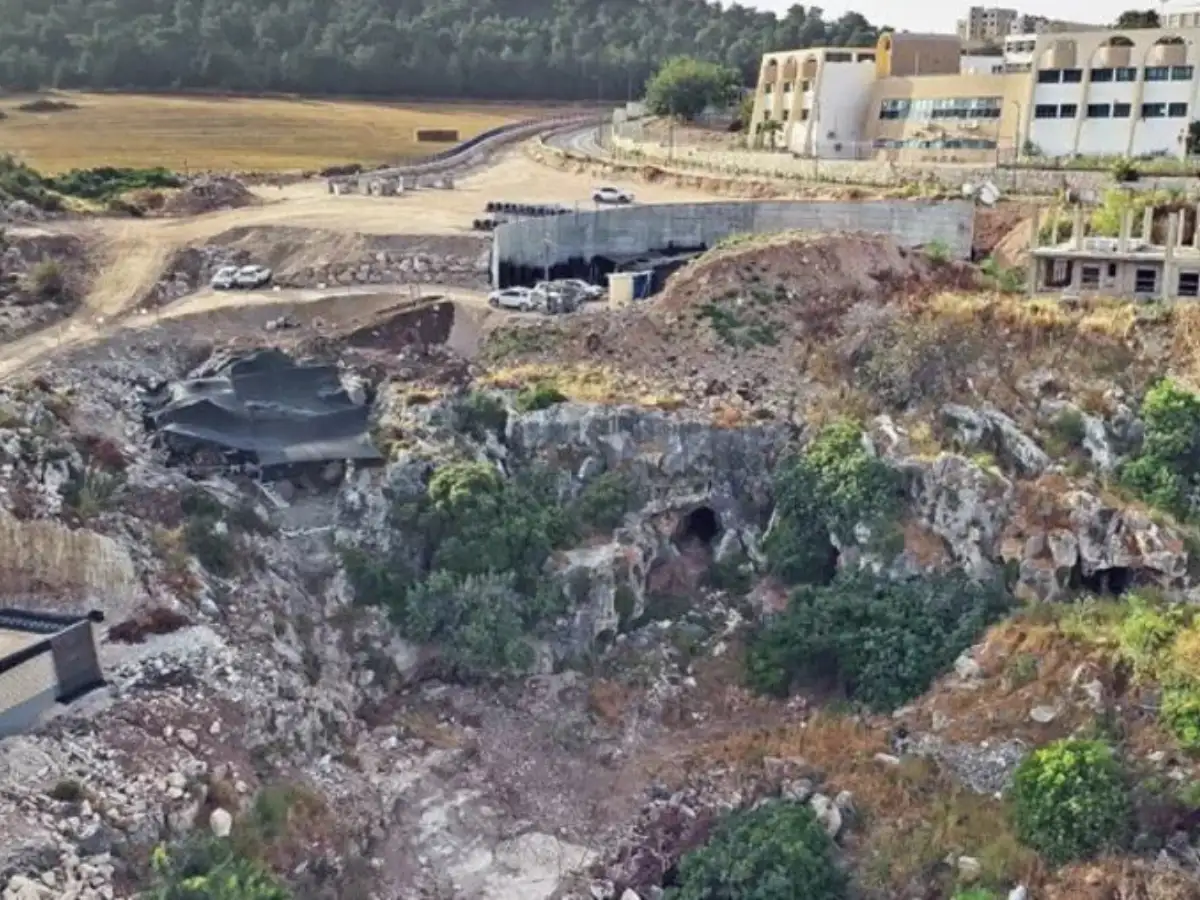
Construction crews in northern Israel were about to break ground near a small town called Fureidis when archaeologists asked for one more look before the digging started. This decision led to one of the most important prehistoric discoveries in decades, a cave sealed off from the outside world for 400,000 years.
The Israel Antiquities Authority and the University of Haifa researchers discovered flint tools, including hand axes, scrapers, and blades, that pushed the age of the cave back much further than anyone expected, CNN reports. Archaeologist Kobi Vardi said his team had originally dated the site to about 200,000 years ago, citing research from the 1970s.

New analysis by Vardi and his colleague Ron Shimelmitz, an associate professor of archaeology at the University of Haifa, reveals that people were actually using this cave as far back as 400,000 years ago, and the assemblage includes about a hundred side scrapers as well as small, sharply made handaxes and blades. They also found fallow deer, gazelle, ancient horse and wild cattle bones, which suggest hunting and processing at a spring-fed site that had been sealed beneath boulders, soil and vegetation for hundreds of thousands of years.
Why this discovery caught researchers off guard
For American readers used to stories about Neanderthals and early Homo sapiens, this cave is older than both. The people who used it were part of the Acheulo-Yabrudian culture, a group of hominins who lived in the Levant, the region that includes modern-day Israel, Lebanon, Jordan, and Syria, sometime between 400,000 and 250,000 years ago. Think of them as a kind of missing-link generation, living right before Neanderthals and modern humans spread across the globe.
Vardi called it “a big surprise” to learn that the cave was about twice as old as previously thought, according to CNN. Shimelmitz described it as “a unique site of global importance,” adding that it belongs to a rare window at the end of the Lower Paleolithic era, right before Neanderthals and modern humans became dominant across many regions.