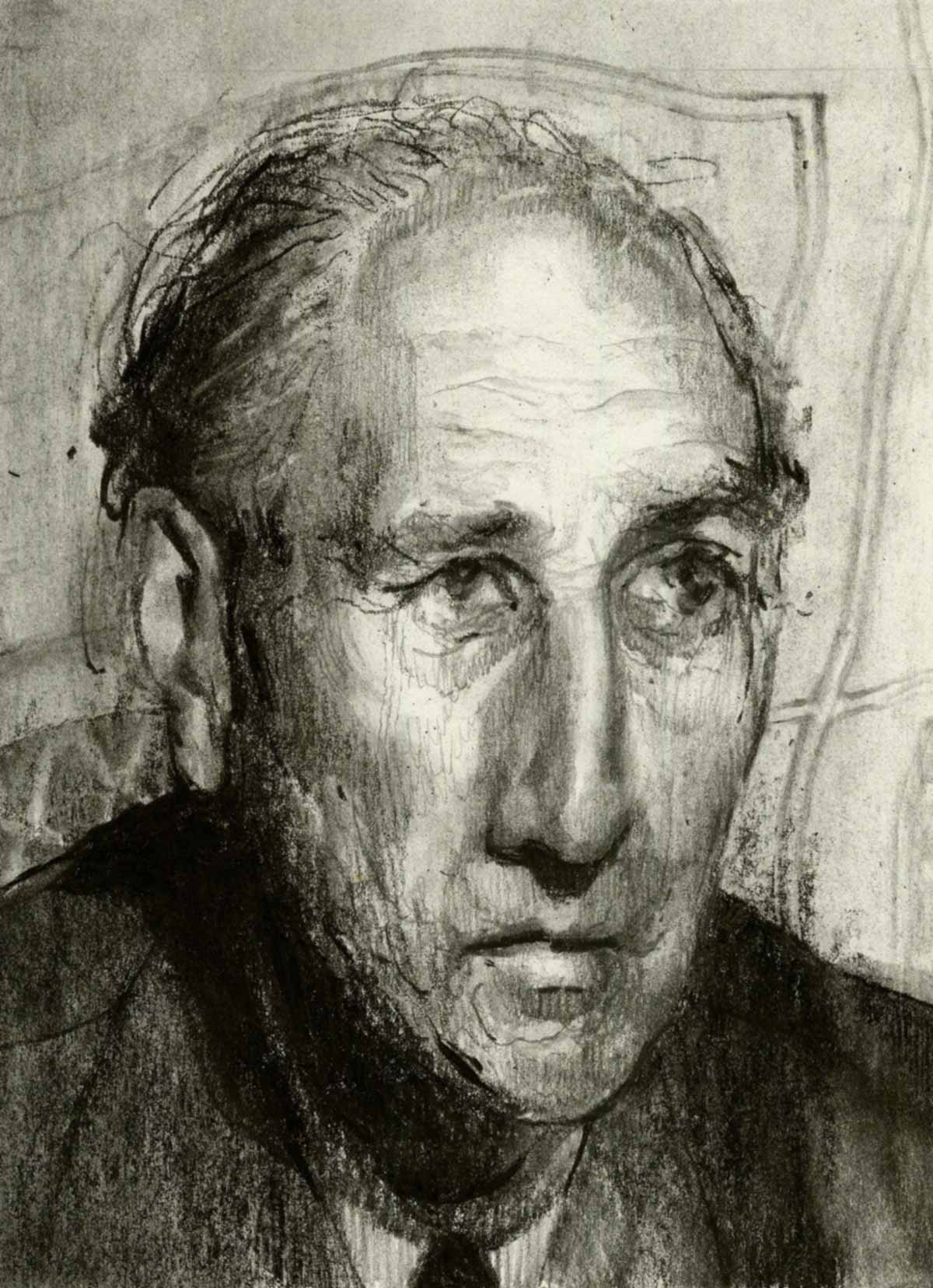
It would be hard to overstate Ferdinand Eckhardt’s impact on the Canadian art world. Eckhardt arrived in Canada from Vienna in 1953, and under his directorship, the Winnipeg Art Gallery became a late-modernist powerhouse. It is not only home to major holdings of international and Canadian works but boasts one of the largest Inuit art collections in the world. For his pioneering curatorial work, Eckhardt was inducted into the Order of Canada, received honorary degrees, and was awarded a Queen Elizabeth II Silver Jubilee Medal. Meanwhile, his wife, Sophie-Carmen Eckhardt-Gramatté, became one of Canada’s leading composers, helping make Winnipeg more receptive to advanced musical ideas from Europe. Both were formative figures on the prairies.
Much of that glamour has now been dispelled following Conrad Sweatman’s revelations of Eckhardt as a Nazi sympathizer—revelations The Walrus published for the first time on November 9. Building on German historian Andreas Zeising’s investigation into Eckhardt’s Nazi writings, Sweatman’s story draws on months of extensive research and is supplemented by scores of documents from archives in Canada, Austria, and Germany. It paints a picture of a man who, after promoting Nazi tenets in his early thirties, moved to Canada and ascended to one of the highest echelons of the country’s art scene.