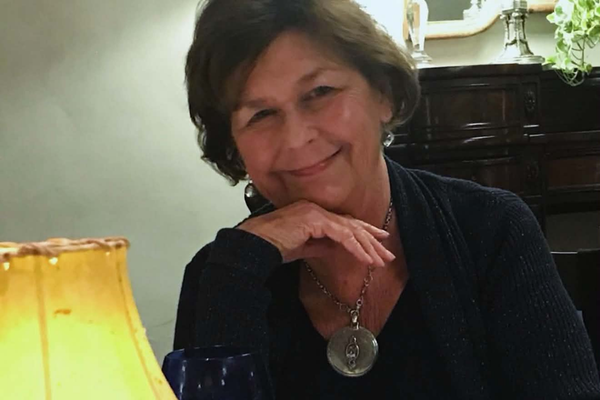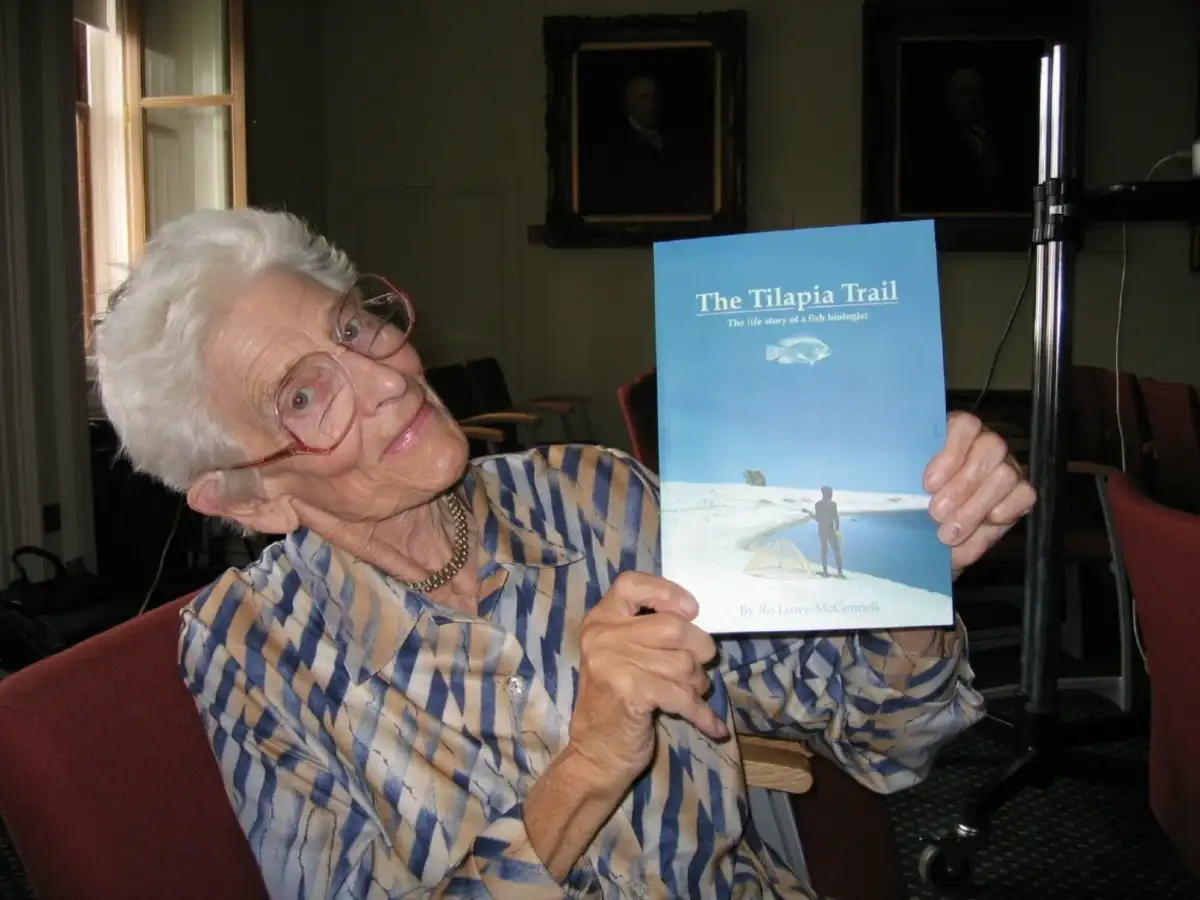
After the Second World War, a British scientist by the name of Rosemary Helen Lowe wanted to work as an entomologist. But in 1945, the Colonial Service refused to employ female entomologists. Instead of giving up on her ambition to become a field scientist, Lowe-McConnell, whose father was Liverpool’s deputy director of education at the time, turned to ichthyology, the study of fish.
That decision eventually took her to Malawi (formerly Nyasaland), a relatively small landlocked southeastern African nation, endowed with spectacular highlands and extensive lakes. She helped establish a laboratory and studied the freshwater fish of Lake Nyasa, now Lake Malawi. Her work on cichlids, particularly tilapia, became an important foundation for later studies of tropical fisheries and fish farming.
A childhood dream took her to Africa
Born in Liverpool in 1921, Lowe-McConnell developed a fascination with nature early in life. She grew up close to the River Mersey, where she watched wading birds, while her family kept animals ranging from stick insects to a donkey. Her father also had an aquarium of tropical fish.
Lowe-McConnell's childhood ambition was to become an explorer in Africa. One of her teachers, however, responded to that dream with the suggestion that “perhaps you can teach,” according to The Guardian, recounting her life.
She went on to study zoology and botany at Liverpool University before joining the Freshwater Biological Association at Lake Windermere. Her early work involved projects on producing food from freshwater during wartime.
The misogynist rejection that changed her scientific path
In 1945, the Colonial Service rejected Ro for being a female entomologist, prompting her to pursue ichthyology. In the same year was sent to Malawi to continue a fishery survey that had begun in 1938. The assignment was anything but an ordinary research trip. Before leaving, she had to learn how to use and repair field equipment, identify fish species and learn the basics of the local language.
She traveled alone by ship to South Africa, then by train to Southern Rhodesia (now Zimbabwe), before continuing by road to Nyasaland, now Malawi, according to the International Society of Limnology. She also carried 14 crates of heavy field equipment on the journey, The Guardian reported.
At Lake Nyasa, the cichlid fish she studied were an important source of protein for local communities. Lowe-McConnell's work, therefore, had both scientific and practical importance: understanding the fish was also part of understanding how to develop a sustainable fishery.
The tilapia research from Africa
Lowe-McConnell returned to Africa in 1948 after a brief period in her home country to write up her Malawi report, now working from Jinja, Uganda, at the East African Fisheries Research Organization.
Her main focus was the biology of tilapia in the lakes of East Africa. She produced a large body of scientific research that later helped researchers examine the effects of fishing and other human activities on fish populations. Her studies on the important food source for many communities in both the developing and developed worlds also provided a valuable foundation for further research on fish farming in tropical waters.
Blue Life Hub, in its overview of the global tilapia trade, estimates that more than 7 million tonnes of tilapia were produced worldwide in 2024, with the USA remaining the world's largest tilapia consumer. Asia accounted for more than 67% of that production, with China remaining the leading producer and Indonesia growing rapidly.
The fish Lowe-McConnell studied in African lakes is now part of a huge global aquaculture industry, which is affordable for most parts of the world.