
Get all your news in one place.
100’s of premium titles.
One app.
Start reading
Fit & Well
Fit & Well
Health
Lou Mudge

A 64-year-old expert trainer shares his best advice for those over 60 who want to start building muscle

Waist-shot of a man standing looking off camera holding two small blue dumbbells with arms outstretched in front. there's a kitchen setting behind him.

If you’re approaching retirement and looking for a hobby, you can’t go far wrong with resistance training.

It’s the best way to combat age-related muscle loss, but strength training in your 60s should also be approached with caution.


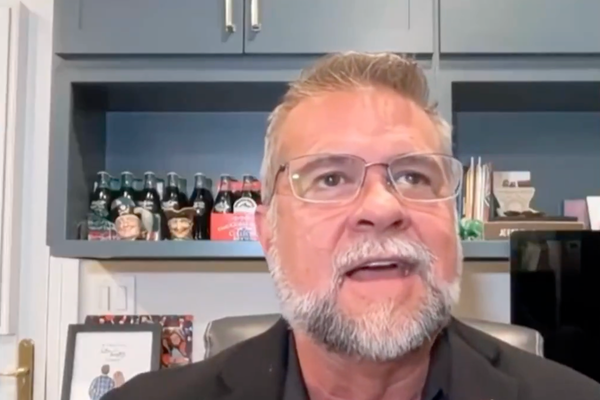
“Strength training reduces the severity of an injury caused by falling (since nothing can prevent falls),” says Fredrick Hahn, a personal trainer and founder of SlowBurn Personal Training Studios, who is in peak condition at 64 years-old.

Hahn works with many people over the age of 60, including famous names, and approaches their programs with care and consideration.

Here are the top three things he wants you to know before picking up a dumbbell for the first time as an older adult.

1. Just show up and do your best on the day

Your mindset is important at any stage of life, but is particularly important for beginners and older adults.

“When we coach our clients through a strength training workout, we are never drill sergeants,” says Hahn.

“We always say, there is no performance value to this workout. Just do the very best you feel you can each time, and bear in mind that the fact you’re here is enough.”

Hahn mentions the 50% rule—putting in 50% of the effort to make your workout goals more achievable—that’s gaining popularity these days.

“I disagree with it because it’s so arbitrary,” he says. “I tell clients to do the very best they can, and if it turns out to be 50%, fine. If it turns out to be 40%, fine. If it turns out to be 90%, fine.”

He explains these approaches nurture sustainability—making training a regular and achievable part of your regular routine—and encourage consistency.

2. Remember less can be more

Contrary to popular belief, the real benefits of exercise happen after you’ve put the weights down.

“They occur when you are resting from the exercise,” he says.

Two to three weekly sessions are enough, but even if you can only manage once a week, you will still see good outcomes.

“If properly performed, strength training provides all of the benefits of aerobic exercise and stretching,” he adds. “A properly designed strength training program is all that you should need.”

Hahn advocates for the less-is-more approach, rather than pushing your body to the limits of what it can withstand.

3. Go slowly to avoid injury

Hahn’s exercise methodology is about slow, controlled movements.

“As the saying goes, speed kills. When you are strength training, you want to move very slowly and in a deliberately controlled manner.”

His rule of thumb: “Take two seconds for the very first inch of a movement and then move smoothly at about an inch per second after that,” he says.

“This roughly equates to a minimum of five seconds to lift a weight and even slower as you lower the weight,” he says.

When choosing weights, select one that challenges you but isn’t so heavy you can only manage a few reps.

“You want to get to the point of complete fatigue in about a minute to a minute and a half,” he says.

Sign up to read this article
Read news from 100’s of titles, curated specifically for you.
Already a member? Sign in here
Related Stories
Top stories on inkl right now
One subscription that gives you access to news from hundreds of sites
Already a member? Sign in here
Our Picks
Fourteen days free
Download the app
One app. One membership.
100+ trusted global sources.