
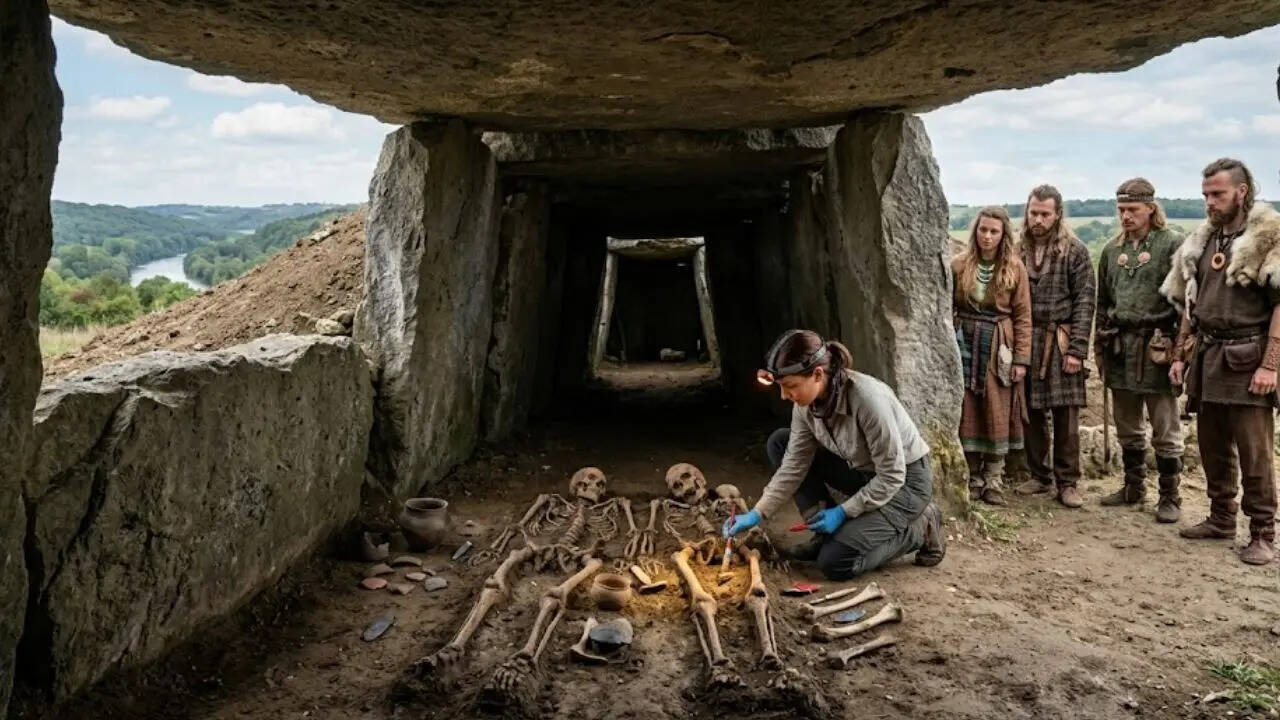
A new genetic research study has demonstrated the existence of a distinct local community of Stone Age farmers that disappeared and were replaced by immigrant groups approximately 5000 years ago near the Paris Basin (specifically at Bury, France). Based on the DNA data retrieved from the teeth of 132 individuals buried in a megalithic tomb in Bury, France, this research confirmed that two distinct genetic populations existed and were separated by an era of abandonment.
This ‘Neolithic decline’ represents a dramatic decline in the northwestern European population throughout the northwestern portion of Europe due to a catastrophic and rapid decline of the Neolithic population, possibly caused by a combination of social, environmental, and disease-related factors. These findings likely provide the best example of an abrupt end to the Neolithic era of monumental, large-scale construction due to this type of transformative demographic shift. The genetic discontinuity observed at Bury underscores a vulnerable period where ancestral lineages vanished, paving the way for the continent-wide expansion of Steppe-related pastoralist ancestry during the Bronze Age transition.




