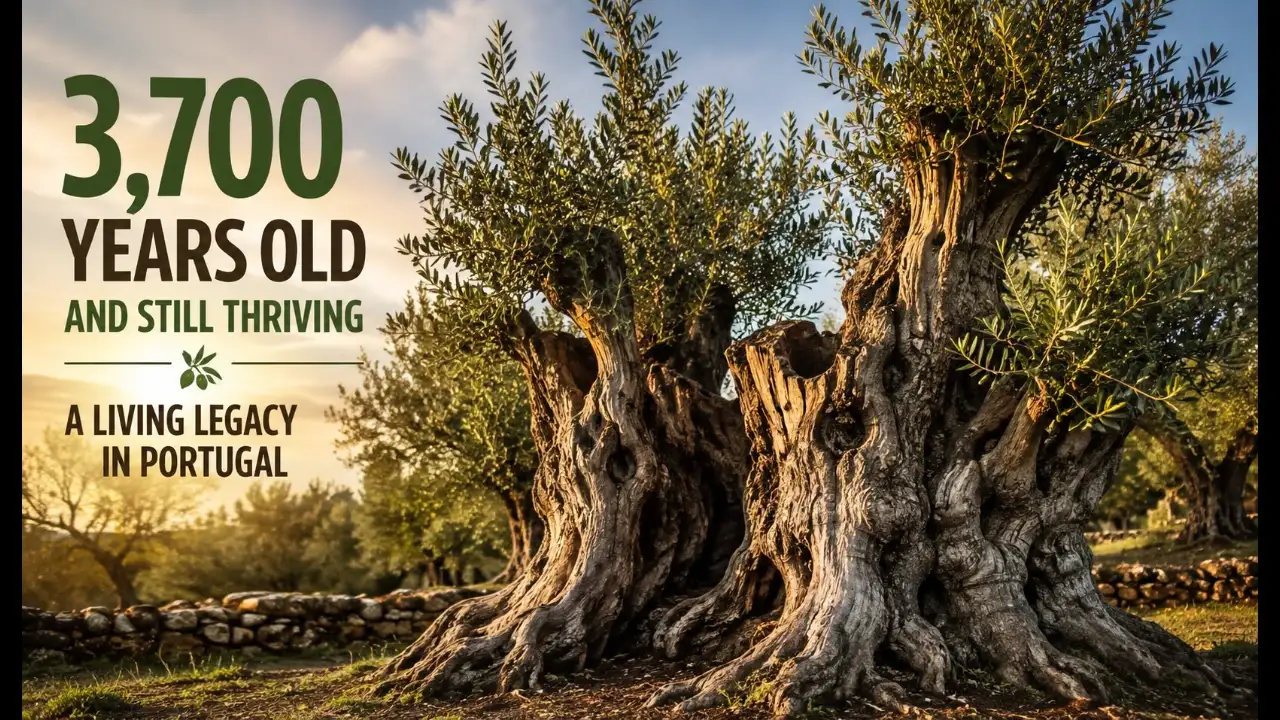
Some trees are old enough to make human history look surprisingly recent. In Portugal, ancient olive trees have been estimated at more than 2,000 years old, with one in the Alentejo region assigned an age of about 3,713 years. If that estimate is correct, the tree was already growing when Bronze Age societies were reshaping the Mediterranean. But determining the age of an olive tree is far harder than simply counting its rings, and that is where researchers at the University of Trás-os-Montes and Alto Douro, or UTAD, have developed an unusual approach.
The difficulty begins inside the trunk. In many familiar trees, age can be estimated by counting annual growth rings. Each season of growth leaves another layer of wood, allowing researchers to work outward from the oldest central wood. Olive trees do not make this job easy. As they become very old, their trunks can become twisted, hollow and divided into separate living sections. The oldest wood may disappear through decay, leaving no simple path back to the tree's first year.