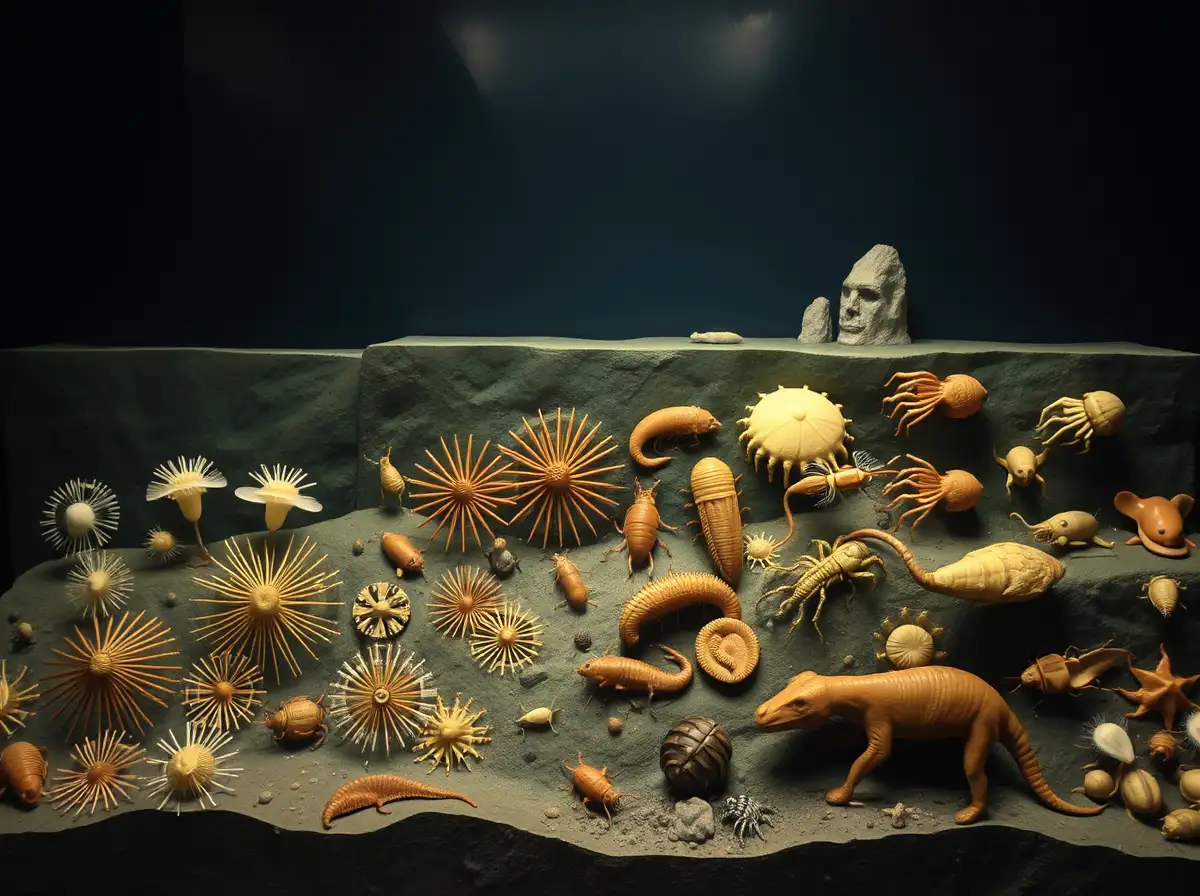
Newly discovered fossils have given scientists their first real glimpse of when Earth made a crucial transition from plants and unrecognizably simple animals to the complex creatures that took over the world and would eventually lead to us. And it happened millions of years earlier than researchers thought. More than 700 fossils found in southwestern China’s Yunnan province offer a window into life from 539 million years ago, during the waning end of the Ediacaran period, a time of simple but strange animals that lived two-dimensionally in the oceans, never going up or down, researchers said. But a study in journal Science said many of the fossils in this trove are remnants of more complex animals that lived three-dimensional lives, traveling up through the water and eating. Those are traits that had been thought to only spring to life at least 4 million years later in the Cambrian period, during what was called the Cambrian explosion of complex and recognizable animal life.
The new finds were a short distance from a United Nations Chengjiang world natural heritage site for other fossils in an exposure along a roadside that’s not glamorous, but has different layers “where you can literally walk through time, geological time, in a landscape,” Dunn said. And one of those areas provides a “snapshot” where evolution brings forces together.