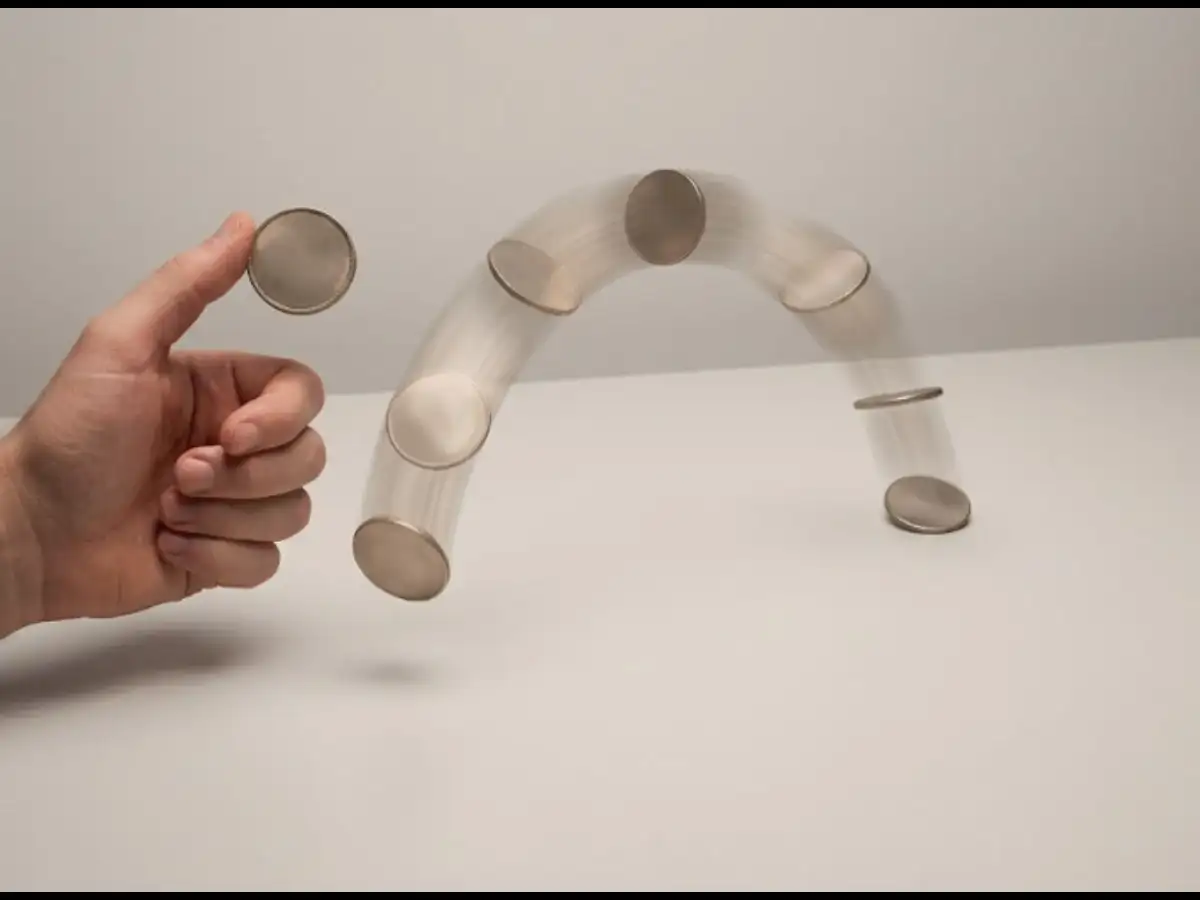
A coin toss is supposed to settle uncertainty. Heads or tails, the conventional wisdom says, should be a 50-50 proposition. But a massive experiment involving 350,757 coin flips found that a fair coin has a small but measurable tendency to land on the same side it started.
The research, submitted to the Journal of the American Statistical Association in 2023 and published two years later, tested a prediction from a physics model developed by Diaconis, Holmes and Montgomery in 2007. The model suggested that the slight wobble introduced when a person tosses a coin could make it more likely to return to its starting position.
The researchers found that the prediction held up. Across 350,757 flips, coins landed on the same side they started 178,079 times, giving a probability of 50.77%. The researchers described the statistical evidence for the same-side effect as extremely strong.
Importantly, the finding does not mean that a coin is more likely to land heads than tails. Across the experiment, there were 175,421 heads, producing a heads probability of 50.01%. In other words, the coin remained essentially fair between heads and tails, while still showing a slight tendency to preserve its starting side.
The experiment involved 48 people flipping coins across 44 different currency-denomination combinations. Participants conducted sequences of coin tosses, recording whether each coin landed on the same side from which it had started. The researchers also videotaped the sequences to audit the data collection.
The study found another intriguing detail: the effect varied substantially between people. Some participants showed little or no same-side bias, while others showed a stronger effect.
Practice appeared to matter, too. The researchers found that the same-side bias generally decreased as participants performed more flips. One possible explanation is that repeated practice improves people's ability to produce a more stable, less wobbly toss. The researchers estimated that around 10,000 flips, or roughly 10 hours of coin tossing, might be enough to virtually eliminate the bias, although they cautioned that exhaustion or declining attention could also contribute.
The findings were later recognized with the Ig Nobel Probability Prize, awarded to researchers from the Netherlands, Switzerland, Belgium, France, Germany, Hungary and the Czech Republic.
The prize citation honored František Bartoš, Eric-Jan Wagenmakers, Alexandra Sarafoglou, Henrik Godmann and many colleagues “for showing, both in theory and by 350,757 experiments, that when you flip a coin, it tends to land on the same side as it started.”
The result has a practical implication for situations where coin tosses are used to make important decisions: knowing the starting side could provide a small advantage. The researchers, therefore, suggest that when a coin flip is used for high-stakes decision-making, the starting position of the coin is best concealed.
So the next time a coin is tossed to decide between two equally likely outcomes, the odds are still overwhelmingly close to even. But the experiment suggests that the coin may remember, ever so slightly, which side was facing up when it began its journey.