Get all your news in one place.
100's of premium titles.
One app.
Start reading
The Economic Times
The Economic Times
Piyush Shukla

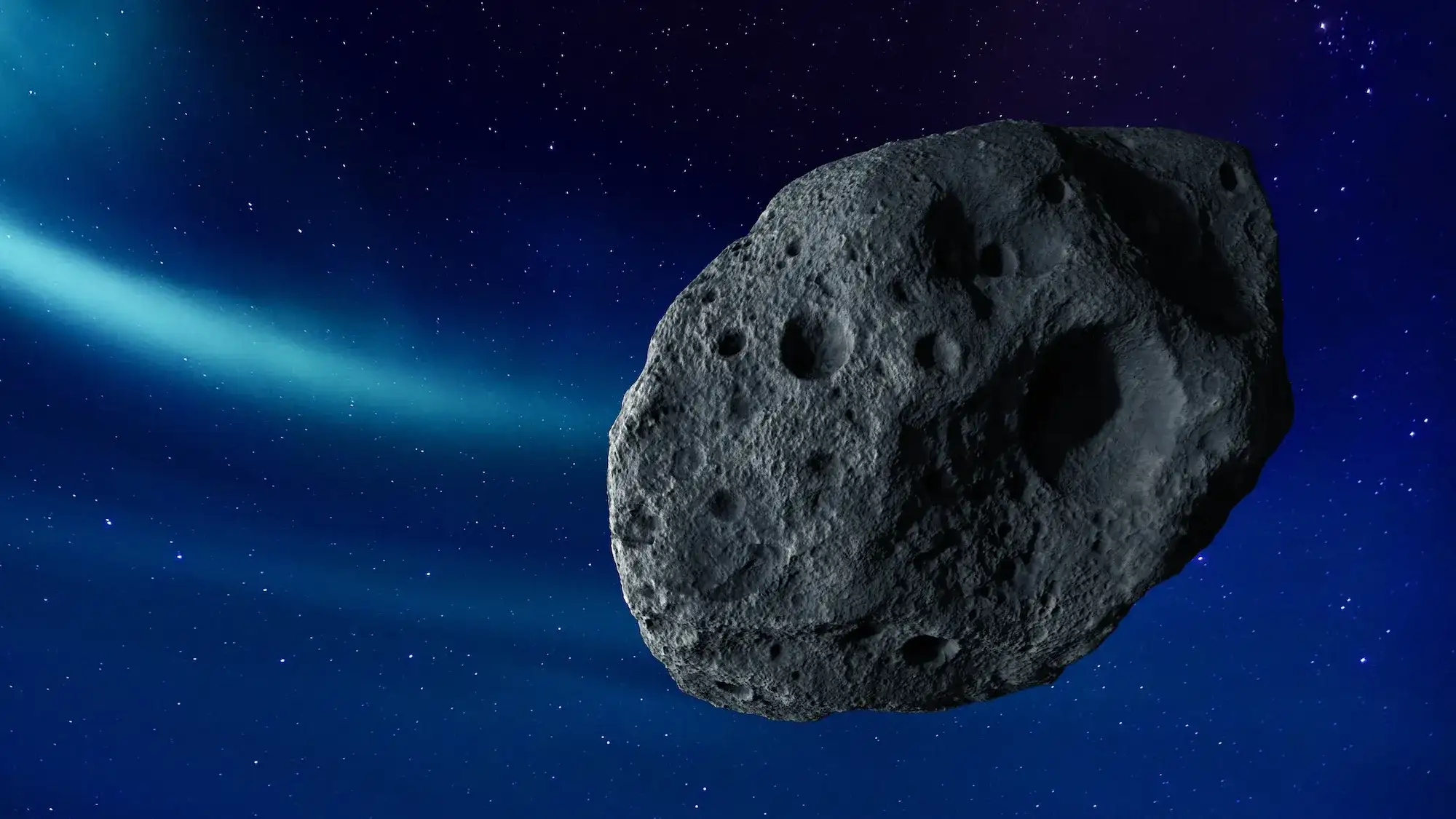
A 1-km-wide asteroid 1997 NC1 is zooming past Earth this Saturday: Is there a risk of impact and how to watch it live

A large asteroid named 1997 NC1 will pass safely near Earth on June 27, 2026 , giving astronomers a rare chance to study a massive space rock without any threat to our planet. The asteroid, estimated to be about 0.6 miles (1 kilometer) wide , is drawing attention because of its size and its classification as a Potentially Hazardous Asteroid .

The upcoming asteroid flyby may sound alarming, especially after memories of the 2013 Chelyabinsk meteor event , when a smaller object exploded above Russia and injured more than 1,000 people. But 1997 NC1 will travel far beyond the danger zone, passing Earth at around 1.5 million miles (2.4 million kilometers) — nearly seven times the average distance between Earth and the Moon.

Why is asteroid 1997 NC1 getting so much attention?

Asteroid 1997 NC1 is considered a significant near-Earth object because of its size and orbit. Scientists estimate it is around one kilometer across, making it much larger than many space rocks that regularly pass near Earth.

For comparison, the famous Chelyabinsk meteor that entered Earth’s atmosphere in 2013 was only about 65 feet (20 meters) wide. Despite its smaller size, it exploded high above the ground with tremendous energy, creating a shock wave that damaged buildings and shattered windows across several Russian cities.

The asteroid was discovered by the Near-Earth Asteroid Tracking system at Haleakala, Hawaii. Its upcoming path has been calculated carefully, confirming that it will pass Earth safely. This is exactly why astronomers monitor near-Earth asteroids — not because every object is dangerous, but because knowledge creates protection.

Could a one-kilometer asteroid really threaten Earth?

A near-Earth asteroid does not need to hit our planet to teach us something about cosmic risks. Scientists study these objects because their size determines what could happen in a worst-case scenario. If an asteroid the size of 1997 NC1 were ever on a collision course with Earth, the effects would be dramatically different from the Chelyabinsk meteor.

A one-kilometer asteroid could travel through the atmosphere largely intact and strike the ground at around 20,000 miles per hour (32,000 kilometers per hour) . The impact would release enormous energy, creating a crater several miles wide.

Such an event could flatten structures near the impact site and throw massive amounts of dust and debris into the atmosphere. The material could block sunlight, affect global temperatures, and disrupt agriculture.

However, scientists do not expect 1997 NC1 to cause any of these effects. Its June 27 approach is a safe flyby. The real lesson is not fear — it is preparation. Planetary defense programs exist because early detection provides options.

How will scientists observe the asteroid during its flyby?

Although 1997 NC1 will pass relatively close by astronomical standards, it will not appear as a bright streak across the night sky. Unlike a shooting star, the asteroid will look like a faint moving point of light. Observers would need a telescope with an aperture of about 6 inches (15 centimeters) or larger to spot it.

The asteroid will move through space at nearly 20,000 miles per hour , but because space is enormous, its motion will appear slow. Amateur astronomers may notice its position changing against distant stars over several minutes.

The best viewing opportunities will be around June 26, 27, and 28 , when telescope users can track its movement. These observations help scientists understand the population of near-Earth asteroids and improve future tracking methods.

FAQs:

What makes an asteroid become a “near-Earth object”?

A near-Earth object (NEO) is a space rock whose orbit brings it close to Earth’s path around the Sun. It does not mean the object is coming toward Earth or will hit the planet. Scientists track these objects because their changing orbits can reveal important information about future movements.

How do scientists predict where an asteroid will go?

Astronomers use repeated observations from telescopes around the world to calculate an asteroid’s orbit. They measure its position, speed, and direction over time, then use computer models to predict where it will travel years or even centuries into the future.

Are most asteroids dangerous to Earth?

No. The solar system contains millions of asteroids, but most are either located far away or follow stable paths. Only a small number cross Earth’s orbital neighborhood closely enough to require detailed monitoring.

What is planetary defense and how does it work?

Planetary defense is the global effort to discover, track, and study objects that could potentially threaten Earth. It involves telescope surveys, orbit calculations, international cooperation, and technologies designed to change an asteroid’s path if needed.

Why are asteroid samples important for science?

Asteroids are considered time capsules from the early solar system. Studying their materials helps scientists understand how planets formed, where Earth’s water may have come from, and what conditions existed billions of years ago.

Sign up to read this article
Read news from 100's of titles, curated specifically for you.
Already a member? Sign in here
Related Stories
Top stories on inkl right now
One subscription that gives you access to news from hundreds of sites
Already a member? Sign in here
Our Picks
Fourteen days free
Download the app
One app. One membership.
100+ trusted global sources.