
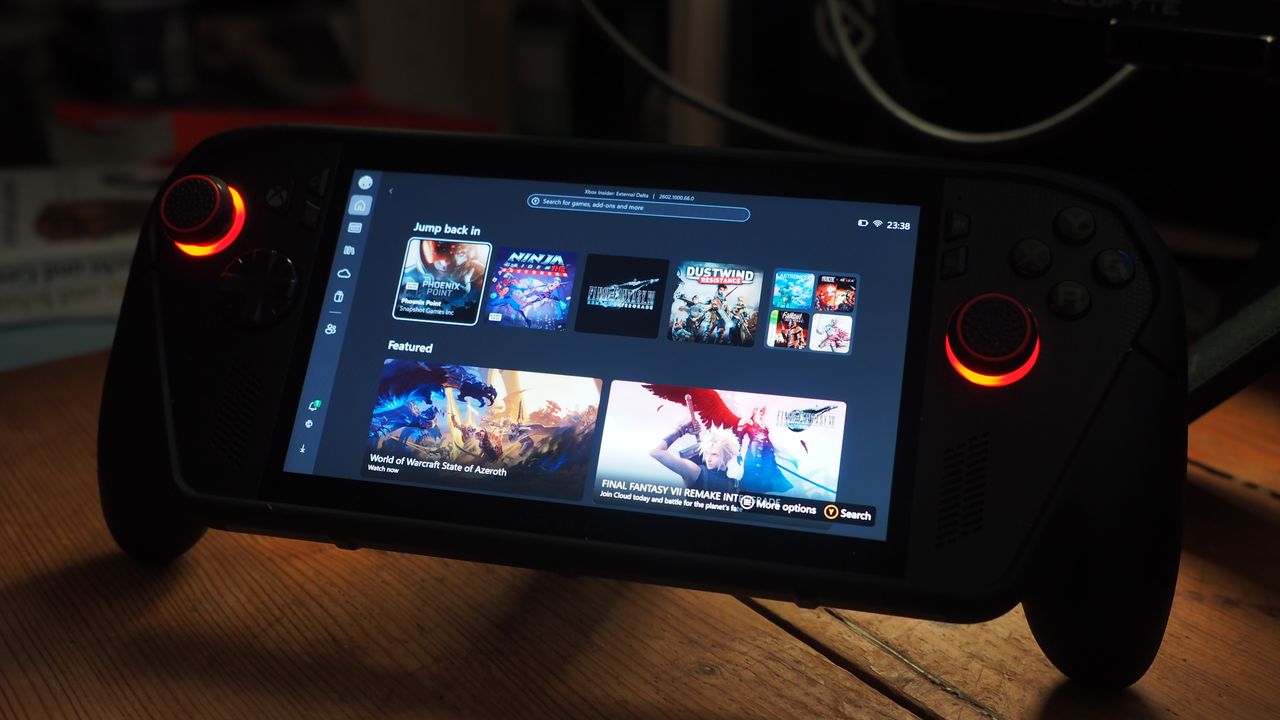
The next Xbox is a PC, and for good reason.
Per the latest GDC "State of the Game Industry" survey (via TheGameBusiness), game developers from across the world detailed their hopes and dreams for the future of the business.

It's no secret that the game industry is stressed. Overall user growth is relatively flat. Revenue has climbed solely by price gouging existing users and finding additional revenue streams. Console manufacturers saw a historically weak holiday period, with Xbox itself seeing near free-fall hardware declines quarter over quarter.
Everything has been blamed, from evolving user behavior, TikTok and addictive algorithms soaking up free time, and consumer confidence enhancing cheaper experiences, such as free-to-play games. Games like Roblox and Fortnite have continued to utterly dominate playtime hours, vacuuming up growth opportunities for traditional platforms.
The survey offered some insights into where developers are prioritizing their efforts to that end, and it seems Windows, namely Steam, is winning out.
This is why Microsoft is essentially turning the next-generation Xbox into a PC. https://t.co/jCl6yb2zEM pic.twitter.com/P1JeNNXJlHJanuary 29, 2026
Year-over-year, Xbox saw the steepest declines in interest, with only 20% seeking to build games for the Xbox platform, down from 34% last year. PlayStation held steady at 39%, and PC maintained its 80% surge from last year.
The survey is a bit odd, in a way, given that the Xbox Ally was its own category at 7%, despite the fact that it is literally a PC and doesn't necessarily require any specific targeting beyond gamepad support. In any case, Xbox Cloud Gaming managed to nab 5% of developer interest, but the big winner was the Steam Deck, in at 40%.
The survey records opinions of over 2,000 game industry professionals from around the world, and doesn't necessarily reflect the on-ground reality of per platform support. But what it does infer, for me, is just how much easier building games for Steam is than it is for console.
The Xbox figures aside, the idea that 60% of game devs apparently aren't interested in PlayStation 5 — the biggest platform on Earth — doesn't make a ton of sense to me. What it illustrates more is the platform barriers potentially developers face when building for the big three, over Steam.
In a recent interview we conducted with New Blood Interactive, they remarked on how easy it is to publish and set up sales events on Steam over Xbox, PlayStation, and Nintendo. The fact that developers are just as interested in the Steam Deck as they are in the PS5, despite the PS5's absolutely mammoth install base, certainly reflects that sentiment to me.
But this is exactly why Xbox's next-gen strategy is critical. The next Xbox is a PC, and the publishing platform will become more PC like along with it.
With core gamers migrating to Steam at a steady cadence, Microsoft too wants to bring more of its experiences to Windows and Steam alike. I've heard some heavy-hitting Xbox first-party experiences, presently not on Steam, will show up there in the coming months.

The next Xbox will simply be an OEM PC akin to a Razer laptop or the Lenovo Legion Go. It'll be full Windows, albeit with backward compatibility for the Xbox console ecosystem. Any content gap that exists on Xbox today or in the future, as a result of surveys like the above, won't matter long term. Xbox next-gen owners will get everything, alongside a full choice of storefront.
What does worry me about the survey is the inference of developer perception of the Xbox ecosystem. Developers are human, and Microsoft is an incredibly unpopular company right now — and that sentiment is likely being reflected in these results. Money can only go so far.
UPDATE: On that point, browsing the full survey itself, you are greeted by this chart, which shows how developers are actually engaging with platforms in the real world. Xbox is near neck-and-neck with PlayStation in reality. At the very least, if you're building a game for PlayStation, porting it to Xbox isn't exactly a huge leap — given the spec similarities. Xbox players remain heavily engaged and spendy, despite the negative sentiment in the media and beyond. Sony itself brought Helldivers 2 to Xbox, shedding its PlayStation exclusivity. It's also bringing Marathon to Xbox, which showcases Xbox's on-going relevancy.

Microsoft likely has a lot of work to do to rebuild faith in the Xbox ecosystem, and promote a healthier relationship with developers across both Xbox and Windows, games or not. Xbox's pivot to PC strategy will only work if developers actually like using the platform — and that isn't simply about money and discoverability.
With Game Pass, Microsoft has potentially curated a user base on its Xbox PC platform that doesn't seek out retail purchases. The Xbox PC app today is very, very bad for discoverability, particularly for retail games. It front-loads Xbox Game Pass and its benefits, and buries new releases away in multiple sections. Microsoft needs to do a ton of work in this area, and boost the visibility of games that aren't on Game Pass, while also improving its tagging system and database cataloguing to surface games one might be interested in. I have no idea why the Xbox PC app is telling me to buy games I already own — show me something new and shiny instead.
This only touches on the challenges Xbox is facing with its current and future-facing strategy. I don't really think Xbox has a content problem today by any means, but it is facing a big image and sentiment problem. And that alone might not be sustainable.

Follow Windows Central on Google News to keep our latest news, insights, and features at the top of your feeds!