Get all your news in one place.
100’s of premium titles.
One app.
Start reading
Roll Call
Roll Call
Nathan L. Gonzales

8 takeaways from the Texas, North Carolina, Arkansas primaries

ANALYSIS — And we’re off. Voters in Texas, Arkansas and North Carolina went to the polls on Tuesday, officially kicking off the 2026 midterm elections. Some votes are still being counted and a handful of races are moving to a runoff, but there are a handful of important lessons and takeaways. 

Top Senate race is set

Amidst all of the chatter about the Texas Senate race on the outskirts of the fight for the majority, the nominees are officially set in a race at the core of the battleground: North Carolina. Former Republican National Committee Chairman Michael Whatley will face Democratic former Gov. Roy Cooper in the race to replace GOP Sen. Thom Tillis, who is not seeking reelection. 
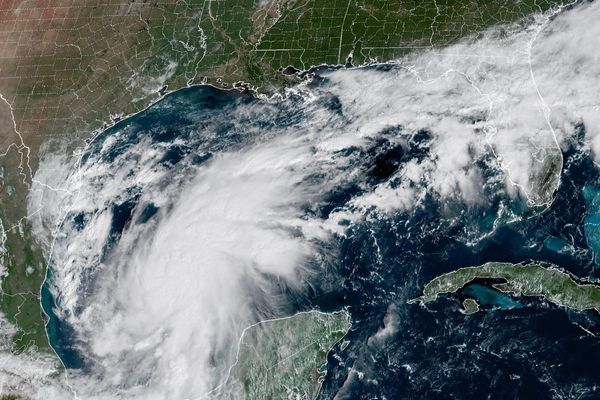
The race is currently rated as a Toss-up by Inside Elections, but it’s a must-win for Democrats if they are going to gain the four seats necessary for a majority. If Democrats don’t win the Tar Heel State, they’ll need to win four of the five following Republican-held states: Alaska, Iowa, Ohio and Texas, all of which are more Republican than North Carolina, and Maine, a more Democratic state but where Susan Collins remains a tough out. President Donald Trump won North Carolina over former Vice President Kamala Harris by 3 points, but it looks like Democrats have a slight advantage in an open seat in a swing state with a popular former statewide officeholder in a national political environment that favors Democrats. If Republicans hold North Carolina in November, it will be a very long night for Democrats. 

Primaries matter?

Both parties treat primaries like the plague. Republicans and Democrats believe primaries are almost always negative, serving as a drain on resources that should be saved for the general election. But time will tell whether Republicans would have been served by a competitive primary in North Carolina rather than the coronation of Whatley. Whatley has never been a candidate before, so the jump to a top battleground Senate race can be significant. A competitive primary would have been an opportunity to hone his skills earlier. But only time will tell whether the lack of a primary will matter. 

Trump watch

Texas GOP Sen. John Cornyn overperformed the pre-primary polls, but 43 percent is still underwhelming for a longtime incumbent. But finishing ahead of state Attorney General Ken Paxton could be enough to convince Trump to endorse him for the runoff. That would boost the senator’s chances in a situation where incumbents typically struggle to dramatically improve their standing. 

Campaigns matter

Texas Democratic Rep. Jasmine Crockett’s loss will likely be attributed to all of the wrong things. Folks will say she’s too liberal, Black or that she’s a woman. In reality, she might have won with a better campaign. State Rep. James Talarico was better at the fundamentals. He raised more money, aired more TV ads and was in the race longer. Crockett got in at the last moment and eschewed traditional ads.

It’s not an anti-incumbent election

State Rep. Steve Toth defeated Rep. Dan Crenshaw in the GOP primary in Texas’ 2nd District, but that doesn’t mean incumbents around the country are on the verge of following suit. Crenshaw was a rare Texas Republican incumbent who did not have Trump’s endorsement, but he was also a partial victim of the Republican redistricting effort. Toth’s legislative district was added to the 2nd while Crenshaw’s Harris County base was dropped. Other incumbents could lose because of age or ideology, but this loss had some unique circumstances.

Preview of chaos?

The confusion over voting and tabulating in Texas’ Dallas County could be an unfortunate preview of November. It doesn’t take widespread confusion to cast doubt on the midterm elections. But a few selected problems and legal challenges in key states with key Senate or Houses could delay the results and continue to cultivate seeds of distrust in the electoral system. None of that is healthy for either party or the country. 

Practice, patience

Tuesday was the first reminder about the need to wait for votes to be counted. Cornyn jumped out to an early lead, only for that lead to erode as more votes were counted. Votes counted first count just as much as votes counted last. It’s OK to wait for a critical mass of votes to be counted before declaring winners.

Democratic momentum remains

Democrat Alex Holladay defeated Republican Bryan Renshaw In Arkansas’ House District 70 to flip a Republican seat. Even though the seat was held by a Republican, Harris actually finished ahead of Trump by 2 points in 2024. But on Tuesday, the Democratic nominee won by more than 30 points. Yes, it was a race with about 11,000 total votes, but it fits into the larger pattern of Democrats overperforming 2024 results in races all across the country over the last year.

The post 8 takeaways from the Texas, North Carolina, Arkansas primaries appeared first on Roll Call.

Sign up to read this article
Read news from 100’s of titles, curated specifically for you.
Already a member? Sign in here
Related Stories
Top stories on inkl right now
Our Picks
Fourteen days free
Download the app
One app. One membership.
100+ trusted global sources.