
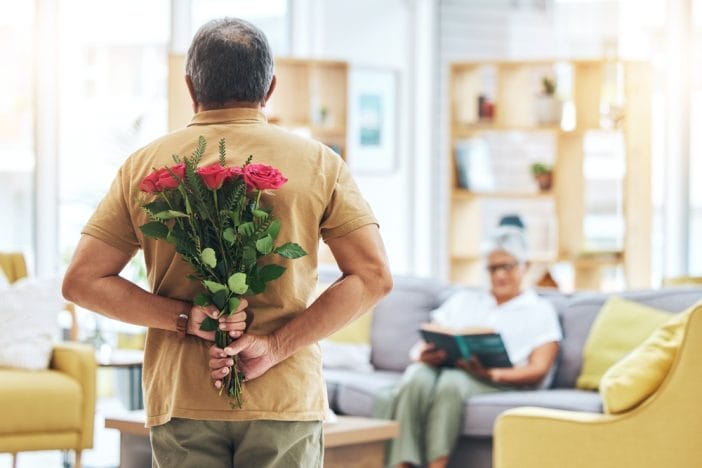
On the surface, grocery store roses feel like a romantic layup. They’re red, they’re flowers, they’re convenient, and they technically check the “romantic gesture” box. But if you’ve ever handed your wife a plastic-wrapped bouquet from the produce aisle and gotten a polite smile instead of that heart-melting reaction you were hoping for, you already know something’s off.
This isn’t about being ungrateful or picky—it’s about meaning, effort, and emotional math. Romance isn’t measured by petals per stem; it’s measured by thought, intention, and the feeling of being deeply understood.

1. The Roses Feel Last-Minute, Even If You Didn’t Mean Them That Way
Grocery store flowers live in the same mental category as batteries, paper towels, and frozen pizza: necessities you grab because you’re already there. Even if you genuinely thought of her and wanted to do something sweet, the location does psychological damage to the gesture. It doesn’t feel planned, intentional, or meaningful—it feels convenient. Romance thrives on the perception of effort, not efficiency.
When a gift looks like it came from a place designed for bulk purchases and impulse snacks, the emotional signal gets diluted. What she often reads isn’t “he thought of me,” but “he remembered at the last second.”
2. They Look Generic Because They Are Generic
Grocery store roses are mass-produced for mass appeal, which means they’re designed to offend no one and emotionally move almost no one. Same colors, same wrapping, same shape, same presentation, same script every single time. They don’t feel personal because they aren’t personal.
Your wife isn’t a template, so gifts that feel templated don’t land with emotional weight. Romance isn’t about perfection—it’s about specificity. The more a gift feels customized to who she is, the more powerful it becomes.
3. The Quality Often Doesn’t Match the Intention
Here’s the unromantic truth: grocery store flowers often have shorter vase lives, weaker stems, and inconsistent freshness due to long transport chains and storage conditions. That means your “romantic” gift can look tired in two days, which quietly undermines the gesture.
Flowers are symbolic, and symbols matter. When they wilt fast, it unintentionally sends the message that the effort was temporary, too. A gift that physically fades quickly tends to emotionally fade just as fast.
4. Roses Can Feel Like Default Romance, Not Chosen Romance
Roses are the cultural default for love, which is exactly why they sometimes feel lazy. They’re the Hallmark card of flowers—universally recognized, but rarely surprising. When romance becomes predictable, it loses emotional electricity.
Thoughtful love feels chosen, not inherited from tradition. Sometimes the problem isn’t the flower—it’s the lack of creativity behind the choice.
5. The Wrapping Screams “Corporate,” Not “Care”
That crinkly plastic wrap, barcode sticker, and promotional tag don’t exactly whisper intimacy. Presentation matters more than people admit, especially in emotional gifts. Visual language communicates effort before words ever do.
When something looks commercial, it feels transactional instead of sentimental. Romance thrives in softness, intention, and detail.
6. It Signals Convenience Over Consideration
Even if your heart was in the right place, grocery store roses often communicate speed instead of thoughtfulness. Convenience gifts feel efficient, not affectionate. Love gestures aren’t judged by practicality—they’re judged by emotional resonance.
The more friction you remove from the process, the less meaningful the outcome often feels. Sometimes effort itself is the romance.
7. They Ignore Her Actual Preferences
Many women don’t even like roses that much. Some prefer wildflowers, tulips, peonies, orchids, plants, or even non-floral gifts altogether. Romance that doesn’t align with personal taste feels disconnected.
Loving someone well means knowing them well. A gift that reflects her preferences always beats a gift that follows tradition.
8. It Feels Like a Symbol Without a Story
Great gifts carry narrative. “I saw these and thought of you” beats “I bought these.” Meaning lives in the story behind the gesture. Grocery store roses usually don’t have one. They’re objects, not experiences. An emotional connection is built through experiences, not transactions.
The Real Romance Rule Most People Miss
Romance isn’t about the object—it’s about the emotional message attached to it. Flowers, gifts, surprises, and gestures are just delivery systems. What matters is what they communicate. Do they say, “I see you” or “I know you”? Do they say, “You matter to me in specific ways”? When the answer is yes, almost anything becomes romantic. When the answer is no, even roses fall flat.
If you want a better reaction, try things like a handwritten note, her favorite snack unexpectedly showing up, a planned coffee date, a flower she actually loves, a memory tied to a place, or a small surprise that shows you were paying attention.

The Upgrade That Actually Changes Everything
The real upgrade isn’t where you buy the gift—it’s how you think about the gesture. When you shift from “what’s a romantic thing to give?” to “what would make her feel seen, appreciated, and understood?” everything changes.
Romance becomes personal instead of performative. It becomes connective instead of symbolic. It becomes about emotional intimacy, not visual cues. And that’s when gifts stop feeling like gestures and start feeling like love.
What’s one romantic gesture that’s meant the most to your partner—was it something big, or something small and deeply personal? Please, share your love stories in the comments section below.
You May Also Like…
10 Winter Relationship Habits That Keep Couples Close
8 Relationship Habits Men Don’t Realize Push Partners Away
6 Traits That Predict Relationship Resilience
7 Relationship Patterns That Quietly Kill Attraction
10 Things Good Husbands Stop Doing After 60 (But Shouldn’t)
NEVER Give Your Wife These 10 Things For Christmas (No Matter How Long You’ve Been Together)
The post 8 Reasons Your Wife Hates Roses From The Grocery Store appeared first on Clever Dude Personal Finance & Money.