
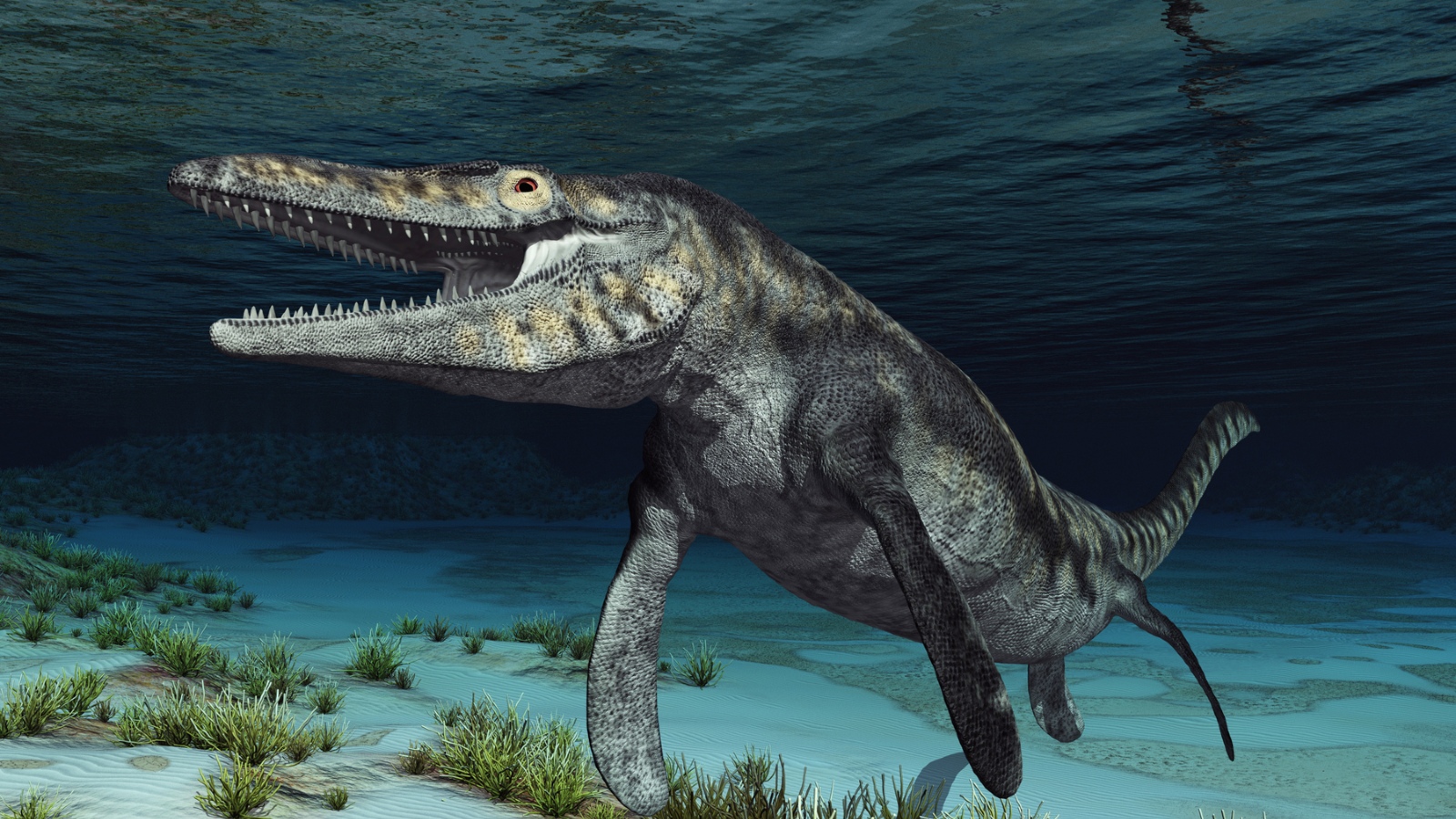
Scientists in Japan have unearthed the near-complete remains of an ancient, great white shark-size sea monster that likely terrorized the ancient oceans it used to inhabit. The prehistoric predator, which researchers have named "blue dragon," has an unusual body plan that sets it apart from its extinct relatives and is unlike any living creature.
The exceptional fossils, which are around 72 million years old, were discovered along the Aridagawa River in Wakayama Prefecture on Honshu island. They belong to a never-before-seen species of mosasaur — a group of air-breathing aquatic reptiles that were apex marine predators during the Cretaceous period (145 million to 66 million years ago). The "astounding" remains are the most complete mosasaur fossils ever uncovered in Japan and the northwest Pacific, researchers wrote in a statement.