
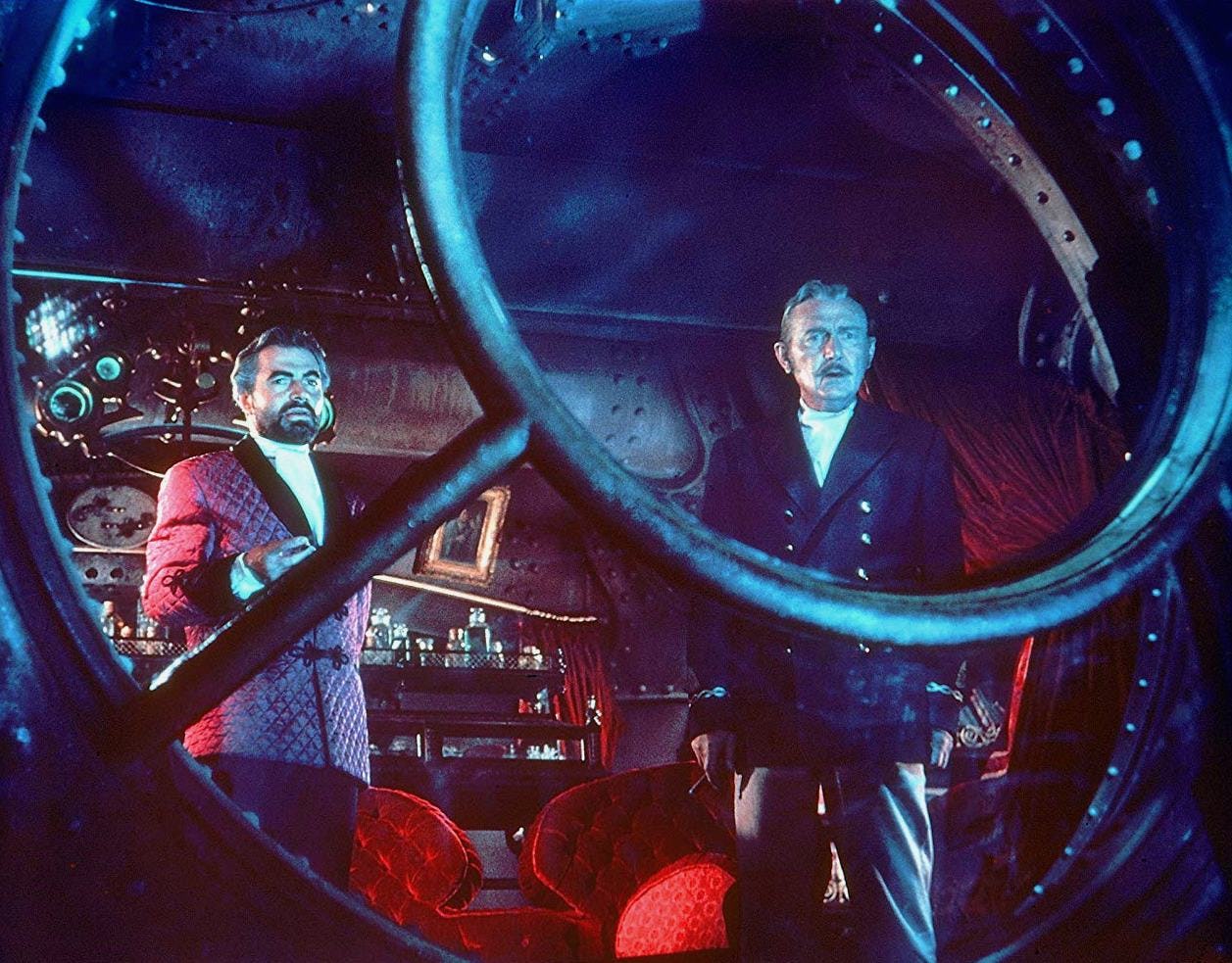
The decade stretching from the early 1950s to the start of the ‘60s was arguably the first golden age of science fiction cinema, as a quick look at even just a few of the titles released then — The Thing from Another World, The Day the Earth Stood Still, Forbidden Planet — can attest. It was also a good time for the works of two authors who’ve both been cited as “fathers” of science fiction: England’s H.G. Wells and France’s Jules Verne.
While stories from both men had been adapted to the screen almost since cinema was born — 1902’s A Trip to the Moon was inspired by Verne’s novel From the Earth to the Moon — they came into their own in the ‘50s and early ‘60s. Wells was represented by George Pal’s classic productions of The War of the Worlds (1953) and The Time Machine (1960), while seven films based on Verne’s work appeared during the same period, most notably 1954’s 20,000 Leagues Under the Sea, now celebrating its 70th anniversary, and 1959’s Journey to the Center of the Earth, just reaching its 65th birthday.













