
Get all your news in one place.
100’s of premium titles.
One app.
Start reading
Homes & Gardens
Homes & Gardens
Emily Moorman

7 Soothing Colors Designers Swear Will Instantly Transform Your Home Into a Calming Sanctuary

Calming bedroom.

Color has the potential to shape not just how a space looks, but how it feels, and for many rooms, from bedrooms to cozy living rooms, creating a soothing, restful space through is the goal. But what are the best colors to achieve a sanctuary space?

According to experts, it's not just about the color itself, but its subtle undertones and how it is used in a room. 'A sanctuary needs softness, which often comes from warmth in the undertone and reduced contrast between walls, ceilings, and woodwork,' says Tash Bradley, Color Psychologist and Director of Interior Design at paint brand Lick.

'A sanctuary isn’t created by playing it safe,' she adds. 'It’s created by designing a palette that genuinely allows your nervous system to soften.' From warming neutrals to soft greens, earthy pinks to muted blues, designers reveal below their favorite sanctuary-inspired colors to give you some stylish, yet soothing, room color ideas.

1. Off-White

The off-white walls set a calming backdrop in this living room, while interest is added through the furniture and artwork. (Image credit: Aaron Leitz. Design: Jessica Helgerson Interior Design)

Decorating with neutrals is a timeless way to create a calming space, whether that be in a living room, kitchen, or bedroom. Offering a blank canvas for furniture, textiles, and artwork to build upon, light neutrals are favorites among designers.

In this living room, the Portland-based Designer Jessica Helgerson opted for Farrow & Ball's Cornforth White on the walls, a soft off-white paint that sets a tranquil feel. 'We chose it because we were looking for something that was essentially white to be extremely light with all the beautiful light coming in from the windows,' explains Jessica.

'Cool colors are calming, and a lack of complementary contrast is calming, so this quiet, soft, tone-on-tone palette reflects the colors that the clients love as well as their goal of creating a calming space to wind down in, from their incredibly busy New York lives.'

2. Pale Green

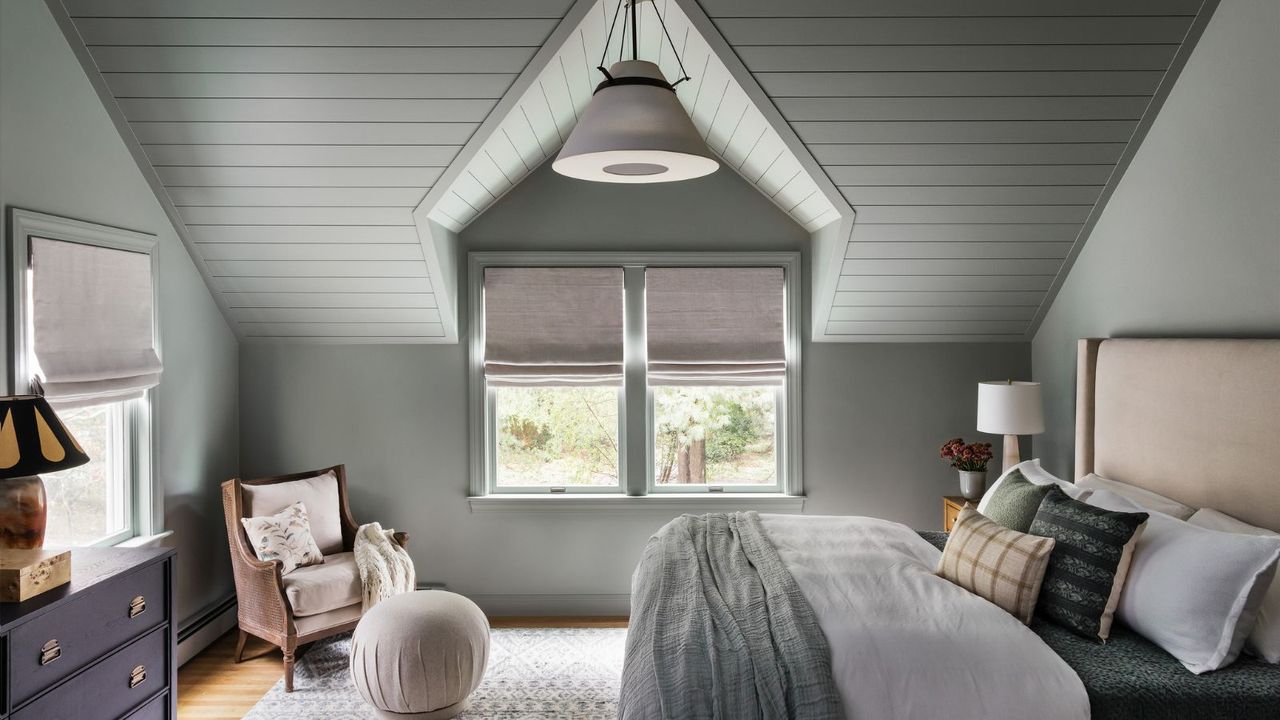
The use of color-drenching with this soft shade of green enhances the room's restful feel by avoiding harsh contrast. (Image credit: Joyelle West. Design: Opaline Interiors)

Green room ideas are perhaps the most fitting color choice when creating a sanctuary space, and designers are especially drawn to light tones. 'Pale green feels calming and relaxing because it reminds us of the natural world,' says the designer Gabrielle Bove of Massachusetts-based design studio Opaline Interiors. 'Its tone isn’t too saturated, so it is easy for the eye to take in.'

In this relaxing bedroom, Sherwin-Williams' Oyster Bay was used to color-drench the space, a soft and cool green paint that reads almost as a neutral. 'This home is surrounded by mature trees and overlooks a pond, so we enveloped this room in Oyster Bay to make it feel like an extension of the outdoors,' says Gabrielle. 'The hue is soft and calming and creates a serene space that feels as if you’re in a treehouse. The palette also calms the angles of the room's ceiling and creates a space that truly cocoons you.'

3. Butter Yellow

The butter yellow wallpaper is Driftwood by Phillip Jeffries, which adds a tactile element to the room. (Image credit: Meghan Balcom. Design: Jessica Hobson Design)

While butter yellow is a fun and on-trend hue, mellow and not-too-saturated versions can be a great way to create a calming space, especially if you also want to add warmth to a room.

'Butter yellow is a naturally calming color that works almost as a neutral,' says the New Jersey Designer Jessica Hobson. 'It exudes a calming, understated happiness which can be a great backdrop to any room.'

In this dining room, Jessica opted for a butter yellow wallpaper, which adds texture as well as a hint of color. 'When using this color on the walls, I love picking a texture or subtle pattern to add interest while still keeping it all tonal and creating an overall soothing vibe,' she adds. 'This pale color can add a serene warmth to any space.'

4. Muted Blue

Soothing blue walls wrap this library room, along with a blue sofa to create a cohesive, calming sanctuary. (Image credit: Peak Visuals. Design: Susan Sutter Interiors)

Blue is widely known as one of the most tranquil colors, and the right shade can be used boldly while still feeling soothing, much like Benjamin Moore's Amsterdam. 'This exact shade creates a serene, enveloping backdrop that feels both timeless and restful,' says the Arlington, Virginia-based Designer Susan Sutter, who used this blue paint in this home library.

'We saturated the walls, trim, and shelving to offset the home's 10-foot ceilings and make the large space feel cozy,' adds Susan. 'The blue offers a calm and serene feel, mirroring nature's sky and ocean, perfect for a busy family's retreat space.'

5. Gray-Blue

The wallpaper in this bedroom is a soothing shade of gray-blue, adding depth while setting a calm backdrop for the more colorful decor accents. (Image credit: Kirsten Francis. Design: Studio Olivine)

Decorating with gray is another way to channel a neutral scheme that feels soothing and restful. But rather than drab grays that fall flat, those with blue undertones can offer a much more welcoming look. 'I find blue with a hint of gray to be a very calming color,' says the NYC Designer Hannah Blumenthal of Studio Olivine.

'I love the calming hues of the wallpaper and curtains in this bedroom,' adds Hannah. 'Even though the accent colors are more active and colorful, I think the blue-gray hues really ground the space and keep it very dreamy.'

Paired with warm wood tones throughout the space, the gray-blue feels balanced. 'Having these simple building blocks in calming, natural tones creates a sense of serenity and cohesiveness in the space,' says Hannah.

6. Earthy Pink

Grounding shades of pink, such as Farrow & Ball's Dead Salmon, adds warmth and a comforting feel to rooms. (Image credit: Molly Culver. Design: Greer Interior Design)

If you're drawn to warm color schemes, earthy and plaster pinks are an on-trend way to go. 'When a soft, warm hue like Farrow & Ball's Dead Salmon is used to color-drench a room, it creates a serene, calming space that feels relaxing during the day and cozy and romantic in the evenings,' says Jennifer Greer Hartmann of the Austin-based design studio Greer Interior Design.

'The homeowner's garden is full of plum colored shrubs and flowers, and this just felt like the right color to complement those hues and welcome you at the front door,' she adds. 'Dead Salmon is a color that doesn’t overwhelm the eye but also feels interesting, warm, and soothing. It can also morph from a fresh daytime color (which was important to us), yet still feel cozy and inviting at night. It’s kind of the ideal soothing color.'

7. Soft Teal

Teal drapery adds depth and richness to this neutral bedroom, while extending the tranquil feel. (Image credit: Becca Lea Photography. Design: Saab Studios)

Teal combines two of the most calming colors: blue and green, so it's no surprise that it's a favorite shade to decorate with when creating calming, sanctuary-inspired spaces. In this bedroom, teal was added through the drapery against a palette of timeless neutrals.

'Soft blue-green drapery instantly lowers the volume in this bedroom,' says the Dallas-based Designer Lauren Saab of Saab Studios. 'This isn’t a sharp coastal blue or a trendy sage. It’s a hushed heritage hue that absorbs light instead of reflecting it, which creates a cocooning effect as soon as you enter the space. Pairing that muted blue-green with warm walnut and brass keeps the room rooted in warmth rather than feeling chilly. Many believe calming colors need to be pale and washed out, but calm actually comes from tonal richness and subtle saturation. When color feels anchored in natural materials, it settles the nervous system instead of stimulating it.'


When selecting colors for a sanctuary space, you should start with the hues that you're naturally most drawn to. By choosing earthy, soft variations of typically bolder colors, your space will feel restful and cocooning rather than stimulating.

That said, experts warn that you may want to steer clear of certain shades when creating a soothing space. 'Colors that are very high contrast, overly cool and stark, or heavily saturated can keep the brain slightly switched on,' says Tash Bradley. 'I’d also be cautious with very stark, blue-based whites. In certain lights, they can feel clinical rather than comforting.'

Sign up to read this article
Read news from 100’s of titles, curated specifically for you.
Already a member? Sign in here
Related Stories
Top stories on inkl right now
One subscription that gives you access to news from hundreds of sites
Already a member? Sign in here
Our Picks
Fourteen days free
Download the app
One app. One membership.
100+ trusted global sources.