
Get all your news in one place.
100’s of premium titles.
One app.
Start reading
Homes & Gardens
Homes & Gardens
Sarah Wilson

7 Expert-Recommended Design Ideas for Beautiful Winter Gardens in Warm Climates – to Make the Most of Your Planting Choices in Milder Conditions

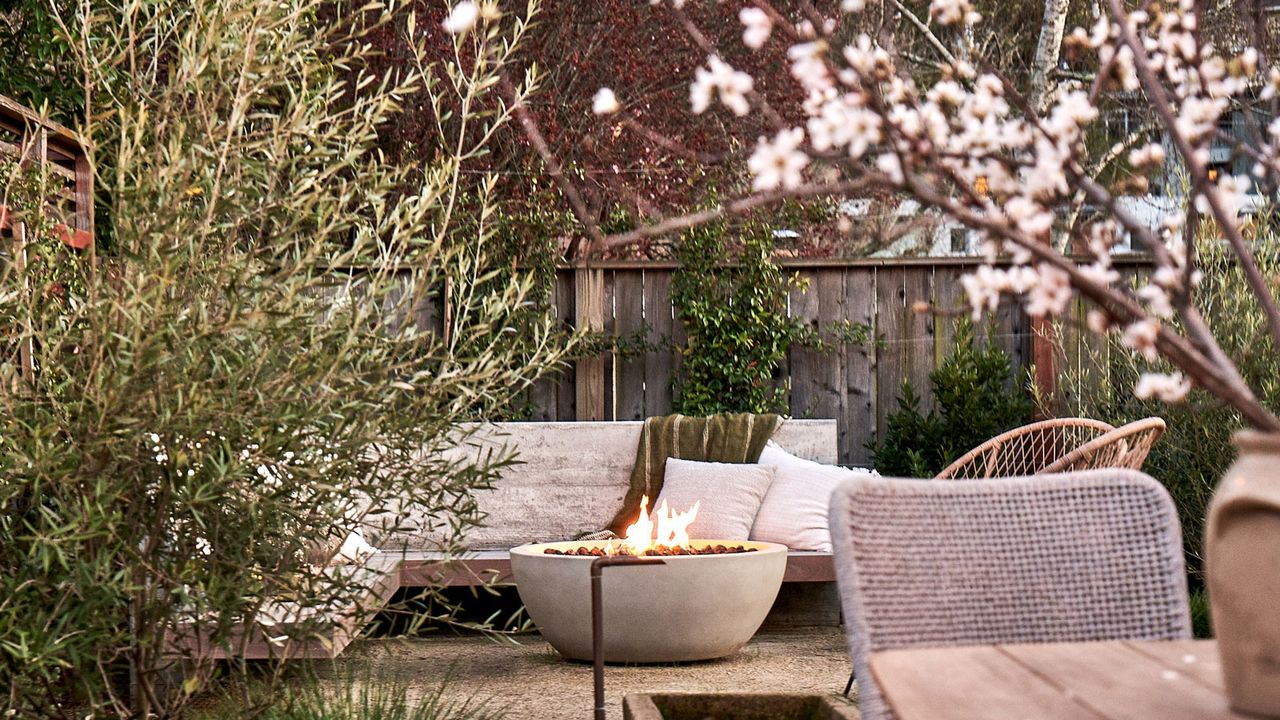
Fire pit with garden sofa, cushions and throws, shrubs and tree with blossom, and a table and chair.

If you live in a warm climate, you'll naturally have more and different planting options to enjoy in a winter garden. As ever, the temptation is to add more flowering plants. While always lovely, there is so much more you can do to create a full, but still seasonal, mix.

Some of the best design ideas for beautiful winter gardens in warm climates include interesting foliage, bark and berries. Or perhaps there is now a gap for a pretty evergreen shrub or a small shapely tree that will add year-round benefits not just enhance the winter garden.

With the slide into cooler weather it's inevitable that the view of your garden will change. This means there's never been a better time to think about the best winter garden ideas to make a space you can enjoy whatever the season. If temperatures do dip make sure there is a view to be enjoyed from inside the house too when you're looking out, just in case you feel inclined to stay indoors.

Enjoy a fire pit on cooler days in the winter garden (Image credit: Yardzen)

7 design ideas for winter gardens in warm climates

The good news is the best design ideas for beautiful winter gardens in warm climates are usually very achievable.

We asked some of our favorite experts to share their ideas on planning a winter garden if you live in the Southwest and this is what they had to say.

1. Integrate evergreen plants into each planting area

Shapely evergreens always add a strong structural note to planting design especially in winter (Image credit: Yardzen)

Clever use of evergreens will keep your planting design interesting right through the seasons so be sure to include them when you're planning a winter garden. A go-to in cooler climates, evergreens add structure and interest for winter gardens in warm climates too.

'Well-sited evergreens offer a structural backbone of foliage, and help you avoid awkward empty spots,' says Yardzen design director Kevin Lenhart. 'When you place evergreens, consider how they will look next to blooming perennial and deciduous species, and how they will look on their own when other plants are dormant.'

Perennial and annual plants die back even in warm climates so when this happens make sure you have plenty of the best evergreen shrubs to add a touch of boldness, either using clipped topiary or letting the shrubs grow in a more unstructured fashion if you prefer a more natural look.

Find a selection of evergreen shrubs to choose from here at Nature Hills to help your planting design ideas take shape.

2. Aim for a continuous display of color

Cyclamen make a great addition to the garden in winter and add color for months (Image credit: Hoo House Nursery)

'Here in the southern United States we're fortunate to enjoy multiple growing seasons, so we can grow an array of plants nearly year-round,' says gardening expert Rhonda Kaiser, author of The Vintage Farmhouse Garden. 'The warm climate and regular rainfall in the South enables us to grow beautiful blooms for many months.'

By the end of the fall, when certain plants have stopped growing, you can simply replace them with vibrant options that last throughout the winter, enhancing gardens in warm climates for months.

'Having a continuous display of color ensures that your garden maintains its beauty and interest year-round,' says Rhonda. 'Winter is the perfect time to plant cyclamen, poinsettias and paperwhites if you live in a warm climate like mine.'

Find ivy-leaved 'Hederifolium' cyclamen here at Amazon and our favorite Ziva paperwhite narcissus bulbs here, also at Amazon, to increase your selection of flowering plants in the winter garden.

'To enhance the garden's overall appeal I combine annuals with perennials,' adds Rhonda. 'Some of my favorite perennials include wisteria, foxtail ferns, Indian hawthorn and native grasses.'

3. Choose plants with silver or blue foliage

Blue fescue is an ornamental grass that shines in the winter garden (Image credit: Irina274/Getty Images)

Plants that retain their blue or silver color during the colder months are a great asset in winter gardens as they add a striking contrast to the planting design. They look good paired with evergreen plants or those with striking winter color. Another plus is that their multi-season beauty continues throughout the year.

'In warm climates, there are many grasses and finely-textured shrubs and perennials with silver to pale blue foliage that makes for a striking accent in any season,' says Kevin Lenhart. 'Among many excellent options are Blue Fescue, any number of sagebrush (Artemisia) cultivars, lavender cotton (Santolina), and 'Canyon Prince' wild rye grass.'

Here at Homes & Gardens we also like Mojave sage and Teucrium 'Harlequin's Silver', which are both versatile landscaping plants with silver foliage, while 'Turquoise Tails' blue sedum is another great choice if you're looking for blue foliage.

4. Add scented plants for an extra dimension

Easy to grow sweet alyssum is a wonderful fragrant option for winter gardens in warm climates (Image credit: Elizabeth Fernandez/Getty Images)

A combination of fragrance and flowers will elevate any winter garden aesthetic. Scented flowers in the garden are wonderful at any time of year but their appeal is elevated when the garden doesn't have so much on offer.

Although usually associated with spring and summer, there are plenty of options for winter flowers for scent in the colder months too, especially in warm climates.

'The winter season holds a special place in my heart,' says Rhonda Kaiser. 'This is the time when I plant sweet alyssum. This delicate flower with its tiny clustered blooms always reminds me of a light dusting of snow, a rare and magical site in the southern region. Its crisp white appearance brings a touch of winter wonder to the garden.'

Planted along walkways, sweet alyssum creates a welcoming fragrant path that invites you into the garden. 'Not only does it add visual interest and texture to the landscape but it's subtle honey-like scent also fills the air, making time spent outdoors even more enjoyable. This cascading beauty truly transforms the garden into a tranquil winter scene.'

Find sweet alyssum plants here at Walmart if you would like to add these beauties to your winter planting design.

5. Pick plants with interesting bark and berries

Vibrant red winter dogwood stems (Cornus) are set off perfectly by the gold and yellow foliage of a Prunus incisa (Fuji cherry tree) (Image credit: Jacky Parker Photography/GettyImages)

Think beyond flowers and choose plants that have other, more unusual, features. Interesting foliage, colored stems, and shrubs with winter berries can be used to create key focalpoints as part of your design ideas for beautiful winter gardens in warm climates. Also consider trees with unusual bark as a wonderful alternative.

Winter highlights include foliage in every shade from pale yellow right through to deep purple, while stems and branches range from red and orange to gray and plum. Clusters of berries always add an eye-catching element to the display, especially if they make a dramatic statement, as is the case with, for example, purple beautyberry.

'Plants can also offer winter interest through attractive bark, colorful branching, sculptural form, or winter fruit,' says Kevin Lenhart. 'These principles can absolutely be utilized in a warm-climate winter garden.'

Kevin suggests choosing succulents too, like agave and aloe, that offer sculptural form year round at a wide range of scales. 'Red twig dogwood is another classic for winter interest, while toyon [a perennial shrub native to Coastal California] is a great choice for larger properties, and has chunky clusters of attractive winter fruit.'

6. Introduce small trees to your garden design ideas

Imagine a shot of deep pink in your winter garden design (Image credit: A LaRue/Alamy Stock Photos)

Smaller-scale trees are very effective in residential landscapes, and plenty of them make great design ideas for beautiful winter gardens in warm climates.

A flowering cherry tree is one of the best trees for small gardens in winter as many have interesting peeling bark that's on display once the leaves have fallen.

There are plenty of other varieties of small tree that will add winter interest in warmer areas. 'The Western (Cercis occidentalis) and Eastern Redbud (Cercis canadensis) both have magenta-pink bare branch blossoms in late winter/early spring, are widely available, easy to grow, tolerate some shade, and tuck nicely into more compact areas,' suggests Kevin Lenhart. 'As natives, they also offer excellent habitat value.'

Kevin is also a fan of manzanitas, another example of California native planting. 'These come in a range of sizes and offer winter flowers and foliage. Larger varieties like ‘Dr Hurd’ and ‘Howard McMinn’ can be trained into beautiful multi-trunked small trees. These are a winter interest slam dunk, offering flowers, foliage, beautiful maroon bark, and graceful form all in one compact plant.'

7. Let your garden relax to keep the design looking good

Let the leaves stay (Image credit: Iiievgeniy/Getty Images)

One of the least glamorous but most important design ideas for beautiful winter gardens in warm climates is to keep your landscape maintained. But it's important to let the space breath a little over winter too, especially if you want to create an eco-friendly garden.

'For generations the standard has been to remove all leaf litter from your yard, but it’s much better ecologically-speaking to leave all that in place, where it provides crucial habitat for a broad range of insects and other fauna, while also insulating and fertilizing to improve soil health,' explains Kevin Lenhart.

'I love designs that reframe fallen leaves, bare-branched plants and the like, things commonly thought of as an aesthetic liability, as something to intentionally present rather than remove.'

If you want to dip your toe into this practice, experiment with leaving leaves in key, intentional areas, like beneath focal trees or as mulch in planting areas. 'Simply maintaining a clean path or hardscape edge and allowing leaves to collect in the adjacent space can create a beautiful contrast,' says Kevin.

You can remove or relocate larger or more unwieldy material like fallen branches or bundled trimmings of herbaceous perennials to less visible parts of your yard, where they can still offer ecological benefits without compromising aesthetics.

If you live in the Southwest why not take a look at our guide to xeriscaping to plan for the summer and check your yard ticks all the boxes for this eco-friendly and water-wise landscaping method for warm climates.

Sign up to read this article
Read news from 100’s of titles, curated specifically for you.
Already a member? Sign in here
Related Stories
Top stories on inkl right now
One subscription that gives you access to news from hundreds of sites
Already a member? Sign in here
Our Picks
Fourteen days free
Download the app
One app. One membership.
100+ trusted global sources.