The fear of falling is real. As we age, balance slips and bones become brittle. A simple stumble can lead to a hip fracture that changes your life forever. But frailty is not inevitable. You can build a body that is resilient, stable, and strong. The secret isn’t running marathons; it is functional movement. These exercises specifically target the muscles that keep you upright and the bones that keep you whole.
The Chair Squat
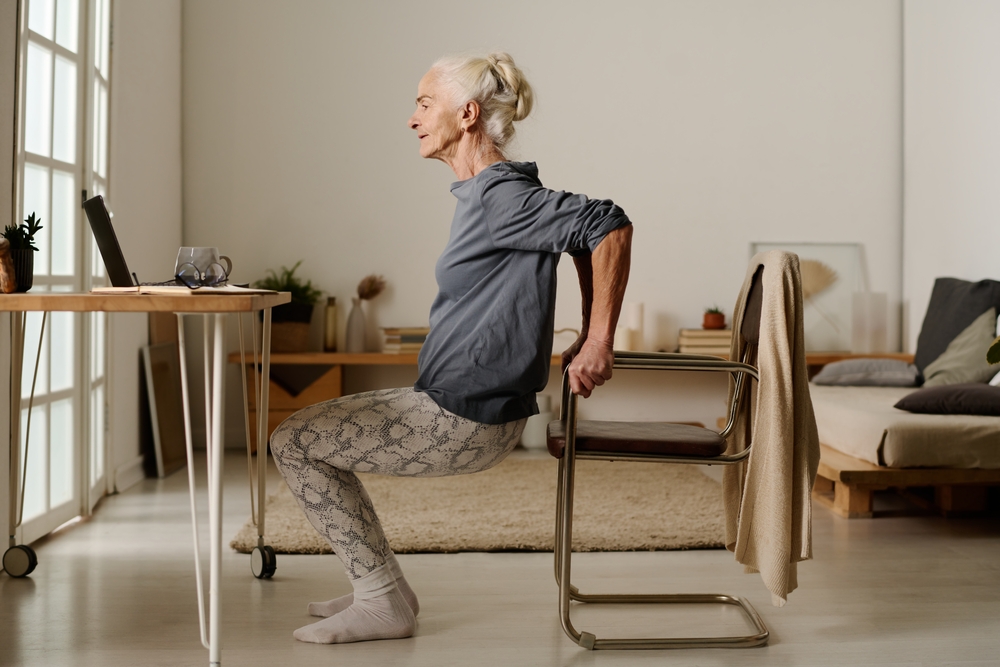
Leg strength is your primary defense against falls. The chair squat builds your quadriceps and glutes safely. Stand in front of a sturdy chair. Lower yourself as if you are going to sit, tap your bottom to the seat, and immediately stand back up. Do not rest. This mimics the most essential daily movement: getting up. Strong legs ensure that if you trip, you have the muscle power to catch yourself.
Single-Leg Stands
Balance is a use-it-or-lose-it skill. This exercise forces your brain and body to communicate. Stand near a counter for safety. Lift one foot off the ground and hold for 10 to 15 seconds. Switch legs. As you improve, try doing it while brushing your teeth. This strengthens the stabilizing muscles around your ankles and hips. Consequently, you become much harder to knock over.
Heel-to-Toe Walk
This is often used as a sobriety test, but it is an excellent neurological drill. Walk in a straight line, placing your heel directly in front of the toes of your other foot. Keep your eyes up, looking forward, not at your feet. This trains your proprioception—your body’s ability to know where it is in space. Improving this sense is critical for navigating uneven sidewalks or cluttered rooms.
Standing Calf Raises
Your calves act as the brakes and gas pedal for your feet. Weak calves lead to shuffling, and shuffling leads to tripping. Stand holding a chair back. Rise up onto your toes, hold for a second, and lower slowly. Repeat this 15 times. Strong calves help you pick your feet up fully when you walk. They also provide the push-off power needed to climb stairs safely.
Side Leg Lifts
Most people only exercise moving forward. However, many falls happen when we move sideways. You need strong hip abductors (outer hips). Stand behind a chair. Lift one leg out to the side, keeping your torso straight. Do not lean. This targets the muscles that stabilize your pelvis. A stable pelvis means a stable gait, drastically reducing the risk of a lateral fall.
The Wall Push-Up
Upper body strength matters too. If you do fall, you need arm strength to break the impact or push yourself up. Floor push-ups can be tough on wrists. Stand arm-length away from a wall. Place your hands flat against it. Lower your chest to the wall and push back. This builds bone density in your wrists and strengthens your chest and shoulders without the strain of gravity.
Step-Ups
Stairs are a common hazard zone. Master them with practice. Use the bottom step of your staircase. Step up with your right foot, bring the left up, then step down. Alternate the leading leg. This builds coordination and power. It specifically trains the muscles to lift the foot high enough to clear obstacles, preventing the dreaded toe-catch trip.
You don’t need a gym membership. You need consistency. Do these exercises three times a week. You aren’t just exercising; you are investing in your independence.
Do you have a favorite exercise that makes you feel steady on your feet? Tell us about it in the comments below!
What to Read Next…
- Dating at 60 Is Terrifying: 9 Brutal Truths About Online Dating After 50
- 8 Foods That Secretly Raise Your Blood Pressure Overnight
- Lifting Your Own Carry-On at 65? You’re Stronger Than 90% of People
- 10 Weirdly Amazing Things About Grocery Shopping in the ‘70s You’ll Wish Came Back
- Why Women Over 50 Refuse To Be “Invisible”
The post 7 Exercises You Must Do After 60 to Prevent Falls and Breaks appeared first on Budget and the Bees.