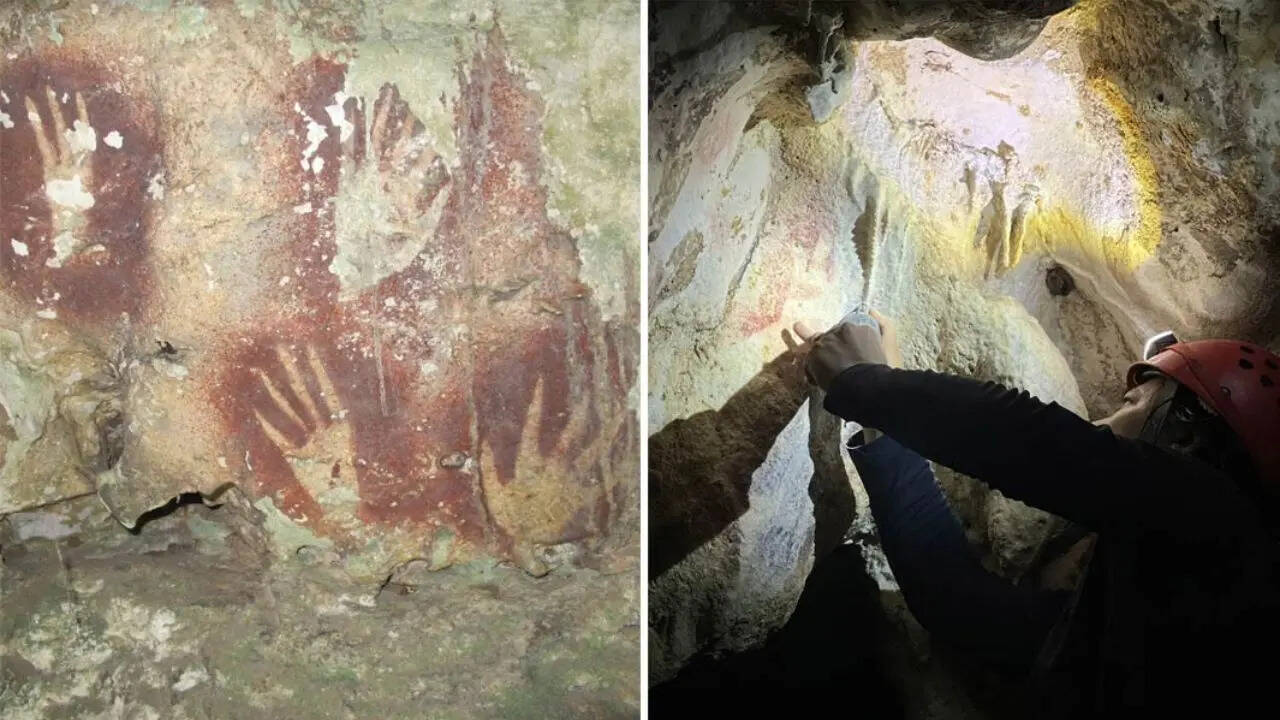
In a limestone cave on Muna Island in southeastern Indonesia, a faint set of markings on stone has shifted quietly through academic circles and into record books. The surface is not dramatic at first glance, just weathered rock with pigment pressed into it in a way that only becomes clear when the light catches it from the right angle. What sits there is a hand stencil, formed tens of thousands of years ago, now placed at the centre of an argument about how early humans were already thinking in abstract terms, symbolic communication, identity expression, and early artistic behaviour long before written language or structured societies emerged.
Get breaking news anytime, anywhere. Download the TOI app now!