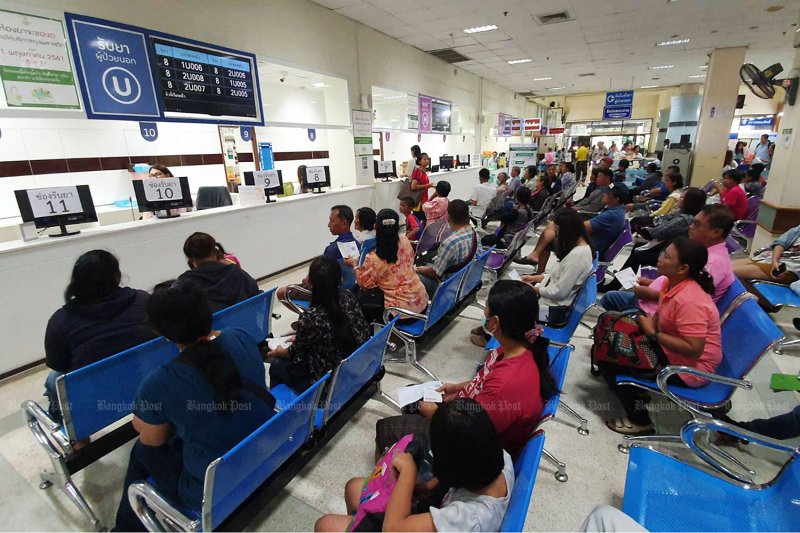
A review of 60 billion baht from the 2025 universal healthcare budget is under way, says Public Health Minister Pattana Promphat, after he questioned whether the money had been properly allocated.
Last week, Mr Pattana ordered a review of the budget allocated to the National Health Security Office (NHSO), which funds the universal healthcare, or gold card, scheme.
He said about 110 billion baht of the 170-billion-baht budget had been transferred to hospitals under the Public Health Ministry, leaving another 60 billion baht requiring further explanation.
The NHSO's finance subcommittee has since reported that the remaining funds were distributed outside the ministry's hospital network, the minister said on Wednesday.
More than 10 billion baht was channelled through Rajavithi Hospital to procure medicines, while about 4 billion baht went to hospitals outside the ministry, including facilities run by state agencies such as the Defence Ministry and the Bangkok Metropolitan Administration. The rest was allocated to registered clinics and private healthcare providers.
Mr Pattana said the allocations must be reviewed to ensure all funded services meet required standards. Any future changes, he added, should be considered by the National Health Security Board. He said every baht of taxpayers' money must be fully traceable and that the NHSO had been instructed on Monday to provide detailed information within seven days on funding recipients, expenditure and supporting documents.
The ministry is also accelerating implementation of standards under the Primary Healthcare Act to ensure all providers receiving NHSO funding meet the same quality requirements.
Separately, Senate Public Health Committee chairman Praphon Tangsrikiatkul denied reports that proposed amendments to the National Health Security Act would abolish the universal healthcare scheme.
He said 400 of the Public Health Ministry's 903 hospitals reported combined losses of more than 12 billion baht, based on 2026 figures, despite increases in the healthcare budget. He said current funding may not fully cover hospitals' operating costs.
"No one is considering abolishing the universal health coverage scheme. We wouldn't even dare think about it, because it's a right of the people," he said. "We want to find ways to ensure the system can provide quality care and remain sustainable in the long term."