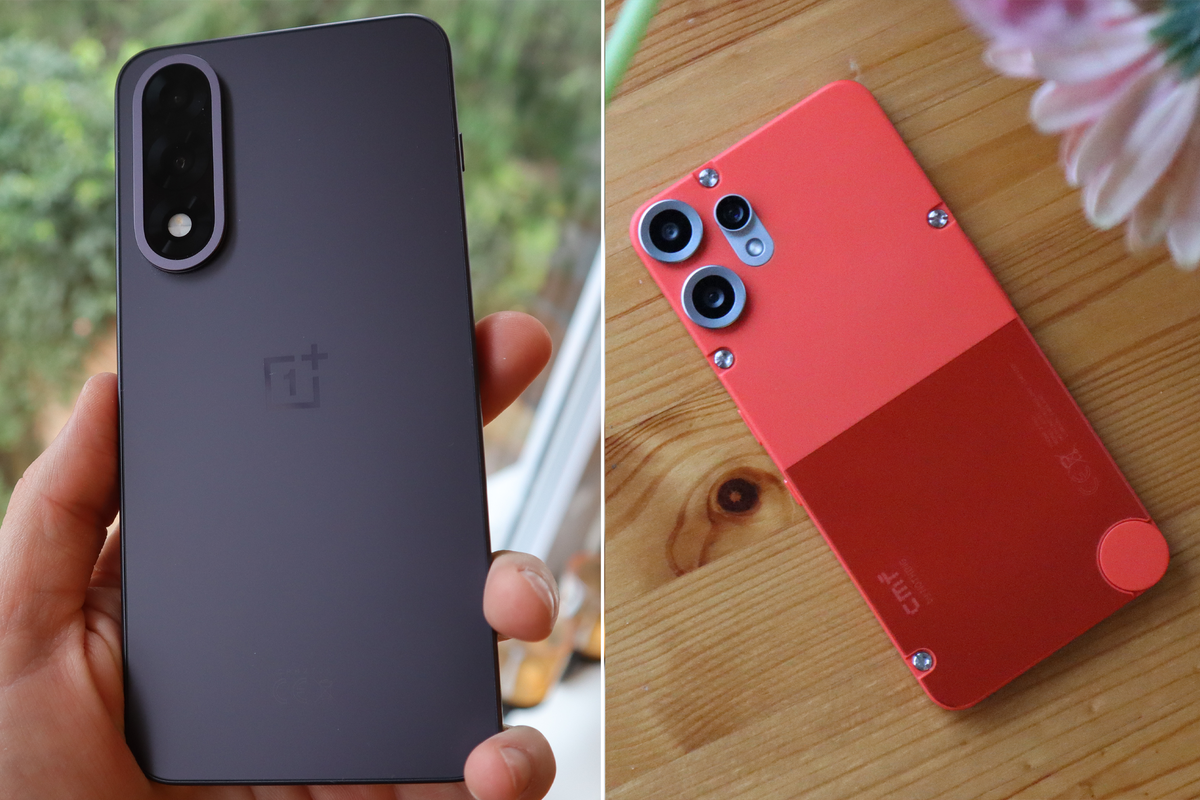
Aside from software development, no other feature shows how far smartphones have come quite like their cameras. Not that long ago, you were lucky to capture a pixelated image that vaguely resembled what you were trying to photograph. Now, some smartphones are so good that they can rival dedicated cameras in various fields.
As the son of a professional photographer and a tech journalist myself, I’m particularly interested in seeing how mobile camera tech has developed over the years. While there’s an argument to be made that it’s now tricky to find a phone with a bad set of sensors, there are still plenty of differences that separate the best camera phones, and you need to be aware of them before making a definitive purchase.

Whether you need a great selfie camera for group shots or sensors that can pull detail from low-light scenes, choosing the right handset depends on your priorities. After taking countless photos to test their capabilities, I’ve found the best camera phones you can buy right now.
The best camera phones for 2026 are:
- Best overall – Oppo find X9 pro: £1,099, Currys.co.uk
- Best budget buy – CMF phone 2 pro: £208.93 , Amazon.co.uk
- Best for zoom – Samsung galaxy S25 ultra: £1,249, Amazon.co.uk
- Best for low-light photography – Honor magic 8 pro: £899., Amazon.co.uk
Read more: Best phones, reviewed by a tech expert
How I tested

For this round-up, I’ve had to use a slightly different methodology for testing out the phones featured below. Because this list is interested solely in camera performance, the typical mobile trappings of display size and battery life don’t really apply here, with the focus being on how well the phones can handle various types of scenes that most people come up against. I tested each phone with day-time shots, portraits, low-light photography, selfies, and its camera app.
Read more: Best Samsung phones, tried and tested by a tech expert
Oppo find X9 pro

Best: camera phone overall
Dimensions: 161.3mm x 76.5mm x 8.3mm
Display: 6.78in, LTPO 120Hz AMOLED
Cameras: 50MP f/1.5 wide-angle, 200MP f/2.1 3x telephoto, 50MP f/2.0 ultrawide, 50MP f/2.0 selfie camera
Battery: 7,050mAh silicon carbon cell
Charging: 80W wired, 50W wireless
Why we love it
- Top-shelf cameras
- Long-lasting battery life
- A premium build that feels great to hold
Take note
- Autofocus needs some improvement
- The experience doesn’t come cheap
- There are better Android overlays
Just to look at the spec sheet for the Oppo Find X9 Pro is to understand that this phone is a beast. You’ve got a huge 6.78in AMOLED display, the speedy Mediatek Dimensity 9500 chipset and crucially, a 7,500mAh silicon carbon battery. All of these are the makings of a great flagship phone, but it’s the three main rear-facing cameras that set the X9 Pro apart from anything else in this category.

Even something as mundane as taking a picture of my (usually cluttered) desk somehow looked tantalising from the X9 Pro’s viewpoint with plenty of colour, and it’s a testament to how versatile the cameras are. Portrait shots honestly look like they’ve been taken with a professional camera, so if you want to convince your friends and family that you’re far more talented a photographer than you actually are, the X9 Pro will gladly to do the heavy lifting for you.
I did find in some scenarios, particularly portrait shots in dimly lit scenes, that the autofocus just wasn’t quite as fast as I’d like it to be, so you may need to tap on the display just to be on the safe side before taking a shot, but it’s a minor price to pay for the quality of what you get in return. Until another brand is able to leapfrog Oppo’s achievements here, I don’t foresee another phone having a better set of cameras for quite some time.
Buy now £1099, Currys.co.uk
CMF phone 2 pro

Best: budget camera phone
Dimensions: 164mm x 78mm x 7.8mm
Display: 6.77in AMOLED 120Hz
Cameras: 50MP f/1.9 wide, 50MP f/1.9 2x telephoto, 8MP ultrawide, 16MP f/2.0 selfie camera
Battery: 5000mAh cell
Charging: 33W wired
Why we love it
- Great cameras for the price
- Outstanding design language
- Large, responsive display
Take note
- Ultrawide lens needs improvement
- Bokeh can be a bit heavy-handed
- Mono speaker
When it comes to finding a great camera phone that doesn’t cost a fortune, there’s no shortage of options, from the Pixel 9a to the Honor 400, but for my money it’s the CMF Phone 2 Pro that presents the biggest bargain of them all. With a starting price of £219, you’d be forgiven for setting your expectations fairly low but Nothing’s budget handset is able to punch far above its weight in almost every meaningful category.

The most impressive feat is that, despite its price, the phone boasts a 2x telephoto lens, which is almost unheard of at this end of the market. It’s such a helpful feature to have, especially if a subject is just out of reach, and the detail captured at 2x easily gets the job done. When taking a few shots of a bouquet of flowers, I was impressed by the natural colours collected by the main 50MP lens, although there’s definitely a touch of unnatural bokeh at play, which can be a bit jarring when you zoom too much into a picture, but it’s not a major issue.
The only big trade-off for having a strong pairing in the two aforementioned lenses is that the ultrawide is limited. The 8MP cap means that detail can break down fairly quickly if you crop an image, but it’s a fair compromise for that telephoto. What also sweetens the deal is the exemplary design of the Phone 2 Pro, both in how it looks and the slick software baked into it, which adheres to an almost iOS-like conformity in every facet. The fact that you can buy the CMF Phone 2 Pro for a fifth of the price of some flagship phones just boggles my mind.
Buy now £219, Amazon.co.uk
Samsung galaxy S25 ultra

Best: camera phone for zoom
Dimensions: 162.8mm x 77.6mm x 8.2mm
Display: 6.9in LTPO 120Hz AMOLED
Cameras: 200MP f/1.7 wide, 10MP f/2.4 3x telephoto, 50MP f/3.4 5x periscope telephoto, 50MP f/1.9 ultrawide, 12MP f/2.2 selfie camera
Battery: 5000mAh cell
Charging: 45W wired, 15W wireless
Why we love it
- A zoom lens that doesn’t quit
- Samsung’s OneUI has never looked better
- Vibrant colours in every shot
Take note
- Expensive compared to the competition
- Quite a bulky phone in the hand
- Relatively slow charging
Samsung’s ‘Ultra’ range has become synonymous with the flagship experience in the Android space, and not without good reason. With no less than four cameras on the back, including an outstanding 200MP wide lens, the Samsung Galaxy S25 Ultra is designed with versatility in mind, but it’s the zoom capabilities that make it a must-buy for photographers who can spot a great shot from far away.

Thanks to the 50MP periscope telephoto lens, there’s already a very stable 5x optical zoom built in, which retains outstanding detail from a distance, making it helpful for capturing a shot that’s just out of reach from where you’re standing. For a more impressive trick, you can use a digital 100x zoom that leans on Galaxy AI to draw out as much detail as possible, and while I expected the feature to be something of a gimmick, I did find myself impressed with the results provided.
The software experience is now far less clunky than it used to be on Samsung handsets, with the OS getting a major visual overhaul from OneUI 7 onwards, to the point where it’ll make some iPhone users glance with envy. What holds the phone back are mediocre specs elsewhere, including painfully slow 45W wired charging, and it’s worth noting that unless you plan on making use of the included S Pen stylus, you could just be overpaying for features you don’t need, which may make other phones more tempting.
Buy now £1249, Amazon.co.uk
Honor magic 8 pro

Best: camera phone for low-light photography
Dimensions: 161.2mm x 75mm x 8.3mm
Display: 6.71in LPTO 120Hz OLED
Cameras: 50MP f/2.6 wide, 200MP f/2.6 3.7x periscope telephoto, 50MP f/2.0 ultrawide, 50MP f/2.0 selfie camera
Battery: 6270mAh cell
Charging: 100W wired, 80W wireless
Why we love it
- Low-light performance is unparalleled
- Two-day battery life
- One of the nicest displays around
Take note
- Boring design
- Quite a hefty camera bump
- Honor AI just isn’t there yet
Honor has been slowly improving its camera tech year on year, but it’s with the Magic 8 Pro that the brand has managed to leapfrog much of the competition when it comes to low-light photography, so if you’re someone who’s always burning the midnight oil or love to document a good night out then you should seriously consider this phone as your next upgrade.

For testing this phone, I was able to take night-time shots in suburban Surrey and Central London, and in both instances the camera performed exceptionally. Even with just a few nearby streetlamps and the moon to rely on, the phone was able to pull out eye-catching colour, and this only increased when rain hit the capital and the nearby billboards were then reflected in newly formed puddles. If anything, it sets the bar a little too high to the point where going back to anything else feels like quite a downgrade.
What holds the Honor Magic 8 Pro back, just like any other phone in the company’s range, is its MagicOS Android overlay. The software just isn’t as seamless as what you’ll find on the Samsung Galaxy S25 Ultra or the Google Pixel 10 Pro, plus Honor’s attempt to implement a suite of AI features just feels lacking, especially against the far more superior Google Gemini and Circle to Search, which are already included on the Magic 8 Pro by default. At the very least, you are getting flagship specs elsewhere and the phone is one of just a handful right now using the Snapdragon 8 Elite Gen 5 chipset.
Buy now £899, Amazon.co.uk
Google pixel 10 pro

Best: camera phone for portrait shots
Dimensions: 152.8mm x 72mm x 8.5mm
Display: 6.3in LPTO 120Hz OLED
Camera: 50MP f/1.7 wide, 48MP f/2.8 5x periscope telephoto, 48MP f/1.7 ultrawide, 42MP f/2.2 selfie camera
Battery: 4,870mAh cell
Charging: 30W wired, 15W wireless
Why we love it
- Google’s exceptional attention to skin tone
- Top-of-the-line editing software
- Easily the best version of Android
Take note
- Not a major leap from the Pixel 9 Pro
- You’ll find better battery life elsewhere
- The charging speeds are slow for a flagship
Google’s line-up of Pixel phones has long since proven the rule that when it comes to mobile photography, high megapixel counts don’t automatically translate to great photos. Instead, it’s all the computational processing taking place behind the scenes that really makes a photo pop, and in this regard the Pixel 10 Pro benefits from years of major software development and refinement.

Even if you’ve taken a photo that might seem fairly mundane at first, give it a moment and you’ll see the Pixel 10 Pro’s software kick into action with gorgeous colour correction. While you can expect solid performance in almost any scenario, it’s portrait photography that stands out, as all types of skin tones look effortlessly natural in the final product, so if you’re more interested in capturing the human experience as opposed to still life objects, the Pixel 10 Pro is made with you in mind.
The only people who needn’t bother with Google’s flagship phone are those who currently own its predecessor, as you’ll find an almost identical photo experience on the Pixel 9 Pro. The big benefit of opting for the 10 Pro, however (in addition to having a longer lifecycle of software and security updates), is the inclusion of Pixelsnap, Google’s take on MagSafe, which paves the way for countless camera accessories, such as the ingenious ShiftCam SnapGrip.
Buy now £799, Amazon.co.uk
OnePlus nord 5

Best: camera phone for selfies
Dimensions: 163.4mm x 77mm x 8.1mm
Display: 6.83in AMOLED 144Hz
Cameras: 50MP f/1.8 wide, 8MP f/2.2 ultrawide, 50MP f/2.0 selfie camera
Battery: 5200mAh cell
Charging: 80W wired
Why we love it
- Tons of detail crammed into the selfie camera
- Super fast 144Hz refresh rate
- Fast charging for the price
Take note
- The design is a bit bland
- More customisation with the Plus Key would be nice
- No wireless charging
If you’re a social animal who just wants a top-tier selfie camera for capturing your escapades with friends, the OnePlus Nord 5 should be your first pick. This mid-range phone doesn’t cost a fortune, with a £399 price tag, but its upgraded 50MP front-camera is easily one of the best I’ve ever used, and made the process of taking selfies enjoyable (which says a lot, as I’m not usually a fan).

You can expect tons of colour to be picked up when there’s plenty of natural light around, but when the sun goes down, the screen can minimise the viewfinder and use the surrounding space to project bright light in your direction. While it might sound a bit jarring, the results very much speak for themselves as you can get a solid night-time selfie – just what you need when you want to capture a quick group shot at the pub/club.
The two cameras on the rear are a little more hit and miss. The main 50MP camera is great to use during all hours of the day, but the 8MP ultrawide just feels like it lacks the same attention to detail. The phone itself is also a bit on the bland side, which is a shame as its predecessor (the OnePlus Nord 4) had style in droves. Still, you are getting access to OnePlus’ slick OxygenOS, and it pairs well with the capable Snapdragon 8s Gen 3 chipset.
Buy now £328.16, Amazon.co.uk
What are the best camera phones?
Even though the competition has never been fiercer, it’s the Oppo Find X9 Pro that manages to separate itself from the crowd with an unbelievable array of cameras. While it’ll cost you quite a bit for the privilege of owning one, the prowess of this phone means that in certain situations, you can get shots that are on par (and sometimes better) than that of a dedicated camera, which is incredible for a device that fits in your pocket.
How I tested the best camera phones in full
During my test, I looked for following:
Why you can trust IndyBest reviews
Thomas Deehan is an experienced tech writer who has previously reviewed the best noise-cancelling headphones and the best digital notebooks for IndyBest. Like all products recommended by IndyBest, each phone was tested extensively and under real-world conditions, which ensures that our reviews are accurate, honest and unbiased.
Looking to upgrade your smartphone? These are the best phones for 2026, reviewed by a tech expert