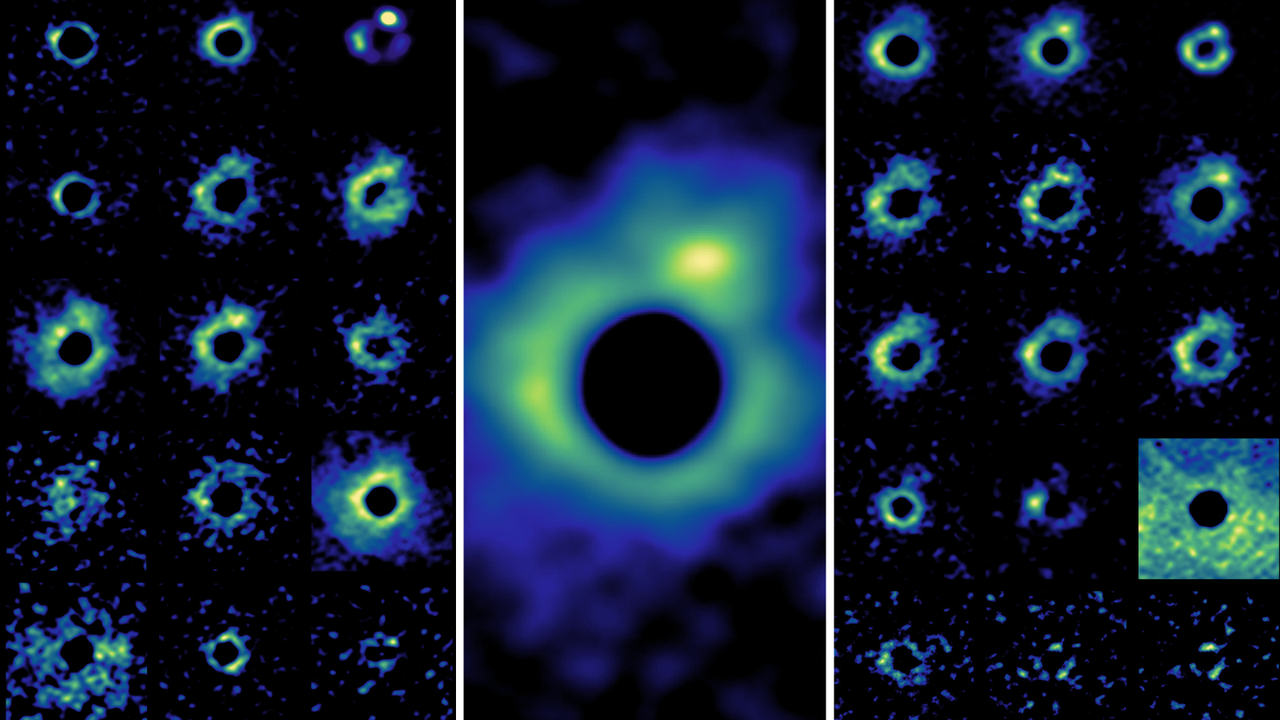
Astronomers have observed 57 different "faces" of a distant exploding star using different molecules to capture a varying picture of stellar death and its impact on its environment. The research could give us a more complete prediction of what will happen to the sun in around 5 billion years when it begins its own death throes and swells out as a red giant star, consuming its inner planets, including Earth.
The observations were made using the Atacama Large Millimeter/submillimeter Array (ALMA), a collection of 66 radio antennas in northern Chile that come together to comprise the largest astronomical project in existence.