
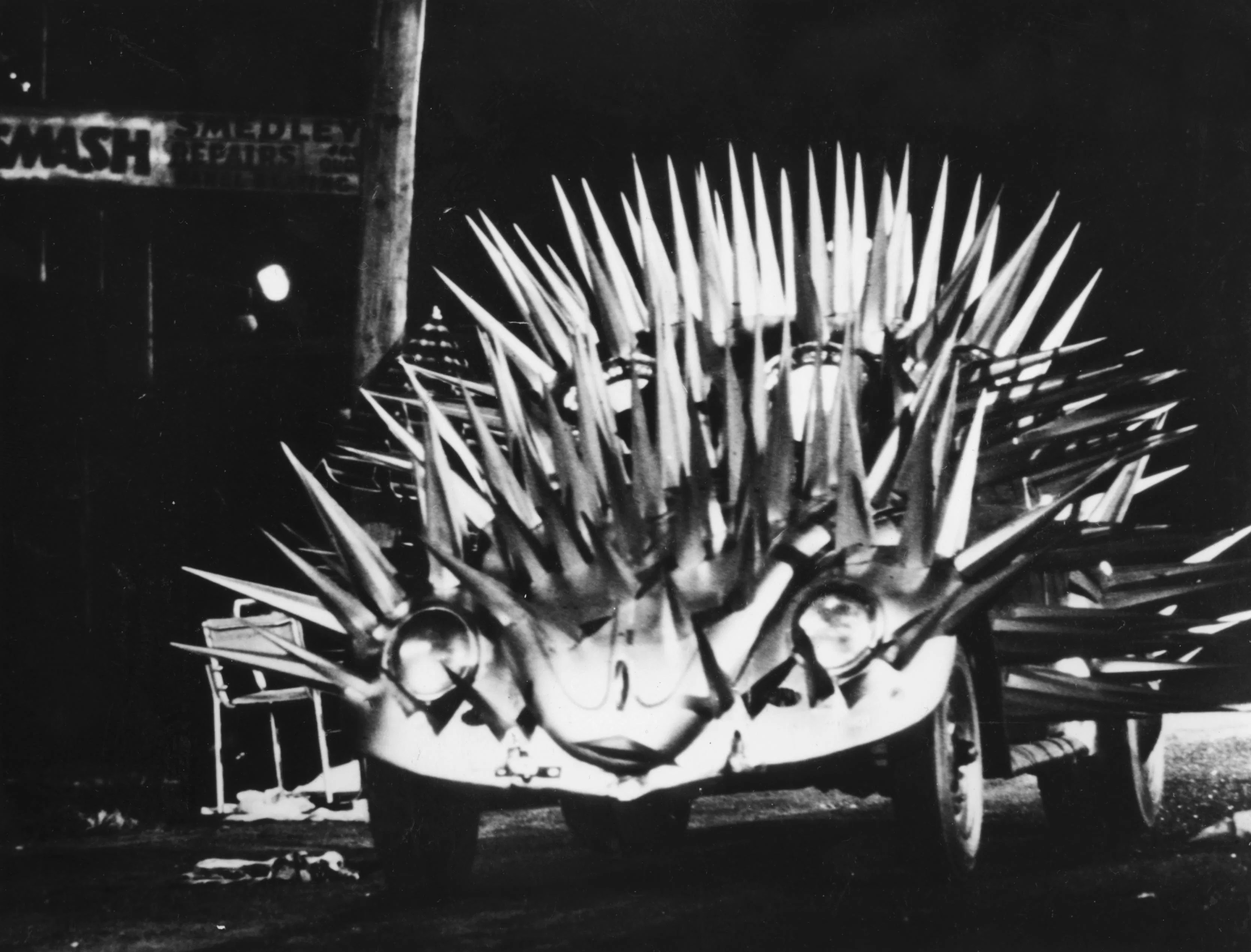
The dystopia of Mad Max (1979) and its automobile-engineered brutalities — a highway patrolman’s preferred method of dispatching criminals involves maneuvering them into fiery crashes — originated from a terrifying everyday reality for writer-director George Miller. Having earlier trained as a doctor and worked as an emergency room physician in Sydney, he made the film as a way of processing the vehicular accident injuries he routinely saw, and the pervasiveness of such violence in his country. “In Australia, we have a car culture in the way Americans have a gun culture,” he told Starlog magazine in 1982. “The cult of the car.”
Five years earlier, Australian filmmaker Peter Weir had experienced a similar despairing sentiment, channeling it into the bleak unease of his feature debut The Cars That Ate Paris, which premiered on this day in 1976. A signpost that appears early in the horror film, diverting travelers off the highway and onto the narrow, unpaved road leading to the fictional town of Paris, reads ‘One Way’: an ominous warning in hindsight. For those who’ve fruitlessly waited in line outside the rural employment office before driving on, however, the advertised promise of work in Paris is enticing. And so these travelers persist.