
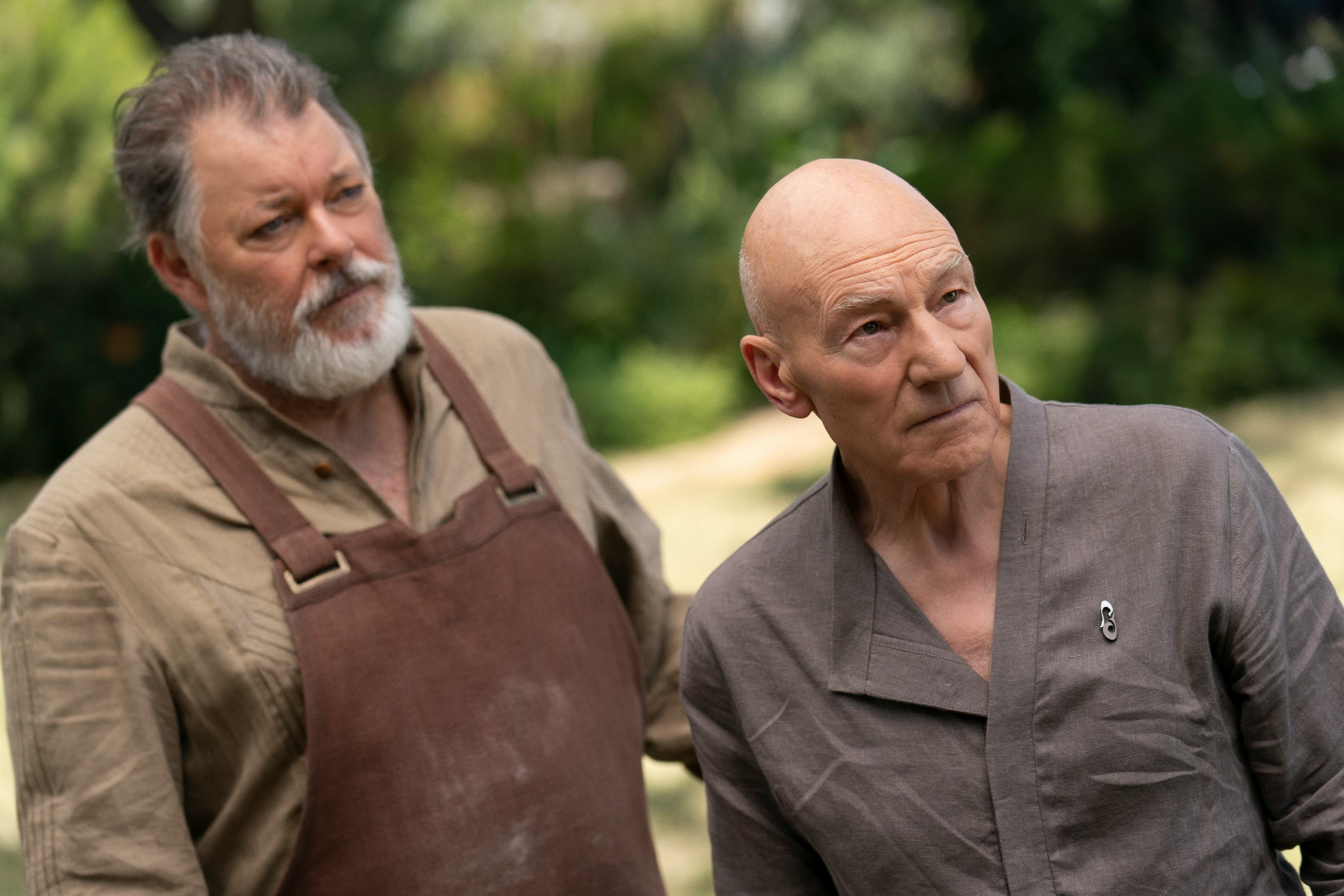
Among hardcore Trekkie circles, there are essentially two dominant opinions about the spinoff sequel series Star Trek: Picard: It didn’t get good until Season 3 in 2023, or the show abandoned its original premise almost immediately after Season 1 sacrificing its new characters in favor of nostalgia when Guinan (Whoopi Goldberg) and Q (John de Lancie) returned in Season 2, and then, the rest of the TNG cast in Season 3. Both viewpoints suggest that Picard is the most uneven of the new post-2017 crop of Star Trek shows, and in that specific assessment, there is certainly some truth. But, what these all-or-nothing takes leave out is the hardcore commitment to classic science fiction themes in Picard Season 1. And regardless of how you feel about the show’s first season, that specific batch of episodes consists of a return to deeply contemplative Star Trek.
Five years after Picard’s debut on January 23, 2020, the legacy of the show remains mixed. (See what I did there.) But what’s fascinating about this series is just how unique its first season remains, and how five years later, what seemed like Star Trek’s safest bet was actually a moment of radical experimentation. Here’s why Picard Season 1 mattered, and why it holds up much better than some of the haters might tell you.