Get all your news in one place.
100's of premium titles.
One app.
Start reading
Tom’s Guide
Tom’s Guide
Technology
Camilla Sharman

5 ways to use baking soda in your yard — and an extra tip on how to sweeten tomatoes

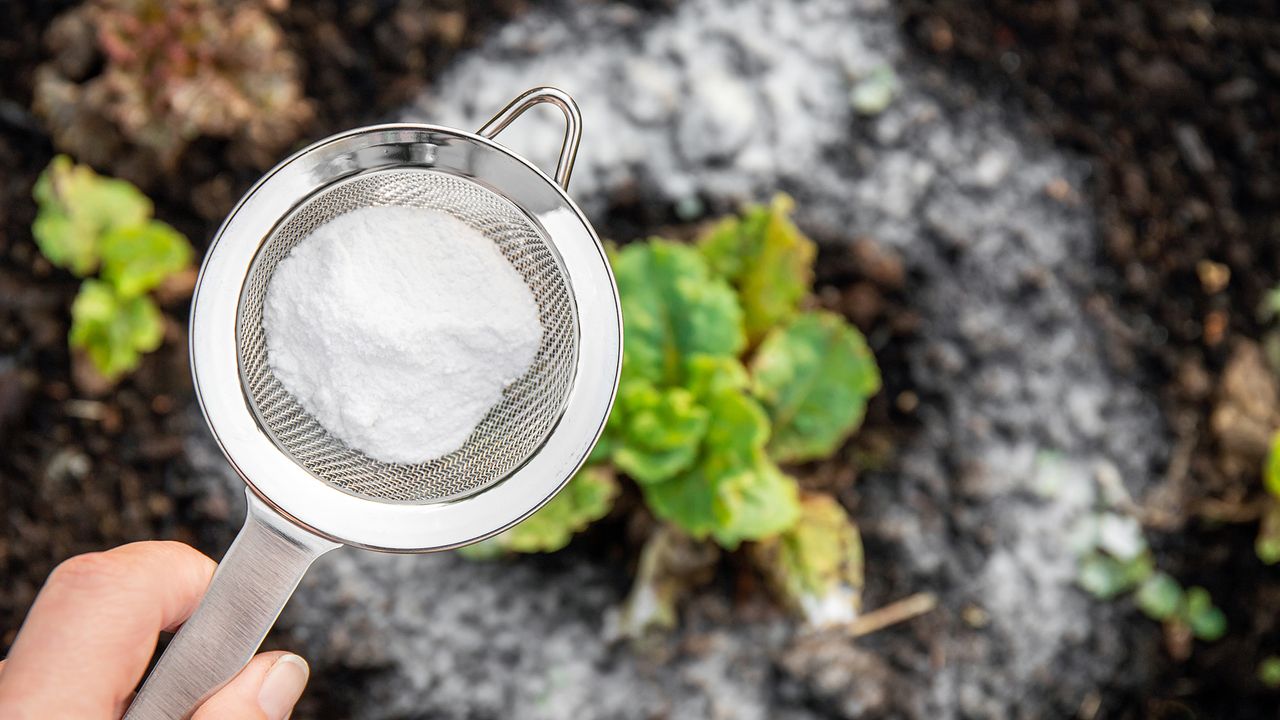
Baking soda being used in garden.

Baking soda is a standard kitchen staple, used to help doughs and batters rise. But apart from its role as a leavening agent, it’s commonly used at home as a cleaner and deodorizer.

I use baking soda combined with dish soap to remove grease stains from clothing, and combined with vinegar to clean my pots and pans. At the same time, I make a paste with water to clean yellow stains off my toilet. I also use it to combat fridge and garbage can odors and freshen stinky shoes and carpets.

But aside from being handy around the home, this miraculous product, which is ultra-cheap and eco-friendly, can be used in many ways around the garden. Here I share five top ways to use baking soda in your yard, with a bonus tip for tomato growers.

1. Soil tester — is it acidic or alkaline?

(Image credit: Shutterstock)

You can use baking soda to find out whether your soil is acidic or alkaline, although it won’t give you a true gauge of its exact pH level. However, it’s a fun experiment to try, especially if you’ve got young children happy to help you out.

What to do:

1. Take a jar and partly fill it with soil.

2. In a second container, mix two teaspoons of baking powder with 3.5 fl oz of water.

3. Pour the solution onto the soil. If it bubbles, your soil is acidic, but if there’s no change, your soil is alkaline.

For a more accurate reading of your soil’s pH level, I recommend using a soil testing kit.

2. Deodorize stinky compost

(Image credit: Shutterstock)

Although my compost bin is at the end of my garden, away from any sitting areas, it can still get a bit smelly. And apparently, materials high in nitrogen content are the worst culprits when it comes to making a stink.

Luckily, baking soda’s odor-neutralizing properties can help reduce the unpleasant stench by balancing the acidic compounds that cause it.

What to do
Sprinkle a small amount of baking soda over the top of your compost pile as soon as it begins to smell. But use it sparingly, as too much will inhibit bacterial growth and slow the material's decomposition.

If the baking soda doesn’t quite do the job, try adding some more brown material to the mix and turn it over.

3. Deter pests

(Image credit: Shutterstock)

Baking soda can be used in several ways to deter pests. If you have a problem with aphids, thrips and white flies, simply spraying plant leaves with a solution containing baking soda can help.

What to do

1. Mix one quart of water with two teaspoons of baking soda.

2. Add one teaspoon of neem oil and one teaspoon of soap.

3. Give everything a thorough mix and pour the solution into a spray bottle.

4. Spray a small amount on one leaf of the plant. If it doesn’t wilt, spray the remaining leaves.

It can also be used as an insecticide

When sprinkled around plants, baking soda can deter slugs and ants; with ants in particular, it disrupts their ability to maintain scent trails. The baking soda acts as a desiccant, drying out soft-bodied insects.

However, it’s best to sprinkle the baking soda around the base of container pots; if sprinkled directly onto soil, it can seep below the surface and damage the roots.

4. Control fungal disease

(Image credit: Shutterstock)

Gardeners often use baking soda to help control fungus in their yards, such as black spot, powdery mildew, root wilt and rust. The baking soda works by raising the pH level on leaf surfaces, making it more difficult for fungus to survive.

However, it’s more likely to slow the growth of fungicides, rather than to act as a cure.

What to do

1. Mix one teaspoon of baking soda and one teaspoon of soap into one quart of water.

2. Place the solution into a spray bottle and spray onto infected areas.

3. Continue to spray once a week to prevent the fungus from coming back.

5. Clean up

(Image credit: Shutterstock)

Once you’ve been digging in the garden, planting seeds or pruning, you’ll want to give your hands a good wash to clean away all the soil. And even if you have been wearing one of the best pairs of gardening gloves, they’ll still need a good wash.

While you’re giving your hands a thorough clean with soap, add a small amount of baking soda, it will act as an abrasive to help shift the grime. What’s more, it can even be used with vinegar to clean your gardening tools.

Bonus tip — improve your tomatoes

(Image credit: Shutterstock)

There is some thought that baking soda can help sweeten tomatoes by reducing soil acidity, and we already know it can neutralize acidic soils.

What to do

Sprinkle a small amount of baking soda around the base of your tomato plants, avoiding the plant itself. It’s best applied during the plant’s early growth stages.

However, be careful how much you apply. If you’re too heavy-handed, the baking soda can harm the soil structure and interfere with nutrient uptake. It’s also a salt, which can burn or stunt your plant if you apply too much.

However, there is no exact science behind this tomato sweetening hack. For reliable results, opt to grow sweet varieties, such as Sungold, Sweet Million or Cherokee Purple, which naturally have high sugar content.

More from Tom's Guide

Sign up to read this article
Read news from 100's of titles, curated specifically for you.
Already a member? Sign in here
Related Stories
Top stories on inkl right now
One subscription that gives you access to news from hundreds of sites
Already a member? Sign in here
Our Picks
Fourteen days free
Download the app
One app. One membership.
100+ trusted global sources.