
A new study in Nature Communications has warned that diabetes could wipe more than 5.177 trillion international dollars from global economic output between 2021 and 2050 across 190 countries and territories, turning a chronic health condition into a sprawling long term threat to growth, work and public finances.
The warning matters because the projected hit is not confined to hospitals or household budgets. It reaches into labour markets, lost productivity and the slow drag that disability and illness can impose on entire economies.
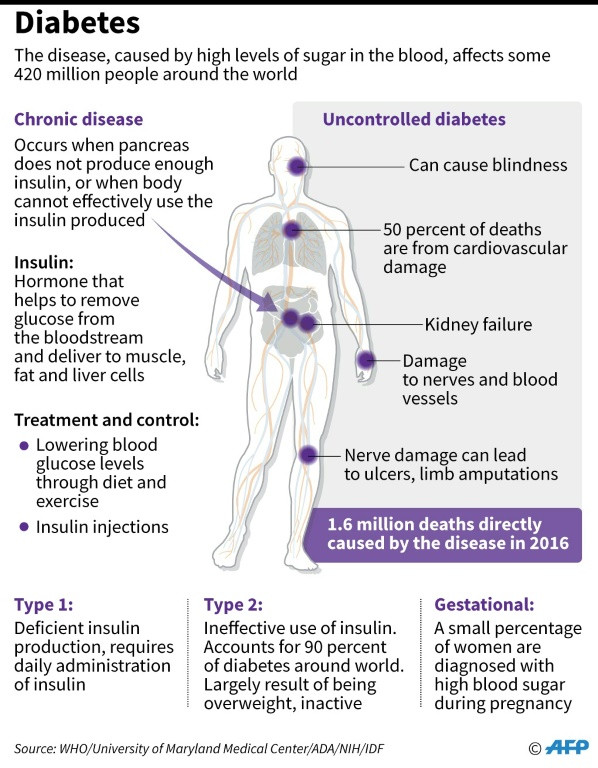
Diabetes has for years been treated in public debate as a medical crisis first and an economic one somewhere further down the list. The new modelling argues that this hierarchy no longer makes much sense.
If current trends hold, the cost will not simply be counted in prescriptions, appointments and complications. It will be counted in weaker output over decades and in governments forced to spend more while getting less back from a less healthy workforce.
Why The $5 Trillion Diabetes Warning Cuts So Deep
Researchers compared a world in which present diabetes trends continue with a counterfactual world in which the disease is eliminated at no extra cost, then measured the difference in projected GDP over time.
What they found is troubling less because it is dramatic than because it is plausible. The study estimates a reduction of 5.177 trillion international dollars in cumulative output from 2021 to 2050, equivalent to about 0.12 per cent of projected global GDP.
That is not an economic apocalypse. It is something arguably more unsettling, a persistent structural loss that compounds quietly while governments argue about other things.
The core driver, according to the modelling, is not simply premature death. It is morbidity and disability.
In plain English, people living with diabetes may remain alive but less able to work consistently, less productive when they do, and more likely to need treatment that diverts resources from elsewhere in the economy. That is the sort of burden politicians routinely underestimate because it lacks the theatrical clarity of a recession or a market crash.
Your "normal" blood sugar is lying to you.
— Robert Lufkin MD (@robertlufkinmd) May 8, 2026
Rising HOMA-IR predicts diabetes a full decade before glucose ever budges — and a 367% jump in cardiac death risk.
115M Americans are pre-diabetic. 8 in 10 have no idea.
Full episode 🎙 https://t.co/55mnAvYr8p pic.twitter.com/05z9y1ew9V
There is also a methodological point worth making. The researchers did not stick to the old cost of illness formula that tallies direct spending and leaves it there.
Instead, they tried to capture labour supply, human capital, treatment costs, savings and capital accumulation. That makes the picture broader and, for policymakers who prefer narrow accounting, a good deal more uncomfortable.
Where The $5 Trillion Diabetes Burden Falls Hardest
The losses are not spread evenly, which is where the study becomes politically awkward. In absolute terms, the United States is projected to suffer the biggest hit, with China and India next in line.
Relative to GDP, Kuwait, the United States and South Korea come out worst. On a per person basis, the heaviest burden is projected for Guyana, the United States and Singapore.
That unevenness tells its own story. High income countries are expected to absorb the largest absolute losses, with the study projecting around 3.217 trillion international dollars in lost output for that group alone.
Low and middle income countries, meanwhile, carry most of the disease burden in human terms, accounting for 81 per cent of global diabetes related disability adjusted life years, but appear to lose less in dollar terms because their economies are smaller and treatment spending is lower.
Diabetes could cost the world $5 trillion by 2050 - not just a health crisis, but a global economic threat. 💸🌍https://t.co/SKYLx3CCew #Diabetes #EconomicImpact @NatureComms pic.twitter.com/AcFK63rhPq
— News Medical (@NewsMedical) May 12, 2026
North America is projected to face the highest macroeconomic burden, despite accounting for only a modest share of global diabetes related DALYs. South Asia presents the reverse picture, bearing nearly a quarter of the global disease burden while showing smaller losses in dollar terms.
The imbalance is almost cruel in its logic. Richer countries lose more money because more money is circulating through their systems. Poorer ones lose more life chances.
The study also offers a sliver of agency, which is rare in projections like these. A 20 per cent reduction in diabetes burden by 2050 could generate about 190 billion dollars in global gains, while bringing incidence and mortality down to the lowest observed global levels could yield around 1.11 trillion dollars.
That does not make prevention cheap or easy. It does make inaction look like the more extravagant choice, especially when diabetes is no longer behaving like a health bill at the edge of the ledger but more like a slow tax on the future.