
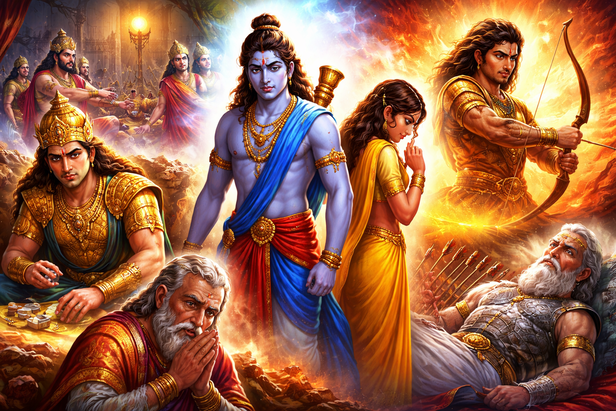
We grow up believing that doing the right thing will lead to the right results. Be honest, stay loyal, keep your promises, follow your duty and life will reward you. But Hindu epics tell a very different story. They show that dharma is not a simple formula where good actions guarantee good outcomes. In fact, some of the most painful consequences arise from decisions that were morally correct.
These stories feel deeply relatable even today because they mirror real life. Sometimes you make the right choice and still lose. Sometimes you stay honest and still suffer. Hindu epics do not hide this truth. They confront it head on.

1. Choosing honesty even when the system is unfair
Yudhishthira’s commitment to truth and righteousness is often seen as ideal. He believed in following rules and maintaining honor at all costs. But when invited to the game of dice, his decision to accept was based on that very sense of duty. Saying no would have gone against the expectations of a king.
What followed was devastating. He lost everything that mattered. His kingdom, his wealth, and his family’s dignity. This moment feels familiar in today’s world. There are times when you play by the rules, but the system itself is flawed or manipulated. The lesson is not that honesty is wrong, but that blind honesty without awareness can make you vulnerable. Doing the right thing also requires understanding the situation you are in.
2. Keeping a promise that breaks everything else
King Dasharatha chose to honor his word to Kaikeyi, even when it meant sending Rama into exile. From a moral standpoint, he did what was expected of a king. A promise once given had to be fulfilled.
But the emotional cost was unbearable. It led to his own death and shattered his family. This situation is something many people experience in smaller ways. You commit to something, you stick to your word, but in doing so, you hurt yourself or those you love. The story highlights a tough truth. Not every promise deserves to be kept at any cost. Sometimes, doing the right thing requires rethinking what “right” actually means in that moment.
3. Standing by someone even when they are wrong
Karna’s loyalty to Duryodhana is one of the most emotional arcs in the Mahabharata. He stood by the person who gave him respect when the world rejected him. Gratitude became his guiding principle.
But that same loyalty tied him to a path of destruction. Even when he knew the moral truth, he chose to stay. This is something many people struggle with today. Loyalty to friends, family, or colleagues can sometimes conflict with what is ethically right. The story forces a difficult question. At what point does loyalty stop being a virtue and start becoming a burden? True strength lies in knowing when to stand by someone and when to step away.
4. Following rules while injustice unfolds
Bhishma’s life is defined by sacrifice and discipline. His vow to protect the throne of Hastinapura made him one of the most respected figures in the epic. He followed his duty without question.
But this same commitment prevented him from acting when it mattered the most. During Draupadi’s humiliation, his silence became one of the most uncomfortable moments in the Mahabharata. This reflects a situation many people face today. You follow rules, respect authority, and avoid conflict, but in doing so, you allow wrong things to happen around you. The story reminds us that being neutral in the face of injustice is also a choice. Sometimes, doing the right thing means breaking the rules.
5. Putting responsibility above personal happiness
Rama’s decision to send Sita into exile after returning to Ayodhya remains one of the most debated actions in the Ramayana. As a king, he chose to prioritize public perception and his duty towards his people over his personal life.
This decision came at a deep emotional cost. It raises a question that is still relevant today. How often do people sacrifice their happiness to meet expectations or maintain an image? Whether it is in careers, relationships, or social roles, many face situations where responsibility conflicts with personal truth. Rama’s story shows that leadership and duty can sometimes demand choices that feel unfair on a human level.