
Get all your news in one place.
100’s of premium titles.
One app.
Start reading
Livingetc
Livingetc
Lilith Hudson

5 Things Sleep Experts Will Always Notice About Well-Designed Bedrooms

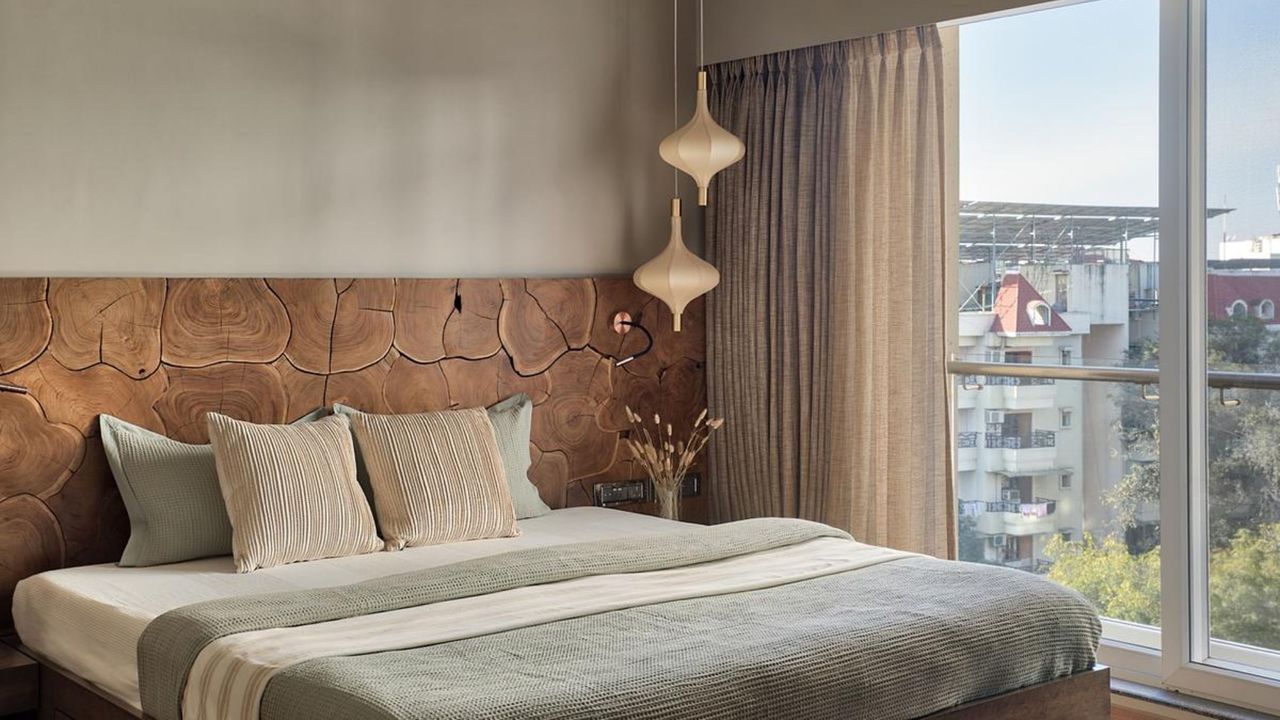
A bedroom with a large double bed next to a window. Beside the bed are two pendant lights hanging elegantly above a side table .

It can be easy to overlook, but our bedrooms are designed for one very specific purpose: sleep. While there's undeniable beauty in bedroom design, every decision should ultimately support rest — and yet this is where so many modern bedrooms fail.

Creating a calming, nurturing sleep sanctuary goes a lot further than merely placing an eye mask on your pillow and adding a sleep spray to your nightstand (although these aren't without their own merits). The most relaxing bedroom designs are far more considered, taking in everything from curtains and bedding to lighting and wall color.

We all want to know how to sleep better, and the answer may be simpler — and more design-led — than we think. To understand what sets the most well-designed bedrooms apart, I spoke to some sleep experts to uncover the most common threads they see in best-designed bedrooms. Here's what they had to say.

1. Blackout Curtains

Doubling up your window treatments is a great way to add warmth, privacy, and create a more supportive sleep environment (Image credit: Anson Smart. Styling: Olga Lewis. Design: Arent&Pyke. Architecture: Carter Williamson Architects )

Our bedroom curtains are an oft-overlooked design detail that can make or break the success of our sleep sanctuary. Unlike other rooms of the home, our bedroom window treatments are of utmost importance. Curtains or blinds that are too sheer won't only fail to provide privacy, but they'll also let in too much light, disrupting our sleep and throwing our circadian rhythm off balance.

"For light control that supports deeper, more consistent sleep, choose blackout curtains instead," says Kenny Timper, a Certified Sleep Science Coach at Mattress Clarity. If you live in a colder clime, consider choosing an option with a thermal layer too for added warmth. If you're not sure where to start looking for blackout curtains, La Redoute has some great ones.

Jason Wingate, co-founder and product developer at the sleep-tech company Zlumber, also emphasizes the importance of a good window treatment, noting that it's one of the first things he notices in a well-designed bedroom. "Consider a high-quality blackout curtain or rods that 'wrap round' to eliminate any lighting leaks around window edges," he says. This kind of curtain pole, from Dunelm, will do the job and still looks modern and sleek enough.

2. Minimal Clutter

Struggling to sleep? Try reducing visual noise. (Image credit: Marco Ricca. Design: Ali Budd Interiors)

The perks of a clutter-free room shouldn't be underestimated, but they're even more pertinent in a bedroom. Our bedrooms should be relaxing, nurturing spaces, which means visual noise should be kept to a minimum.

That's not to say that you have to commit to a stark minimalist bedroom (in fact, most designers would advise against it), but a bedroom designed for sleep should always be tidy and organized. "It's always easier to sleep in a calm, organized space," says Kenny. It's not just about aesthetics, either. "A clean space reduces cognitive load and nighttime stress," Kenny adds.

To keep clutter to a minimum, don't overlook the importance of effective bedroom storage ideas, either. "Keep things contained in baskets and drawers, not piles," urges Dr Stacey Denise Moore, a sleep expert and founder of The Neuroaesthetic MD. These White Company baskets are a great place to start.

As the saying goes, a tidy room equals a tidy mind.

3. Calming Color Palette

Earthy, calming tones can completely transform the feel of a bedroom (Image credit: Fabian Martinez. Design: Direccion)

One thing interior designers and sleep experts can both agree on is the importance of bedroom colors. When you walk into a bedroom, you'll instantly sense the mood. Is it relaxing, or invigorating? Light and bright, or dark and moody? The dominant colors used will be responsible for this.

Wall color, of course, has the biggest influence, but there are also other accent colors to consider — the color of your bedding, for example, or even your carpet. "I'll always notice muted tones that promote relaxation rather than visual stimulation in a well-designed bedroom," says Kenny. "No neon green."

The best color for sleep will be delicate and soothing. "Deep blues, sage greens, or other soft colors, for example, can help lower the heart rate and prevent visual overstimulation," says Jason.

4. An Absense of Tech

The "Analogue bedroom" trend has full support from sleep professionals (Image credit: Louisa & Fyodor. Design: Lofy Studios)

There's been a huge buzz around so-called "analogue bedrooms" recently — tech-free sanctuaries intended to combat digital overload and improve sleep hygiene — but it's more than just a fad. Sleep experts all agree that the best-designed bedrooms have minimal technology.

Designing a tech-free bedroom doesn't need to be difficult, either. It's probably as simple as removing a few screens. "I always check to see a bedroom has no TV for fewer visual and mental cues that keep the brain in 'entertainment mode'," says Kenny. "Phone chargers should also be placed away from the bed to discourage late-night doomscrolling and overstimulation."

5. Breathable Bedding

They're not necessarily easy to spot in an instant, but natural fibers will always win the vote of confidence from sleep experts (Image credit: Darren Chung. Design: Suzy Hoodless)

The type of bedding you use isn't necessarily obvious, but it's something sleep experts will actually try to decipher. You might not think twice about the material used for your sheets or pillow, but they can make all the difference to your sleep.

"For example, cottons, linens, or wool layers can help with temperature regulation as opposed to heat-trapping synthetics," explains Jason. To promote the best sleep, natural fibers are always on sleep experts' radar.

Stacey notes that much of this stems from the fact that a cool room is easier to sleep in. "Breathable bedding means fewer heat spikes," she says. The likes of cotton, bamboo, and wool are all hypoallergenic, too, adding to their comfort.

If anyone understands how to curate a truly restorative sleep sanctuary, it's sleep experts. The most calming bedrooms share these five essential elements, and the good news is they're surprisingly easy to introduce if your space is missing them.

Pair these design ideas with tips for designing a low-cortisol bedroom, and the effect will be truly transformative. The result is a bedroom that doesn't just look serene, but actively supports deeper, more restorative sleep.

Sign up to read this article
Read news from 100’s of titles, curated specifically for you.
Already a member? Sign in here
Related Stories
Top stories on inkl right now
One subscription that gives you access to news from hundreds of sites
Already a member? Sign in here
Our Picks
Fourteen days free
Download the app
One app. One membership.
100+ trusted global sources.