
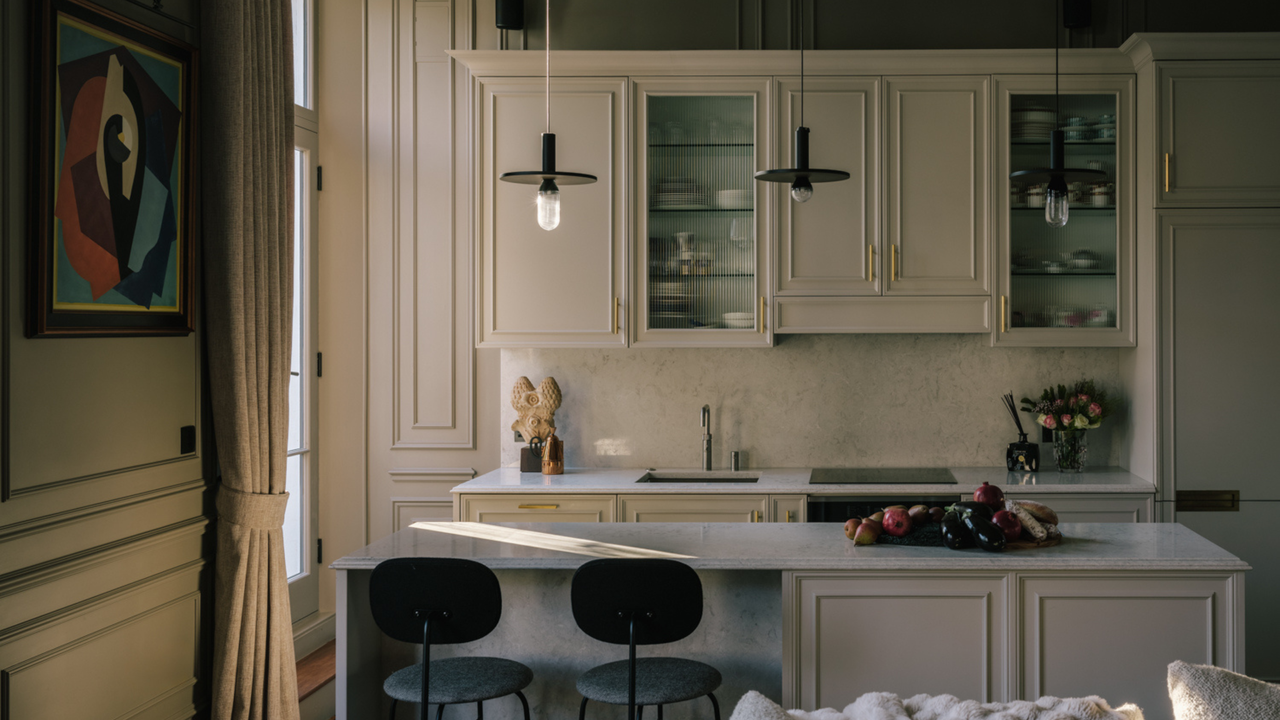
A kitchen should be designed and built to last. While this means the durability and longevity of the materials should withstand daily use for years to come, it also means the look and style shouldn’t date any time soon.
Even if you design what you deem a 'modern kitchen', it's realistically going to date at some point — and worst of all, it won't even feel nostalgic at that point. However, there are some shortcuts to make a kitchen more 'timeless', and slow down the degradation process by avoiding certain trends and embracing some classic ideas.

Certain elements may develop and naturally evolve as families grow, but realistically, the bones of a kitchen should last a long time. We’ve called in the experts to hone in on the elements that help to create just that.
1. Materials That Look Better With Age

“A timeless kitchen starts with materials that feel special and won’t date quickly,” says Allison Lynch, Cambridge showroom director and senior designer at Roundhouse Design. Natural stone, raw textured timbers, and curated finishes are key — especially now that the “messy kitchen” takes away the practical chaos, letting the main kitchen become the showpiece.
Some materials wear and age with time and use, and this only makes them more appealing, adding character along the way. Allison gives the example of metal handles in patinated brass. “Its patina looks amazing with time, along with metal sinks and door fronts.”
Other materials, such as stainless steel kitchens and concrete countertops and floors, will also wear well over time, increasing the charm and character with a less pristine look, allowing scuffs and markings to enrich the material. “Choose natural materials that wear in, not out,” Allison says. Timber, stone, and unlacquered brass all gain beauty over time showing that life and movement are present.
2. Colors That Feel Considered, Not Trend-Led

Colors can sometimes feel awkward to incorporate into such a large, complex space, especially when aiming for a timeless look, so it can feel easier to play it safe. A neutral kitchen color idea is always a safe bet compared to opting for an on-trend one, yet you don’t want to play it too safe and steer clear of individuality.
Ideally, if you're going to choose a bold color, make it something you adore and give it a purpose. To support this, Allison suggests that “timeless design leans toward richer, more complex hues rather than the flat grays and navy tones that have dominated the last decade. These more unusual shades offer longevity and individuality.” If you decide to play it safe, Samantha Gallacher, founder of Art+Loom and co-founder of IG Workshop advises to “choose classic neutrals such as warm whites, light greiges and natural wood tones, and avoid ultra modern high gloss cabinetry, they tie the kitchen to a very specific era of the 2010s, and show wear and tear easily.”
From another perspective, interior designer Erik Munro advises you to avoid overly bright or trendy color schemes that “you might love for the first year but tire of by year five,” he says. “But then again, I love a colorful kitchen! My real advice is to be bold, choose what you love now, and don’t be afraid to change it later."
If the materials are good to begin with, you’ll have no problems changing the color at a later date; just make sure it’s something you actually like. The kitchen should ideally be a warm and welcoming environment as soon as you enter it, and if you can get that across in a palette you’re drawn to, then that’s perfect.
Thread your accent colors through your smaller styling accessories to create a cohesive scheme.
3. Mixed Materials

There’s nothing quite like combining natural materials and watching them come together as a curated scheme. Combining wood, stone, painted cabinetry, and other interesting textures creates a space with depth and balance — a common idea for a timeless, transitional-style kitchen. These layers of texture build to create a sense of warmth and thoughtfulness, which is most welcoming.
Allison suggests using timber doors. “They are especially sought-after for the warmth and craftsmanship they add," she says. “One-note kitchens that rely on a single material or finish — these date quickly and lack personality.”
4. Functional Layouts That Feel Calm

“Timeless kitchens are beautifully simple and intelligently planned,” states Allison. The main kitchen doesn’t need to carry all the storage anymore, thanks to the secondary prep spaces, which have become so popular, but it does need to feel seamlessly organized and purposeful.
“The biggest mistake we see is homeowners leading their design with aesthetics rather than thinking about how the space needs to work,” says Al Bruce, founder of Olive & Barr. “When designing a kitchen, it’s key to consider lifestyle factors, space and flow as these will determine the best layout.” It’s easy to fall into awkward zoning and unrealistic layouts — spaces that may look stylish but prove dysfunctional in everyday use.
So what does work in a kitchen to sustain a sense of tranquillity and calm amongst the chaos you may occasionally experience when cooking? One thing interior designer Kate Cox, creative director at HÁM Interiors, suggests is open kitchen shelving. “It helps lift the visual weight and provides a place to curate favourite ceramics, glassware and art, giving the room a relaxed, lived-in elegance that feels in step with the rest of the home."
Al Bruce suggests that rather than adding in as many kitchen cabinets as you can, working with your designer to assess the essentials and consider what items are being used and which are simply taking up space. “Too many wall cabinets can make the space feel top-heavy, when a smart internal storage and open shelving keeps the kitchen feeling open, airy and stylish.” He continues, “A final detail to consider — especially in taller rooms — is avoiding cabinetry that runs all the way up to the ceiling. Allowing the kitchen to sit comfortably within the architecture, rather than dominating it, therefore creating a more balanced, considered look.” The kitchen should feel like it belongs in the room, not like it’s overpowering the space and becoming a part of the structure.
5. Architecture Appropriate Design Features

When it comes to design, our different backgrounds make us all see things in a very different light from one another. With this in mind, it’s vital to hone in on the architectural qualities of the property itself, whether that's Georgian, Victorian, or Edwardian, or something more modern completely.
“Styles shift, we change, and that’s ok," Erik suggests. "That said, I think the best way to create longevity in a kitchen is to pay attention to proportion and look at classical references — Georgian paneling, Victorian dado rails or even mid-century three-quarter wall heights — and let the age of the property guide you.” Respecting the age and character of the property will only ever work in your favor.
FAQs
What Should Be Avoided if You Want the ‘Timeless’ Kitchen Look?
Overly trend-led choices are the quickest way to date a kitchen. Hardware, inparticular, is often the first giveaway. “Avoid trendy finishes like matte black, rose gold, or oversized pulls,” says Samantha Gallacher, “Hardware trends shift quickly, so instead opt for finger channels or timeless finishes such as unlaquered brass, polished nickel, or oil rubbed bronze.” She also stresses that practicality matters just as much as aesthetics, “The number one rule for kitchens – never ever use touch latches on cabinets. They ruin cabinetry and break all the time.”
Another common pitfall is visual overload. According to Artem Kropxxxx, Founder of Arsight, using too many finishes of one material can disrupt the sense of calm that defines a timeless space. “When there are several metal tones, multiple wood finishes, and more than one strong pattern, the kitchen can start to feel restless rather than classic.” He also warns against overly decorative cabinetry, as they age fast especially when paired with on-trend colors. This also applies to high-gloss surfaces, not to mention the fingerprints you’ll forever be noticing. Simple and subtle certainly wins the race here.
Finally, avoid mistaking novelty for longevity. Al Bruce explains, ““Handmade shaker kitchens are timeless in their design, durability and practicality,” offering a level of versatility that allows them to evolve rather than date. Built on traditional craftsmanship and thoughtful proportions, they’re a reminder that the most enduring kitchens are those designed to last visually and still function as they should.
Planning a kitchen that's timeless isn’t about freezing a space in a particular era and never moving forward; it’s about designing with enough care, quality, and intention that it can evolve gracefully over time.
When materials are chosen for how they age, layouts are planned for how you actually live, and details are thoroughly considered as design features rather than afterthoughts, the result is a kitchen that feels good years and years after it’s been installed.