
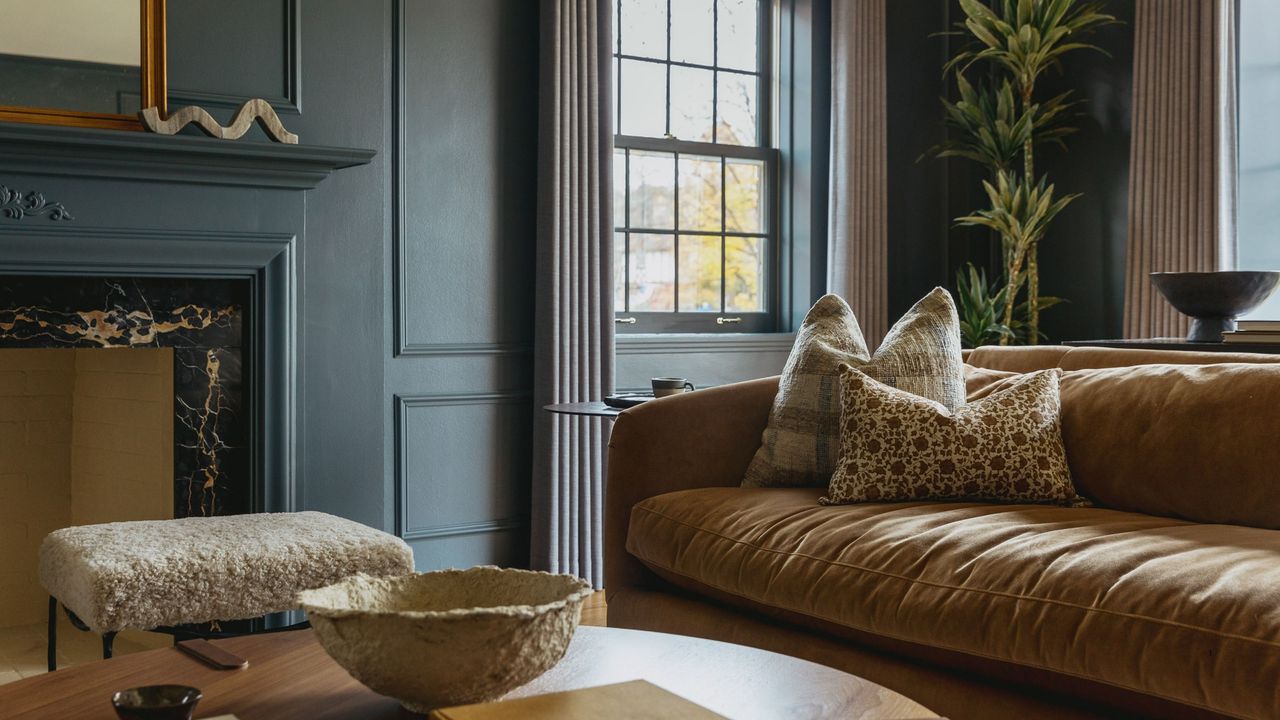
Painting a room yourself is not easy. In fact, it requires a lot of planning, prepping, and patience. However, many of us are working with a champagne taste on a beer budget, and hiring a professional to do the job isn't always in the cards. Trust me, I get it, and I've tried my fair share of painting to know that a few insider tips and tricks help elevate your paint job from amateur to exceptional.
Skipping proper cleaning and priming? Is the matte finish looking too flat? These are a few of the painting mistakes that give away the fact that a professional decorator was indeed absent during the renovation. And no one wants a DIY to actually look like a DIY. So who better to get the scoop on how to properly paint a room than designers, decorators, and painting experts themselves?

Below, I've rounded up five of the most common room painting mistakes and the best painting tips to avoid them. Don't worry, I'd never let you put a paint roller on the wall without assessing all possible obstacles.
1. Selecting the Wrong Type of Paint

First and foremost, yes, the kind of paint you use matters a lot. Professional painter, renovator, and founder of Sunset Coatings, Ralph Peralta, says, "The paint you select must be suitable for both the surface and the location." You'll want to select your paint with elements like indoor or outdoor, high-traffic spaces, and moisture-prone rooms in mind.
And most of the time, high-quality paints from trusted paint brands will outperform cheaper, lesser-known brands. "You'll find they go on more evenly, provide better coverage, are more true to color, are easier to clean, and last longer," says Ralph. When all of those pros are on the table, it's worth investing a little more for quality.
The paint can also differ in how much pigment it has, and typically, higher-quality paint has better pigment. With this in mind, "Farrow and Ball's paint is one of my favorites to use," shares interior designer Michelle Accetta. "Higher pigment helps the paint look more consistent in different lighting and provides better coverage."
2. Skipping Swatch Tests

Next, and possibly one of the biggest painting mistakes you can make, is skipping a swatch test. Sampling paint around the room helps identify how the color and finish will sit in the space, as well as how the lighting will affect the color.
"The lighting of the room you are painting is often overlooked, and it can result in a room feeling too cold or just looking flat," says Portland-based interior designer, Brittany Luedecke. In a north-facing room, for example, you get a lot of cool, indirect light throughout the day. To counterbalance that, pick a color in north-facing rooms that's on the warmer end of the color wheel.
Alternatively, "If you really want to bring color into a south-facing space, you should consider the fact that the light will probably bleach out a more subtle color, so going for something a little more saturated might be the right option," says Brittany.
Swatch tests will help you discover what works before coating an entire room — and that's a painting mistake we definitely want to avoid.
3. Selecting the Wrong Sheen

The next painting mistake that will make your finish feel less professional is less obvious. Almost every expert I spoke to mentioned how the sheen of your paint finish is basically make-or-break-it.
There is no hard-and-fast rule, but "Most designers will use satin or semi-gloss for baseboards, cabinets, and trim," says Brittney. We interact with doors and trim frequently, and a glossy finish hides stains and oils.
For walls, "you usually want to go with a flat or matte finish, and the same goes for the ceiling," she adds. However, be wary of blindly following trends like super-matte finishes. While these can be very stylish when applied correctly, "flatter paints will get scuffs that stick around," says Michelle. And no one wants a paint color that actually feels flat.
If you're color-drenching a room, using different sheens on the walls versus the millwork is actually what makes the built-ins, crown molding, and baseboards pop even when everything is the same color.
4. Skipping Proper Planning and Prep

"But even if you nail the color and the sheen, and use all the right tools, none of it matters if you haven't prepped properly," says Brittney. Prep is the most important thing when painting a wall, and it's where most people cut corners.
So, what does proper prep look like? Clean your walls, caulk anything that needs smoothing out, remove hardware where you can, and cover your floors. Basically, trust your instincts on what needs to be done, and don't skip anything.
At minimum, Brittney says, "Tape down two to three feet of brown paper or plastic along the baseboards so it can't shift while you work." Drips and overspray always happen, and paint specks on hardwood or tile are a dead giveaway that someone rushed the job.
5. Not Considering Your Home's Wider Scheme

And lastly, a painting mistake that a professional decorator would never make is failing to consider how paint colors coordinate throughout a home's color scheme.
A bold color on a wall that stops too abruptly will read more as an out-of-place accent wall. The same thing happens when considering how colors will flow from room to room. Homes should feel cohesive, especially in an open concept, and if each room feels like it belongs to a different house, it breaks that finished feel.
Michelle adds, "Not working with the undertones of the walls also distracts from the overall design scheme." Even if you are working with white walls, they have subtle undertones that lean either warm or cool. "Make sure to use the same undertone in the paint you are choosing to paint the new area," says Michelle.
Hopefully, this list of subtle painting mistakes to avoid helps you prep for your next project as the professionals do. Ultimately, it's all about putting in the time to yield the best results.
For more decorating advice, be sure to subscribe to the Livingetc newsletter.