
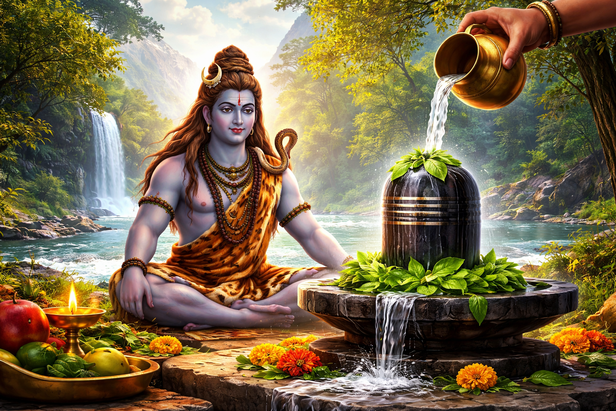
Maha Shivratri is often described as the night of Shiva and Parvati’s union, but its deeper meaning lies beyond mythology. Spiritually, it is considered a night of heightened awareness, discipline, and inner stillness. Unlike festivals centered on celebration and abundance, Maha Shivratri focuses on restraint and introspection. Shiva is worshipped not with gold or luxury, but with water, leaves, silence, and devotion. The simplicity of these practices reflects Shiva’s nature as the ascetic who values awareness over display.

1. Observing Fasting With Awareness
Fasting on Maha Shivratri is meant to discipline the body and calm the mind, not to cause discomfort. Traditional belief holds that reducing food intake conserves energy, allowing greater mental clarity and alertness. Since Shiva is revered as the Adiyogi, fasting symbolizes self control and inner balance. Whether one observes a complete fast or consumes light food, the intent matters more than the method. The practice reminds devotees to rise above indulgence and focus inward.
2. Offering Water and Milk to the Shivling
Pouring water or milk over the Shivling is one of the most recognizable rituals of Shivratri. Symbolically, water represents life and emotional flow, while milk signifies purity and nourishment. Together, they reflect balance between intensity and calm. The slow, continuous offering encourages patience and focus, turning the ritual into a meditative act rather than a mechanical one. It expresses the idea of surrendering restlessness and seeking harmony.
3. Staying Awake Through the Night
The night long vigil of Maha Shivratri represents conscious wakefulness. Spiritually, darkness symbolizes ignorance, and remaining awake signifies awareness in the midst of it. Shiva is associated with alertness and stillness, and the vigil mirrors this quality. Even staying awake for part of the night with intention is considered meaningful, as the practice emphasizes awareness over physical endurance.
4. Chanting Shiva Mantras
Mantra chanting, especially “Om Namah Shivaya,” is believed to steady the mind and regulate breath. The repetition gradually quiets mental noise and brings attention inward. On Maha Shivratri, chanting is traditionally done at night, when distractions are minimal. The aim is not loud recitation, but continuity and absorption. Over time, the silence between chants becomes as significant as the sound itself.
5. Practicing Silence and Introspection
Silence is one of the most subtle offerings to Shiva. Observing silence allows the mind to slow down and reflect. Shiva is often depicted as a silent teacher, emphasizing wisdom through stillness rather than words. Even brief periods of silence on Shivratri encourage self observation and clarity, helping rituals transform into inner experiences.