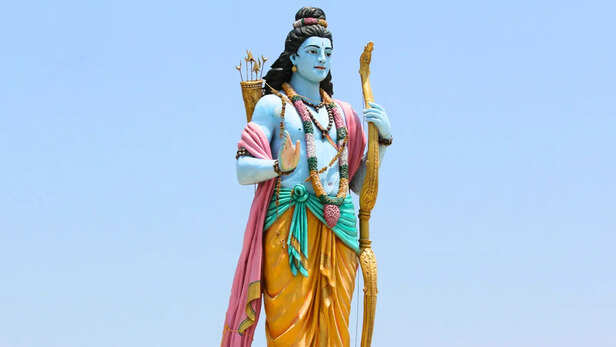
There is something profoundly captivating about the Ramayana- not merely as a sacred narrative, but as a living geography that continues to breathe through the temples, rivers, and landscapes of India. What makes this epic extraordinary is that its story is not locked in the past; it is scattered across real places that devotees can still visit, experience, and connect with on a deeply personal level.
Yet, beyond devotion and history lies something even more intriguing- hidden layers of truth, lesser-known traditions, and enduring mysteries that continue to surround these sacred spaces. These are not myths in the casual sense, but beliefs, practices, and observations that have been preserved through centuries of faith and cultural continuity.

Ayodhya Ram Mandir: The Sacred Ground of an Eternal Birth
At the heart of this journey lies Ayodhya, revered as the birthplace of Lord Rama. While millions recognise its importance, what often goes unnoticed is how deeply layered this sacred geography truly is.
Traditional accounts identify this exact region as Ram Janmabhoomi, and over centuries, continuous worship and references in ancient texts have sustained its identity as Rama’s birthplace. What adds to its spiritual depth is the belief that Ayodhya is not just a physical city, but one of the seven Moksha-puris- places believed to grant liberation.
The hidden truth here is not a dramatic secret, but a powerful continuity: despite invasions, destruction, and reconstruction across centuries, the site has remained a focal point of uninterrupted faith, making it one of the rare places where belief has outlived history itself.
Rameswaram: The Temple Linked to the Bridge of Faith
Far in the south, Rameswaram holds one of the most fascinating connections to the Ramayana. This is traditionally believed to be the site where Rama prayed to Lord Shiva before beginning his journey to Lanka.
The Ramanathaswamy Temple is not only one of the twelve Jyotirlingas but is also associated with a remarkable phenomenon- its 22 sacred wells, known as teerthams, each said to have water with a distinct taste despite being located within the same complex. Devotees still experience this variation today, and it continues to intrigue visitors and researchers alike.
Nearby lies the legendary Ram Setu, a chain of limestone shoals visible between India and Sri Lanka, which many traditions associate with the bridge built by Rama’s army. While scientific interpretations exist, its alignment with the epic narrative keeps the mystery alive.
The hidden truth of Rameswaram lies in this convergence of belief and geography- where faith is not abstract, but tied to tangible, observable elements.
Bhadrachalam: The Temple of a Devotee’s Vision
Located on the banks of the Godavari, Bhadrachalam Temple is deeply connected to a unique story- not directly from the Ramayana, but from a devotee’s experience that kept the epic alive through centuries.
The temple is named after Bhadra, a devotee who is believed to have meditated here, waiting for Rama’s darshan. According to tradition, Rama appeared before him, granting his wish and sanctifying the region.
Historically, the temple gained prominence during the 17th century through Bhakta Ramadasu, whose unwavering devotion led to its construction despite immense personal hardship. His story is documented and widely acknowledged in regional history. The hidden truth here is subtle yet powerful: Bhadrachalam stands as proof that the Ramayana is not just an ancient story- it is a living tradition that continues to manifest through devotion across different eras.
Chitrakoot: The Land Where Time Feels Paused
Nestled across Uttar Pradesh and Madhya Pradesh, Chitrakoot is widely believed to be one of the primary locations where Rama, Sita, and Lakshmana spent a significant part of their exile.
Ancient texts, including the Ramayana, describe Chitrakoot as a place of natural beauty and spiritual calm, and even today, the region retains an atmosphere that many visitors describe as unusually peaceful.
One of its most revered spots, Ram Ghat, is traditionally associated with Rama’s daily routines during exile. Pilgrims continue rituals here that are believed to trace back to those times. The hidden truth of Chitrakoot lies in its continuity of experience: while centuries have passed, the landscape, rituals, and spiritual atmosphere remain closely aligned with the descriptions found in the epic, making it one of the rare places where narrative and environment still feel inseparable.
Ram Tirth, Amritsar: The Birthplace of an Untold Chapter
Away from the more commonly discussed locations lies Ram Tirth Temple, associated with a lesser-highlighted but crucial part of the Ramayana- the life of Sita after her exile.
Tradition holds that this site marks the ashram of Sage Valmiki, where Sita found refuge and where her sons, Luv and Kush, were born. It is also believed that Valmiki composed significant portions of the Ramayana here, making this location deeply significant in the preservation of the epic itself.
Annual fairs and rituals continue to honor this legacy, drawing thousands of devotees who come not just for Rama, but for Sita’s story- one of resilience, dignity, and quiet strength. The hidden truth here shifts the narrative: it reminds us that the Ramayana is not only about Rama’s journey, but also about the lives and sacrifices of those around him.
A Story That Still Lives Among Us
What makes these temples extraordinary is not just their connection to the past, but their ability to remain relevant in the present. The Ramayana is not experienced only through scriptures- it is felt through these places, their rituals, their stories, and the countless devotees who continue to keep them alive.
And perhaps that is the greatest secret of all: that the Ramayana was never meant to remain a story. It was meant to become a living experience- one that continues, quietly and powerfully, even today.
Unlock insightful tips and inspiration on personal growth, productivity, and well-being. Stay motivated and updated with the latest at My Life XP.