
Get all your news in one place.
100's of premium titles.
One app.
Start reading
Livingetc
Livingetc
Amiya Baratan

5 Problems With Designing Your Home Entirely Around 'Calm' — And What Experts Do Instead so a Space Doesn't End Up Boring or Impersonal

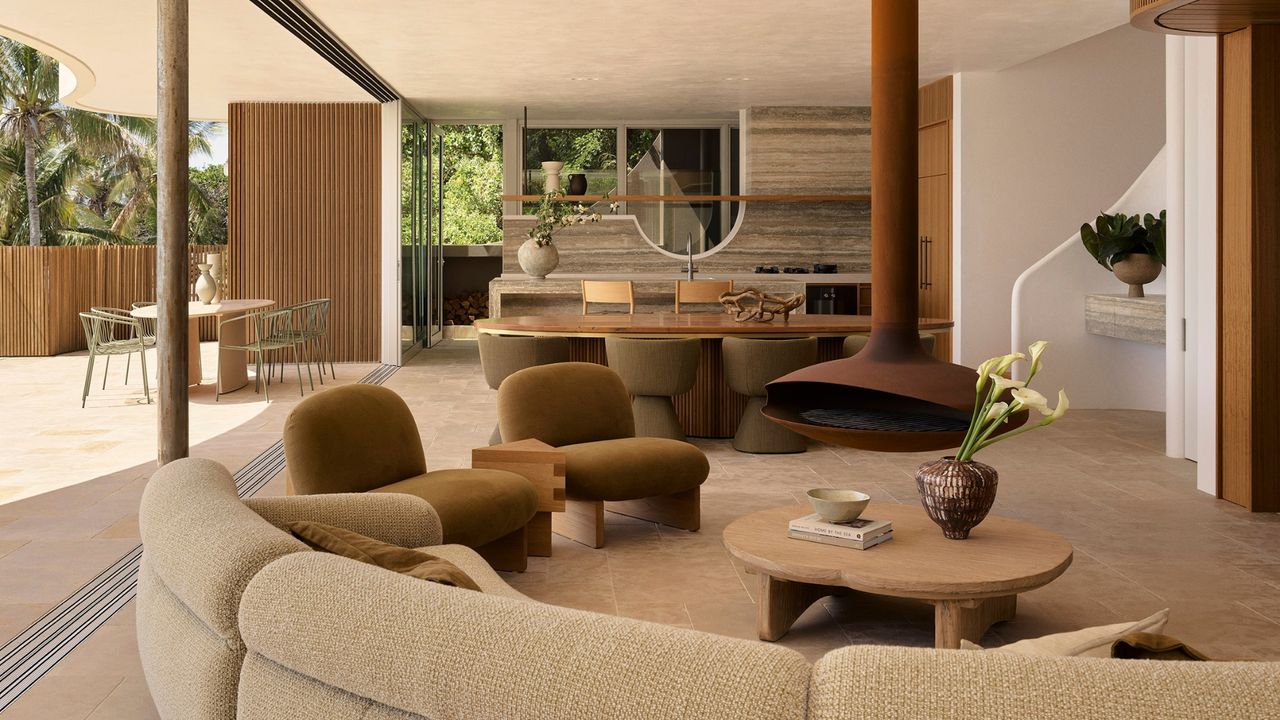
An earthy living room with a curved sectional sofa, brown suede chairs, a wood coffee table, a vase of tulips, a brown hanging fireplace, a stone kitchen, and the balcony doors drawn open.

As a home wellness writer, I find that most of the homes I explore are designed with calm at their core. However, there's a difference between designing a home entirely around this feeling and interspersing pockets of relaxation to envelop you at the end of the day.

The main problems with a home curated solely to calm include a lack of emotional registers, monotonously neutral palettes, rigid visual perfection, impersonal spaces, and rooms that fall flat. As with most aesthetics, it's about finding the balance between making your home feel calm without compromising dimension.

So if you've chased this style of interiors your whole life, here's why it might be slightly overrated once you catch up.

1. Lack of Emotional Registers

DO INSTEAD: Consider the objective of the room and let the interior style tie into the way it feels. (Image credit: Sharyn Cairns. Design: CKA Studio)

"You might want a bedroom to feel restful, but does your kitchen, dining room, hallway, children's room and sitting room all need to make you feel exactly the same way?" says interior designer Hayley Fellows-Prior.

"Ideally, some rooms should energize you, some should encourage conversation, some can be playful, and some should feel cocooning." Designing each room for a different mood will ultimately make your home feel far more stimulating.

This fluted black vase from H&M is a low-stakes way to cheer up a space with a vibrant bouquet.

2. Overdoing Neutral Palettes

DO INSTEAD: Don't be afraid to introduce color outside the boundaries of a neutral scheme. (Image credit: Riley Snelling. Design: LN Studio. Builder: Memme Investments)

"Going with an all-neutral palette with no variation or contrast is a big problem with designing homes entirely around calm," says interior designer Jennifer Jones. "All white walls and furniture can feel sterile instead of serene."

Instead, she recommends designing in a range of tones and textures to maintain a warm feel. And if you can't help but favor simple colors, try using minimalist palettes that don't feel one-dimensional.

Buying a rug with a cool pattern or a bold color will instantly wake your space up from its all neutral slumber.

3. Visual Perfection Leaves No Room for Relaxation

DO INSTEAD: Embrace the wabi-sabi of your home for a space that genuinely evokes a sense of restfulness. (Image credit: Anson Smart. Design: CG Design Studio. Builder: Thais Pupio and Wak'a Designs)

"If everything has to remain perfectly styled, concealed, and clutter-free, you can end up creating a home you're frightened to actually live in," says Hayley. "A genuinely comfortable home should tolerate the chaos that a Tuesday morning can bring, everyone trying to rush out of the door at once and coffee mugs piled in the sink!"

For this problem, I prescribe the Japanese art of fukinsei, or the charming concept of wabi-sabi. It'll help you embrace asymmetry and imperfection for a home that feels more livable.

A hint of patina, as manufactured into these ceramic planters, makes your home feel more comfortably lived in.

4. You're Left with Impersonal Spaces

DO INSTEAD: Let your home's story speak to the memories you've made. (Image credit: Riley Snelling. Design: LN Studio. Build: Agrigento Luxury Homes)

"Typically, I find that a calm home can simply feel boring," Jennifer points out. "There's no interesting artwork, color, or unique patterns that lend a home soul and personality."

And if all you're being fed by your calm-coded algorithm is beige homes, then this is your sign to snap out of your feed and avoid copycat interiors. Instead, take a moment to get your taste back. I have a feeling your house will feel more like a home before you know it.

Even a black-and-white picture will look twice as stylish in this pattern-drenched frame.

5. No Contrast Equals a Flat Aesthetic

DO INSTEAD: Start with one interesting thing in every room to offset its neutrality. (Image credit: Robin Utama. Design: CKA Studio. Builder: Samssons Projects)

"One of the problems with designing entirely around calm is that everything can end up speaking at the same volume. If the furniture, artwork, lighting, color and accessories are all deliberately quiet, there's nothing for the eye to land on and a room can feel surprisingly flat," says Hayley.

"Calm doesn't have to mean removing contrast. Often it's one stronger element, whether that's an oversized artwork, a deeper color, or an unusual piece of furniture, that gives all of the quieter elements around it a reason to exist."

My favorite way to introduce a spoonful of visual interest is through the unexpected red theory, mismatched dining chairs, and color capping. Sometimes, all you need is a single element of surprise to breathe life into a room.

If you're willing to test your limits, a statement piece like this Tetris Wall Mirror from Seletti will make everyone stop, stare, and enquire.

If the one aspect you're not willing to experiment with is paint, then consider quiet colors for living room walls that aren't absolutely neutral. And in the meantime, sign up for the Livingetc newsletter for more design advice.

Sign up to read this article
Read news from 100's of titles, curated specifically for you.
Already a member? Sign in here
Related Stories
Top stories on inkl right now
One subscription that gives you access to news from hundreds of sites
Already a member? Sign in here
Our Picks
Fourteen days free
Download the app
One app. One membership.
100+ trusted global sources.