
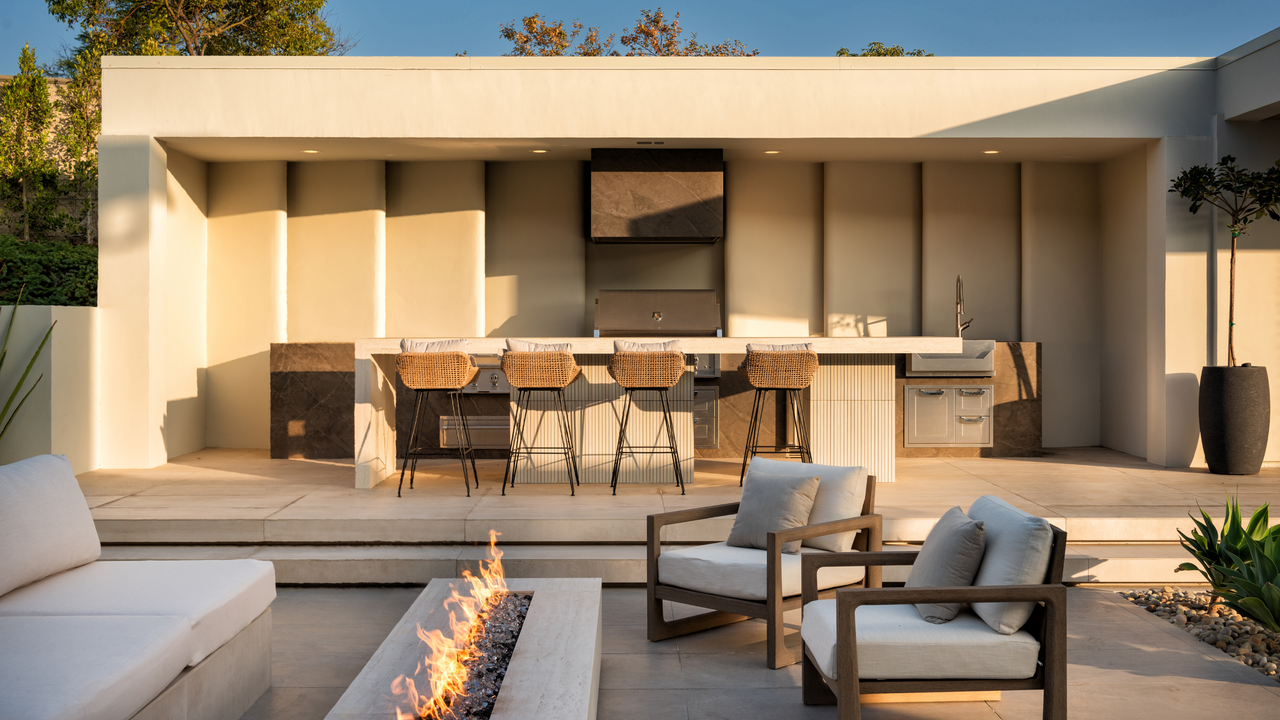
Once upon a time, not too long ago, an outdoor kitchen meant little more than a barbecue. Maybe a small prep table too, if you were lucky. How times have changed. Nowadays, we're seeing outdoor setups as complex and elevated as what you'd expect to find inside a chef's home.
Over the past few years, outdoor kitchens have had a major glow-up, and it seems that the improvements just keep coming. These modern outdoor kitchens are integrating trends and technology at the same rate as we see inside the home, creating spaces that will have you rejecting your OG kitchen entirely.

But the trends we're noticing popping up in the kitchens of our outdoor spaces have got a fair few noticeable differences from what's popular in regular kitchen designs. These trends are tweaked and adjusted to reflect their surroundings, with designs that refer back to the nature they sit within, and smart additions perfect for dining al fresco. So, get the summer started on the right note and take a look at these outdoor kitchen trends for 2026 to make the most of your garden in style.
1. Function-First Designs
"The biggest outdoor kitchen trend for 2026 is the shift from aesthetics-first to function-first," argues James King, VP of Design at RTA Outdoor Living.
Much like with your regular kitchen trends, there is a constant battle between form and function, and it can be trickier than you'd expect to find a way to marry the two. However, this year, James says that functionality is coming out on top.
This is a contrast to the direction that garden trends had been heading, as James explains, "For years, homeowners built outdoor spaces that looked great for the few hours they hosted guests. But now this is changing; I’m experiencing a clear move towards design that prioritizes how people actually live in their outdoor space every single day."
In a practical sense, this looks like a focus on how we actually cook, with an emphasis placed on workflow, incorporating popular ideas like the kitchen triangle. As well as this, James also notes a heightened interest in "surfaces that hold up to daily use without constant maintenance, and material choices that prioritize durability and safety over just visual appeal."
2. Year-Round Usability
Of course, when we talk about outdoor kitchens, the conversation is so often focused on summertime hosting. But, for the people investing significant amounts of money in these designs, finding ways to make them work well beyond the summer months is a top priority.
Co-founder of Suns Lifestyle, Reilly Gray, notes, "The biggest trend we're seeing for outdoor kitchens this year is the shift towards designs that are modular, fully integrated, and intended for year-round use."
Unlike your typical barbecue setup, these outdoor kitchens are increasingly relying on some type of structural coverage, as well as higher-quality, weather-resistant materials.
One popular technique for this is combining your outdoor kitchen with a pergola. As Reilly explains, "Positioning kitchens under pergolas also helps to create a true destination in the garden, defining the space for cooking, dining, and entertaining while providing valuable shelter from the elements, allowing the kitchen to be enjoyed comfortably throughout the year."
Many popular designs integrate adjustable forms of coverage, so you can choose whether you want full protection or allow a little bit of sunshine in while you cook.
3. Bringing in a Bar
While many homeowners are finding ways to make their outdoor kitchen work on an everyday, casual basis, there are still a fair few of us who are keen to make our outdoor kitchen a hub for garden parties and summertime hosting, too. And, for the ultimate outdoor hosting setup, a bar is practically an essential.
But this feature won't go into retirement by the time September rolls around. In fact, if anything, adding a bar will make your outdoor kitchen better suited to year-round use. As Kris Manalo, design lead at Atkin and Thyme, explains, "Outdoor bars tend to see continued use even as the weather cools, as preparing drinks is often quicker and less labor-intensive than cooking. A combined kitchen and bar set-up, therefore, gives the space greater purpose and helps extend the outdoor entertaining season."
Combine it with some cool, layered outdoor lighting and plenty of comfortable bar seating, and you've got yourself the ultimate outdoor hangout setup — just don't be surprised if your guests overstay their welcome.
4. Durable Material Choices
When it comes to outdoor kitchen trends, it's really all about the materials. Of course, there are colors and kitchen appliance trends that come and go, but the materials are what really define the look and are especially important for outdoor kitchens.
According to Paul Dore, from County Stone Ltd, it's all about large-format tiles in porcelain or ceramic. As he explains, "This is more than opting for a durable worktop; it's about using material in a way that's intentional."
This year, people are stepping beyond the purely functional and are finding visually intriguing ways to elevate the look of their outdoor kitchens, while still maintaining maximum durability and functionality. For example, Paul says, "The technique that's really gaining momentum is using thinner-format porcelain slabs to clad island sides and build up edge profiles to appear 80 to 100mm thick. The result is that luxurious, solid look you'd associate with a high-end interior kitchen — but without the structural weight that causes headaches in outdoor builds."
These smart solutions show a greater desire to get the absolute most out of these outdoor spaces. "They're no longer seasonal additions or afterthoughts — they're year-round spaces that need to perform in a British climate and stand up to the same scrutiny as any interior room. That shift in expectation is pushing materials and detailing to a new level," says Paul.
5. Blending With Nature
With so much focus placed on creating continuity between your interiors and outside spaces, you can actually end up with a garden that feels incongruous to its surroundings. No matter what, nature should be at the core of your garden design. But when we use so many cold, hardscaping materials, they can begin to overpower the surroundings, making nature feel like it's on the back foot with your outdoor kitchen design.
As Sophie Bertrand, head of design at Rosebank Landscaping, says, "Outdoor kitchens can risk overpowering a space if they are not balanced with the surrounding landscape." So, to help mitigate this, she recommends spending some time building up a layered, gentle planting scheme to counteract the hardness of these materials.
"A considered planting scheme using softer evergreens and foliage can soften harsh lines while helping the kitchen feel integrated into the wider outdoor living environment," she explains. By including leafy foliage, you help root your outdoor kitchen into its surroundings, making it feel distinctly different from an interior kitchen.
Another nice way to do this is by planting an edible herb garden near your outdoor kitchen. Not only will this help to bring more color and softness to the design, but you'll get plenty of use from it, too.

If you can't commit to a full structural cover for your outdoor kitchen, a sturdy sun sail, like this, is a great alternative.

These portable, dimmable LED lamps are such a low-maintenance way to bring some extra illumination to your outdoor kitchen.

Every good outdoor bar needs a few outdoor bar stools to match, and these rattan ones from Nkuku have a lovely, boho look.
Now you know all the trends to include, it's time to get acquainted with all the outdoor kitchen mistakes you should be avoiding, just in case.
And for all the rest of your design inspiration, why not subscribe to our newsletter, and all the latest will land directly in your inbox.