Delhi is a city that moves fast. Deadlines, traffic, ambition, competition. Every day feels like a test of patience and resilience. Yet within this restless rhythm, there are sacred pauses. Places where people step out of the noise and into silence. Among these spiritual anchors, Hanuman temples hold a special place.
For many in Delhi, Hanuman is not a distant figure from scripture. He is strength before an interview, calm before an exam, protection before a journey, and courage during personal struggles. Across the capital, certain Hanuman temples have become deeply woven into the emotional and spiritual lives of the city’s residents. Here are five famous Hanuman temples in Delhi that continue to inspire devotion and inner strength.

1. Hanuman Mandir Connaught Place
Faith Standing at the Heart of the Capital
Located near Baba Kharak Singh Marg, this temple is considered one of the oldest Hanuman shrines in Delhi. Historical accounts link its reconstruction to Maharaja Jai Singh in the eighteenth century, while popular belief connects it to the time of the Pandavas. Its location in the commercial and political core of Delhi gives it unique significance.
One of the most remarkable aspects of this temple is the continuous chanting of “Sri Ram Jai Ram Jai Jai Ram,” which has reportedly been ongoing for decades. In the middle of traffic, offices, and crowded markets, the temple offers an uninterrupted spiritual rhythm. Many professionals and students visit here before important decisions, finding reassurance in a shrine that has stood steady through centuries of change.
2. Shri Hanuman Mandir Karol Bagh
Strength Amidst the Rush of Everyday LifeSituated near Ajmal Khan Road, this temple is deeply connected to the daily lives of West Delhi residents. The idol of Hanuman here is depicted in a strong standing posture, symbolizing readiness, discipline, and unwavering devotion.
The temple is especially crowded on Tuesdays and Saturdays, when devotees gather to recite Hanuman Chalisa. Shopkeepers, families, and working professionals often include a visit here as part of their weekly routine. Beyond rituals, the temple also organizes religious discourses and community initiatives. In an area known for constant movement and business activity, it provides grounding and mental clarity.
3. Hanuman Setu Temple
Devotion by the Flowing Yamuna
Located near Yamuna Bazaar close to Kashmere Gate, Hanuman Setu Temple carries historical and symbolic importance. The name Setu recalls Hanuman’s role in the Ramayana during the building of the bridge to Lanka, representing courage and faith during impossible circumstances.
Its proximity to the Yamuna adds a quiet spiritual depth to the surroundings. Devotees often visit here during challenging phases of life, seeking strength to overcome fear and uncertainty. The temple’s traditional architectural style and devotional atmosphere make it a significant spiritual landmark in one of Delhi’s oldest regions.
4. Sankat Mochan Hanuman Mandir
Seeking Relief from Life’s PressuresThe very name Sankat Mochan means remover of troubles, and this temple near Jhandewalan reflects that promise. Easily accessible and well maintained, it draws office goers, students, and families throughout the week.
Regular recitations of Sundar Kand and Hanuman Chalisa create a collective devotional environment that many find emotionally healing. People come here not only for ritual worship but to find calm in moments of anxiety. In a city where stress is common and expectations are high, this temple offers a space to breathe and regain inner balance.
5. Shri Hanuman Vatika
A Modern Symbol of Timeless Faith
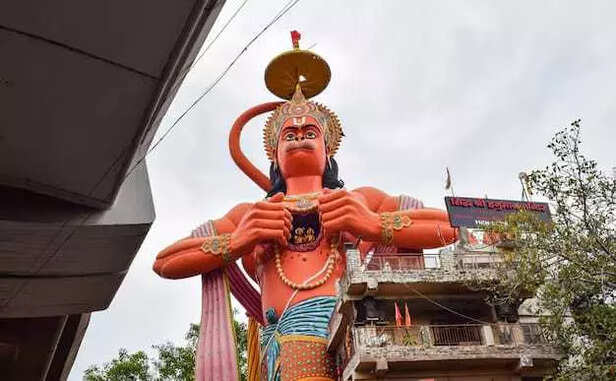
In Dwarka stands Shri Hanuman Vatika, known for its expansive premises and towering statue of Lord Hanuman visible from a distance. Unlike older temples rooted in medieval history, this shrine represents contemporary temple architecture while preserving traditional rituals.
The grand statue symbolizes protection and watchfulness over the surrounding community. Families gather here for special pujas, festivals, and spiritual gatherings. Its scale reflects how devotion continues to grow alongside urban expansion. Even in newly developed residential areas, faith remains a central force that binds people together.