
Get all your news in one place.
100’s of premium titles.
One app.
Start reading
Homes & Gardens
Homes & Gardens
Tenielle Jordison

5 Cold Hardy Plants For a Green Roof – Jump on the Most Low-Maintenance Sustainability Trend of 2026 in Your Own Yard

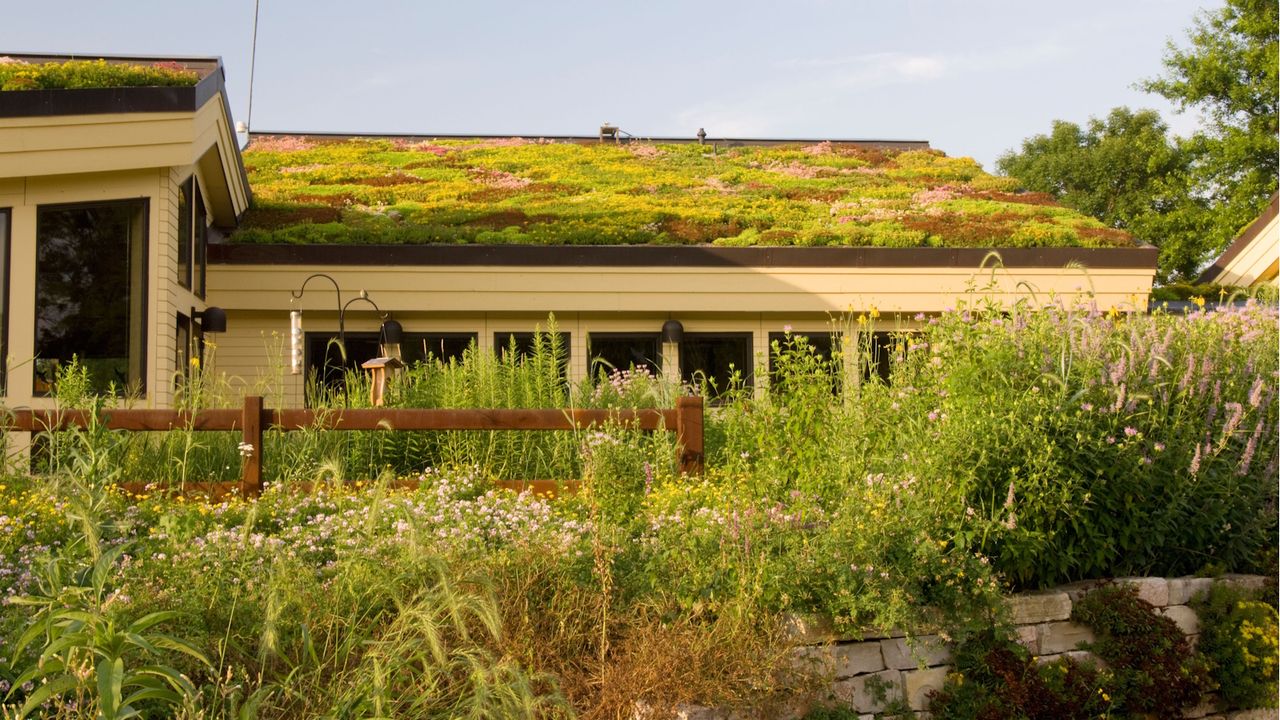
Green roofs to protect from wildfires.

Green roofs are a sustainable garden trend that's here to stay. Not only do they provide a new dimension to planting schemes, they're also a beautiful solution to greening up urban spaces. And, they host a number of environmental benefits.

However, you might be put off having a green roof if you live in a colder hardiness zone (generally speaking zone 6 and below). This is especially the case when the best plants for a green roof are better suited to warmer climes, coping with intense sun exposure and high temperatures. But, there are actually plenty of cold hardy plants for a green roof that can make this a sustainable garden feature in the colder regions.

From succulents to flowers and grasses, there are a surprising number of plants to grow on a green roof that can thrive in colder conditions. Plus, they often need minimal to no frost protection, making them ideal for a low-maintenance green roof. Here, garden experts share their top five picks.

(Image credit: Simon Turner/Alamy Stock Photo)

5 Cold Hardy Plants for a Green Roof

A green roof offers so much to a garden, as a fundamental example of biophilic garden design. It improves air quality, manages water runoff, improves energy efficiency (by helping to cool and heat a building), creates wildlife habitats, and more.

Even if you don't live in the warmest of climes, you can create one in your yard, whether it be on a shed roof or your house. Here are the best plants to choose.

1. Rosemary

(Image credit: Steffen Hauser / botanikfoto via Alamy)

First on the list of cold hardy plants for a green roof is one of the most aromatic herbs: rosemary.

'One surprisingly tough, cold-tolerant plant I always come back to is rosemary,' says Siobhan Shaw, sustainable gardening expert and founder of Growing to Give.

'It's evergreen, woody, aromatic, and much hardier than people expect,' she adds.

While rosemary thrives best in zones 8-11, the coldest varieties (like 'Arp' which is available as starter plants on Amazon) are hardy down to zone 6.

'On a green roof, where drainage is excellent and soil stays relatively shallow, rosemary can thrive as a low, bushy, cascading plant that doesn’t ask for much water and gives a lot back,' Siobhan says.

'It’s especially well suited for extensive green roof systems with full sun, good airflow, and well-managed wind exposure.

'Bonus: it smells incredible and feeds pollinators with tiny pale purple flowers,' she adds.

The hardiest varieties of rosemary are herbs you don't need to winterize, too, making it a low-maintenance option for this urban garden set-up.

2. Dianthus

(Image credit: Vaivirga via Getty Images)

For a pop of color on your green roof, Peter Lowe, Garden Program Manager at The Dawes Arboretum, recommends dianthus, better known as pinks or carnations.

'These plants will grow half a foot to a few feet. They love drier, tougher soils, and they grow well in full sun,' Peter describes.

These charming blooms are native to Europe and Asia, with a hardiness to zone 3-9 and are tolerant to the challenging, exposed conditions of a green roof.

'It has a unique appearance, a plethora of colorful options, and they're are also fairly disease-resistant,' Peter adds.

These flowers are also tolerant of frost to a certain extent, but can benefit from mulching for insulation.

It's easy to grow dianthus from seed (with these dianthus seeds from Amazon, for example), or you can source starter plants from nurseries.

3. Cobweb Houseleek

(Image credit: blickwinkel via Alamy)

While you may associate landscaping with succulents and cacti with hotter climes, there are several succulents that are incredibly hardy of colder temps - including the rosette-forming cobweb houseleek.

It has a unique appearance, with fibrous hairs that resemble a cobweb, hence its name.

'The benefit of growing succulents on a roof is that they don't need a lot of water to survive and thrive,' says urban gardening expert Annette Hird.

As a succulent, cobweb houseleek has shallow roots, ideal for the limited soil depth of a green roof. Plus, it's drought-tolerant.

'Plus, they're low-care and don't demand any attention. Planting a selection of these could also provide plenty of color when they flower with pink blooms in summer, and they'll keep pollinators happy.'

Cobweb houseleek can tolerate down to zone 4, native to mountainous regions of Southern and Central Europe, where it experiences cold winds and cold night temperatures.

Come winter, it generally doesn't need any frost protection, but it will need excellent drainage to cope with heavier rainfall in the colder seasons.

Planting tip: plant cobweb houseleek en masse to create a mat of rosette foliage.

Find cobweb houseleek starter plants on Amazon.

4. Prairie Dropseed

(Image credit: Alamy/Botanic World)

Among the cold hardy plants for green roofs, there are lots of options of ornamental grasses. One of the best is prairie dropseed, a pretty native grass that forms mounds of green foliage that turn orange in fall, with tan and silvery panicles.

'These delightful mounds add depth and interest to roof planting,' says Annette.

It's hardy across zones 3-9 and is incredibly low-maintenance, making it ideal for a low-effort urban garden.

Prairie dropseed doesn't require lots of water once established and does best in well-draining soil, like the soil typically used for green roofs.

Prairie dropseed is available to purchase from Nature Hills.

5. Creeping Phlox

(Image credit: MaYcaL/Getty Images)

Creeping phlox is another blooming plant to include on your green roof. It's a flowering ground cover with varieties that is hardy across zone 3-9.

'This plant is native and does well in drought and with erosion,' says Peter.

A bonus of creeping phlox is that it's a fast-growing ground cover that will spread and fill gaps in your green roof.

It blooms in spring in a range of colors, from white to pink and purple. It's fairly low-maintenance, but it does benefit from cutting back after flowering by about one third.

You can do this with pruning shears (like these bypass pruning shears from Amazon), encouraging denser growth and more flowering next season.

Find creeping phlox seeds of all colors at Burpee.

FAQs

How Do You Maintain a Green Roof?

Green roofs are generally low-maintenance, but you should plan to check on it a few times a year. You should cut back any flowering plants once faded, get rid of weeds, and ensure your irrigation system is working.

Another benefit of green roofs you may not be aware of is that some green roof plants can protect from wildfires.

Shop Gardening Accessories

Sign up to read this article
Read news from 100’s of titles, curated specifically for you.
Already a member? Sign in here
Related Stories
Top stories on inkl right now
One subscription that gives you access to news from hundreds of sites
Already a member? Sign in here
Our Picks
Fourteen days free
Download the app
One app. One membership.
100+ trusted global sources.