
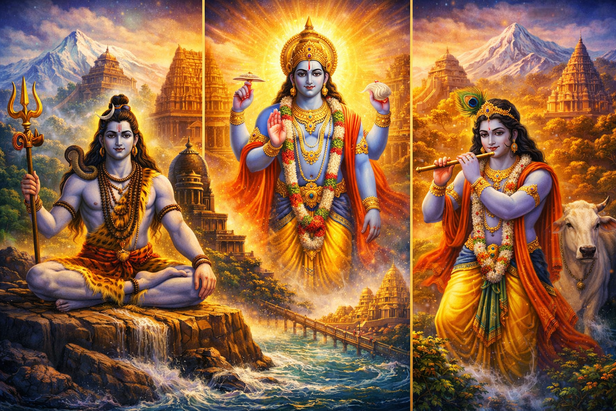
India’s temple tradition is often described through separate paths: Shaiva, Vaishnava, and Krishna bhakti. But some temples make that separation feel incomplete. In these sacred spaces, Shiva is not distant from Vishnu, Vishnu is not separate from Krishna, and Krishna is not worshipped in isolation from older temple traditions. Instead, the connection feels organic, philosophical, and deeply Indian.
That is what makes these temples so fascinating. They do not merely represent devotion to one deity. They reveal how Hindu worship has long allowed overlap, reverence, and shared sacred meaning. In some places, one form of God worships another. In others, shrines stand side by side, quietly reminding devotees that what people divide in practice often remains united in spirit. These four temples stand out for exactly that reason. They make the connection between Shiva, Vishnu, and Krishna feel not forced, but natural.