Get all your news in one place.
100’s of premium titles.
One app.
Start reading
Times Life
Times Life
Nidhi

4 Hindu Rituals That Were Very Different 100 Years Ago

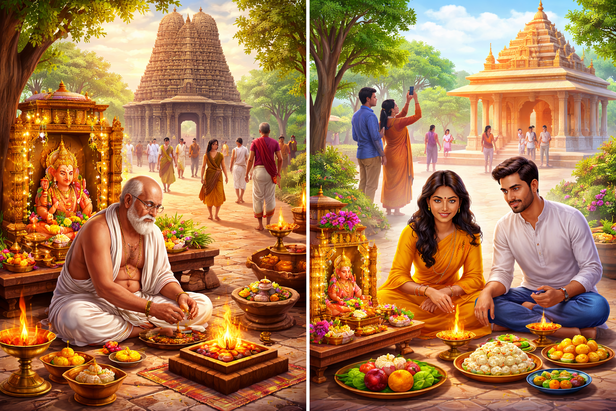
Hindu traditions are often seen as ancient and unchanging, but the way many rituals are practiced today is quite different from how they were performed just a century ago. While the spiritual meaning and faith behind these practices remain the same, the lifestyle of people has transformed significantly over time.

A hundred years ago, most Hindu rituals were deeply connected to daily routines, community life, and traditional family structures. Life moved at a slower pace, and people had more time to follow detailed spiritual practices. Today, with urban lifestyles, busy work schedules, and modern conveniences, many rituals have become shorter, simpler, and more flexible.

These changes do not mean traditions are disappearing. In fact, they show how Hindu culture has continuously adapted with time while keeping its core values intact.

1. Daily Puja at Home Was Longer and More Detailed

Chrysanthemums and Marigolds are Used for Puja

In earlier times, daily worship at home followed a structured routine that could take a significant amount of time. Many families woke up before sunrise, bathed, and then prepared the home shrine with fresh flowers, lamps, and offerings. Devotional chants and Sanskrit mantras were often recited for extended periods.

Today, most households still perform daily prayers, but the process has become shorter. People may light a lamp, offer incense, and say a brief prayer before starting their day. The ritual has adapted to modern schedules, but the intention of devotion remains strong.

2. Temple Visits Were a Regular Part of Everyday Life

A century ago, visiting the temple was a routine activity for many people. Temples served not only as places of worship but also as centers for social gatherings, cultural events, and spiritual learning. Many devotees visited temples daily or several times a week.

In modern times, temple visits are often reserved for festivals, special occasions, or weekends. Urban living and busy lifestyles have reduced the frequency of visits, though devotion remains strong. Many temples have also embraced technology by offering live streaming and online darshan.

3. Hindu Weddings Used to Last Several Days

Wedding
Men and gold digger

Traditional Hindu weddings in the past were extended ceremonies that lasted several days. Each ritual had deep spiritual significance, and families carefully followed Vedic customs under the guidance of priests and elders. These ceremonies involved the entire community and emphasized sacred vows and traditions.

Today, many weddings are condensed into shorter events due to time and logistical constraints. Although celebrations may still be elaborate, the rituals are often performed within a single day or evening.

4. Fasting Rituals Were Followed More Strictly

Fasting has always been an important part of Hindu spiritual discipline. Earlier generations followed strict fasting rules during occasions like Ekadashi, Navratri, or Shivratri. These fasts often involved complete abstinence from certain foods and a day dedicated to prayer and spiritual reflection.

Today, fasting practices are often more flexible. Many people adapt the rules according to their health and lifestyle, choosing lighter diets or symbolic fasting while continuing their daily responsibilities.

Sign up to read this article
Read news from 100’s of titles, curated specifically for you.
Already a member? Sign in here
Related Stories
Top stories on inkl right now
One subscription that gives you access to news from hundreds of sites
Already a member? Sign in here
Our Picks
Fourteen days free
Download the app
One app. One membership.
100+ trusted global sources.