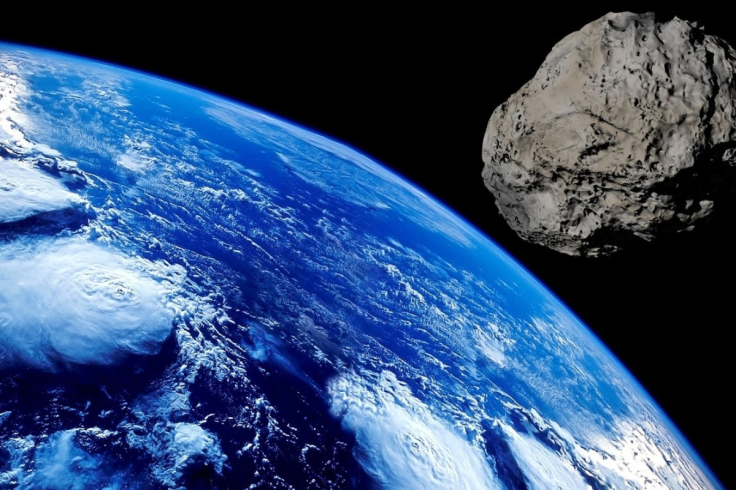
The calendar turning to the final month of the year brings with it not just the festive excitement of Christmas and New Year's, but a profound sense of awe as the cosmos unveils a series of spectacular events right above our heads. If you have been searching for a reason to dust off your telescope or simply peer up into the winter night sky, December 2025 delivers astronomical wonders that range from dazzling meteor showers to the close passage of an object born outside our solar system.
NASA has released its comprehensive monthly skywatchers' guide, detailing a trio of unique celestial occurrences visible from Earth. These events are guaranteed to keep the reader's attention glued to the heavens, perhaps even offering a bonus chance to spot the stunning aurora borealis or 'northern lights'. From a cosmic interloper, the third of its kind ever discovered, to a colourful meteor display and a close pairing of the moon and the largest planet in our solar system, here is a detailed look at when and how to witness these truly memorable December spectacles.

The Enigmatic Interstellar Visitor: Tracking Comet 3I/ATLAS
The most compelling of December's celestial offerings is the arrival of Comet 3I/ATLAS. Its designation, 3I, marks it as only the third object in recorded history to be confirmed as having originated from outside our solar system, making its passage through our stellar neighbourhood an event of global scientific significance.
The previous interstellar visitors, 'Oumuamua and 2I/Borisov, similarly captured the world's imagination, and 3I/ATLAS provides a new opportunity to study matter that formed far beyond the sun's influence. The object was first spotted on July 1, 2025 by the Asteroid Terrestrial-impact Last Alert System, or 'ATLAS', telescope in Chile, which is how it earned the latter part of its name.
Astronomers globally, led by NASA, are employing a variety of sophisticated spacecraft and Earth-based telescopes to observe and study the comet closely. This concentrated effort is crucial, as its brief presence in our vicinity is the only chance we have to learn as much as possible about its composition and trajectory before it departs our solar system once more, perhaps never to return.
Understanding these cosmic wanderers provides invaluable data on how material is exchanged between star systems throughout the Milky Way, informing our understanding of planetary formation itself. Its path is a hyperbolic trajectory, meaning it is moving too fast — reaching speeds up to 246,000 kilometres per hour — to be gravitationally bound by the sun. The comet reached its closest point to the sun (perihelion) on October 29, 2025, passing just inside the orbit of Mars before beginning its outbound journey.
The good news for Earth-bound viewers is that Comet 3I/ATLAS poses no threat to our planet and will remain safely distant throughout its passage. On its closest approach to Earth, scheduled for December 19, the comet will still be approximately 170 million miles away, a distance that is more than 700 times the distance between the Earth and the moon. Based on observations from the Hubble Space Telescope, astronomers estimate the nucleus of 3I/ATLAS to be between 440 metres and 5.6 kilometres in diameter.
For dedicated skywatchers, catching a glimpse of this fascinating object is possible, though it requires specific equipment. Look towards the east to northeast in the early pre-dawn hours. The comet may be found just beneath Regulus, the bright star that forms the radiant heart of the constellation Leo, the lion.
To successfully observe this interstellar traveller before it leaves our planetary neighbourhood, you will need to use a telescope with an aperture of at least 30 centimetres. Local observatories and organised skywatching events offer the best opportunity to view this rare spectacle.

December's Sparkling Spectacle: The Geminids, a Companion to 3I/ATLAS
While Comet 3I/ATLAS provides a subtle, telescopic treat, the Geminid meteor shower offers a spectacular, widespread display visible to the naked eye. Known consistently as one of the brightest and most colourful annual meteor showers, the Geminids will streak across the skies, reaching their glorious peak on the evenings of Dec. 13 and 14.
Unlike most meteor showers that originate from icy debris shed by comets, the Geminids are unique, being comprised of debris trailing the celestial object known as 3200 Phaethon. This object is not a comet but an asteroid — a rocky body — which scientists believe is why the Geminid meteors are often so bright and relatively slow-moving, enhancing their visible 'fireball' quality. The asteroid 3200 Phaethon is classified as an Apollo-class asteroid and orbits the sun every 1.43 years.
To catch the dazzling peak of the Geminids, look to the eastern sky throughout the entire evening on Dec. 13 and continue your observation on Dec. 14. The meteors will appear to radiate from the constellation Gemini, hence their name, but the easiest point of reference is the bright planet Jupiter, which will be visible nearby.
For observers under the darkest possible skies, NASA's predictions are thrilling: residents could potentially see up to 120 Geminid meteors per hour. This high rate makes the Geminids a must-see astronomical event that can be enjoyed without any specialist equipment, unlike the more elusive Comet 3I/ATLAS.

A Celestial Alignment: Jupiter and the Moon's Conjunction During the 3I/ATLAS Passage
Rounding out the cosmic calendar for the month is a beautiful celestial pairing: the conjunction of the moon and Jupiter on the evening of Dec. 7. During a conjunction, two or more objects appear to draw extremely close together in the sky, creating a visually striking alignment from the perspective of an observer on Earth.
While their proximity is merely an illusion created by our viewing angle, the sight is always enchanting. For example, as the moon and Jupiter appear to pair up this month from our Earthly view, they are, in reality, separated in space by hundreds of millions of miles — a stunning reminder of the vast distances involved in astronomy.
To enjoy the view, look towards the moon in the eastern sky on Dec. 7. The gas giant Jupiter will be positioned just above and slightly to the right of our nearest celestial neighbour. The sight of these two bright objects shining together offers a perfect, easily accessible opportunity for novice skywatchers to engage with the night sky, complementing the challenges of observing Comet 3I/ATLAS and the spectacle of the Geminid shower.
During the conjunction, the moon and Jupiter will appear just a few degrees apart — roughly the width of your outstretched fist at arm's length — with Jupiter shining brightly at an apparent magnitude of approximately -2.8.
December 2025 is an exceptional period, proving that the most spectacular entertainment is often free and overhead. From the telescopic challenge of catching the elusive interstellar visitor Comet 3I/ATLAS, to the guaranteed delight of the Geminid meteor storm and the beautiful celestial handshake between Jupiter and the moon, the skies are truly open.