
The cosmos has a knack for upending our expectations just when we think we have the neighbourhood mapped out. On Jan. 14, 2026, the Hubble Space Telescope swivelled its gaze toward the interstellar visitor known as 3I/ATLAS, capturing a series of six images that have left the astronomical community — and Harvard's Professor Avi Loeb — grappling with a genuine enigma. This is not your average comet; it is a celestial rebel that appears to be defying the very laws of solar physics we rely on to categorise our own solar system's icy wanderers.
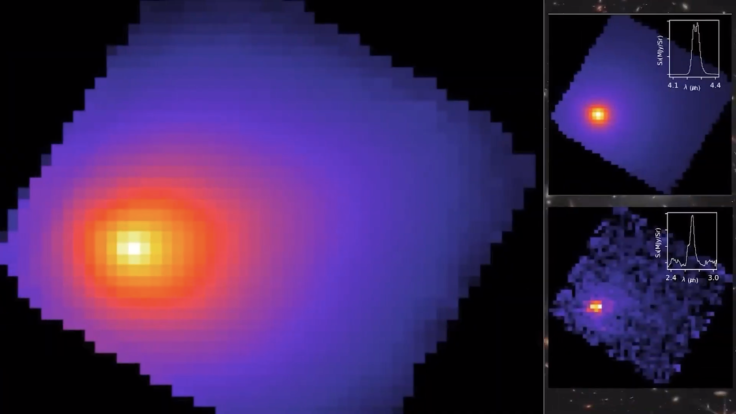
The latest snapshots reveal a massive, glowing halo of material surrounding the object's nucleus, extending more than 130,000 kilometres toward the sun. To put that in perspective, that is roughly a third of the distance between the Earth and the moon. However, the real 'weirdness' began when researchers applied a specific digital filter to the data. The brightness map captured by Hubble represents the state of 3I/ATLAS after its perihelion, showing how the interstellar guest is reacting to the intense heat of our local star.















