
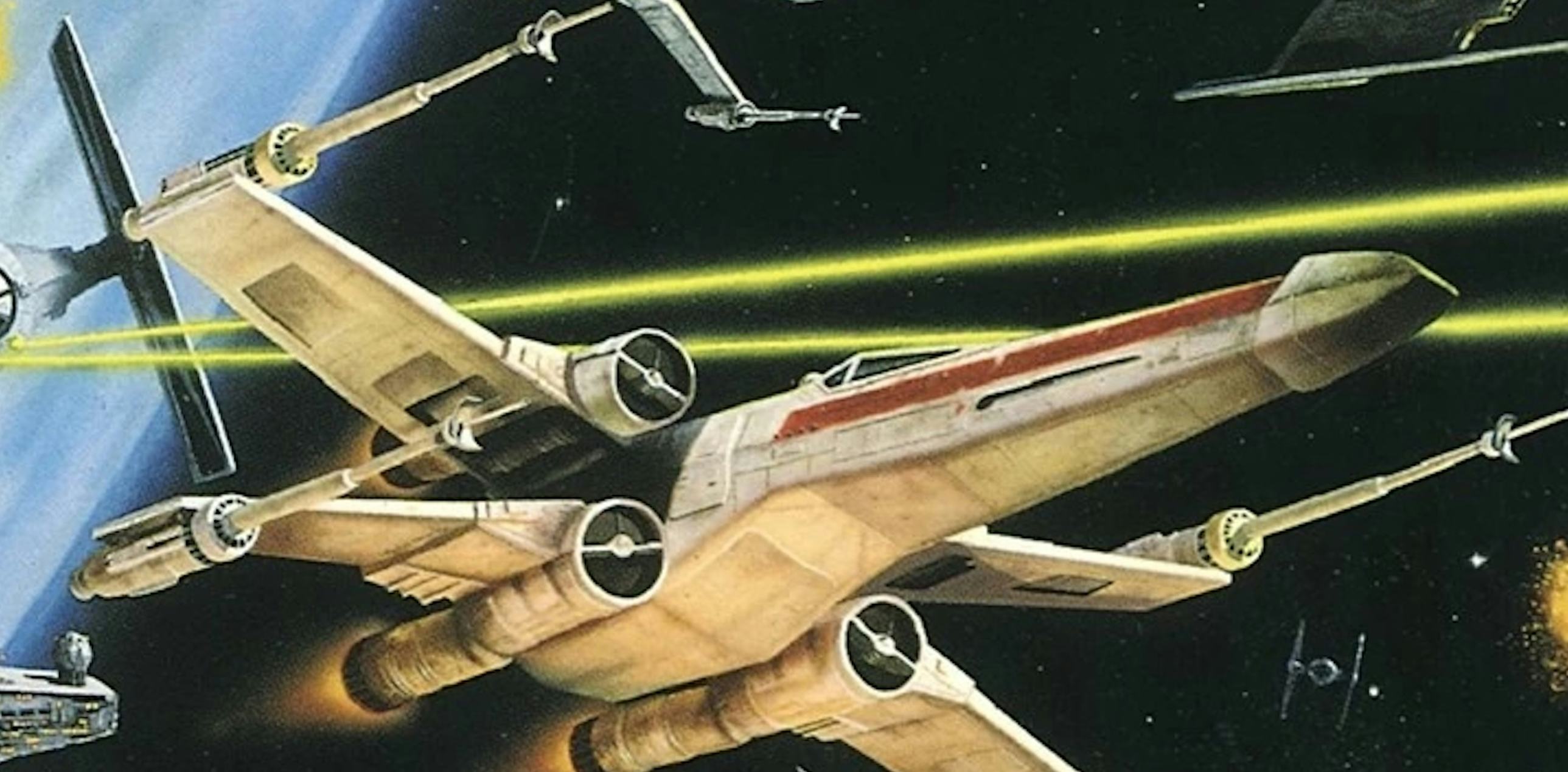
What is the coolest thing about the classic Star Wars trilogy? Some might say the easy answer to this question is everything about lightsabers; it’s equally true that the starfighters of the first three films are just as awesome. In fact, one of the primary innovations of Star Wars in 1977 was the idea that it brought nimble space dogfights to cinema. Prior to Star Wars, space battles were more lumbering, depicting larger spacecraft duking it out in the style of nautical battleships. But thanks to George Lucas’ imagination and the wizardry of the early ILM pioneers, Star Wars basically invented the way we even interact with imaginary space combat.
It’s tempting to say that in the 1990s, when the torch of Star Wars was carried by video games, comics, and novels, the saga was honoring its 1970s and 1980s roots. But what was happening was a bit more nuanced than that. In the era before The Phantom Menace and the slight reinvention of the Force, the Expanded Universe (later called “Legends”), in various seminal works (like Timothy Zahn’s Heir to the Empire), actually pushed Star Wars deeper into science fiction subgenres rather than, say, space fantasy. Like Rogue One and, eventually, Andor, one kick-ass Star Wars series positioned itself as sci-fi spycraft meets Top Gun, and that series was what we know and think of as Rogue Squadron.














