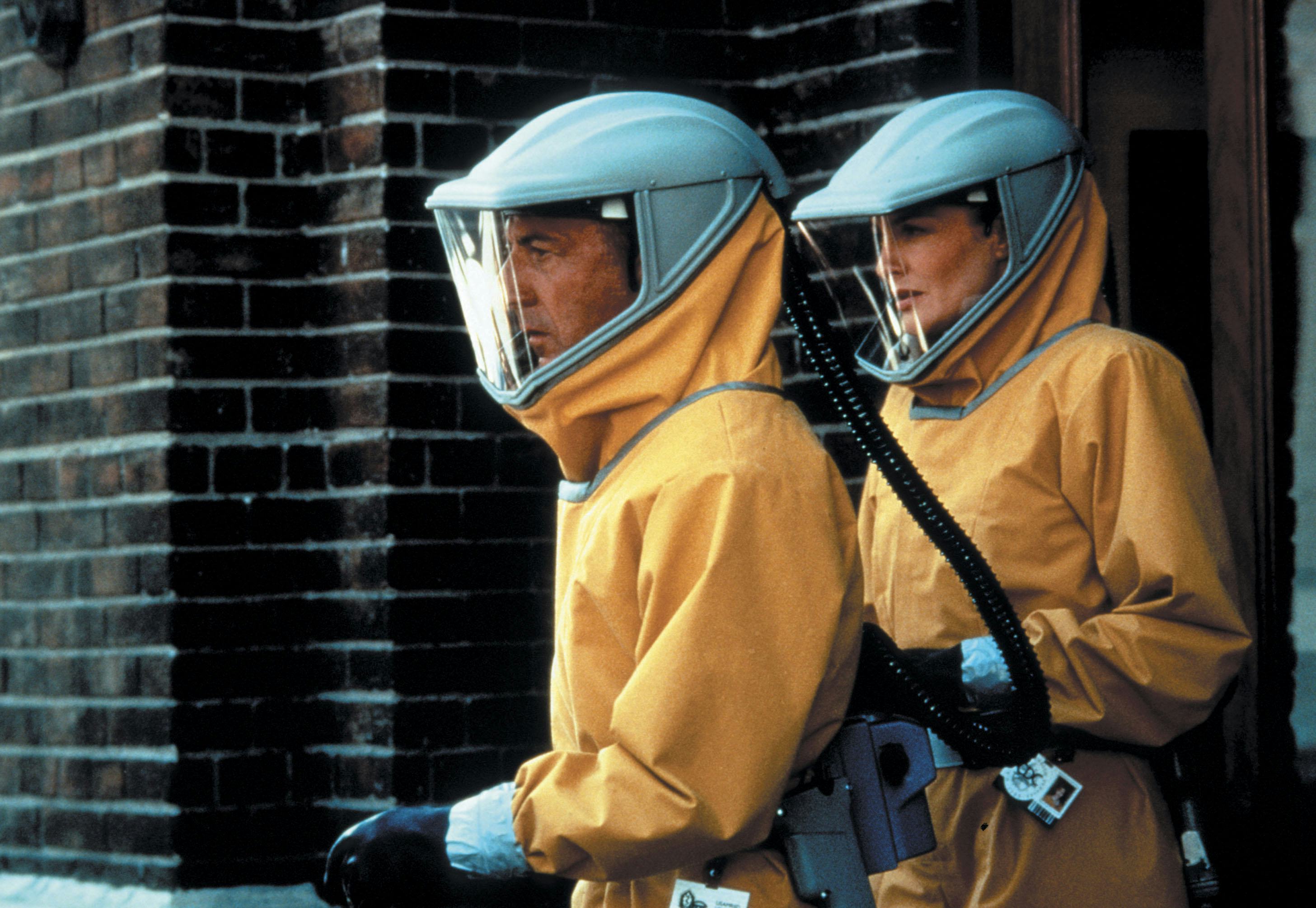
When Outbreak was released 30 years ago, Wolfgang Petersen's tense, often terrifying (if conventionally melodramatic) film seemed like the sci-fi movie it was. Surely a global outbreak of something as devastating as the movie's mutant Ebola-like virus couldn't really happen, could it? Three decades later, Outbreak seems prophetic, not just in its scenario of a rogue virus escaping from Africa and making its way into the U.S., but also in the reactions of government, business, and people alike to such a catastrophe. Outbreak is something of a mirror on society that, three decades later, is worth taking a deep look into.
The film opens in 1967, when a virus (christened Motaba) is discovered in the Congo, leading U.S. Army officers McClintock (Donald Sutherland) and Ford (Morgan Freeman) to promptly destroy the area in which it was found — along with the camp and soldiers that have been compromised by it. Nearly 30 years later, a new outbreak of Motaba occurs in Zaire, with Army epidemiologist Sam Daniels (Dustin Hoffman) concerned that the virus could spread around the globe.