Get all your news in one place.
100's of premium titles.
One app.
Start reading
MyLifeXP
MyLifeXP
Noopur Kumari

3 Most Powerful Astras in the Mahabharata

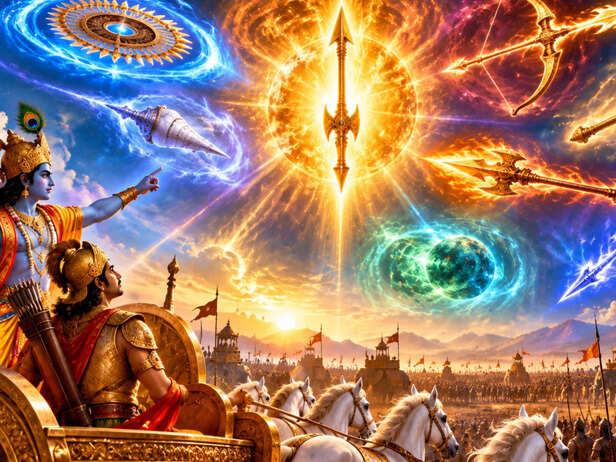
The Mahabharata is filled with warriors, divine weapons and battles that seem larger than life. But among the many astras described in the epic, some carried such extraordinary destructive power that they could not simply be treated like ordinary weapons. The Narayanastra, Brahmashirastra and Pashupatastra stand out for the warnings, conditions and consequences associated with them. One demanded that warriors stop fighting. Another was linked with devastating consequences for the land. And the third was granted to Arjuna by Lord Shiva with a serious warning about its immense power. Their stories reveal why divine weapons were not meant to be used carelessly.

Narayanastra: The Weapon That Demanded Surrender

Ashwatthama and the Narayanastra
The Narayanastra was unleashed by Ashwatthama during the Kurukshetra war.

The Narayanastra is associated with Lord Vishnu and appears in the Mahabharata during Ashwatthama's attack on the Pandava forces. The weapon was described as unleashing a tremendous shower of weapons against the enemy. But its most unusual feature was the way it was countered. Krishna instructed the Pandava warriors to put down their weapons and stop resisting. The epic describes the astra becoming peaceful when warriors abandoned their weapons and ceased fighting. Bhima initially refused to follow the instruction, forcing Krishna and Arjuna to intervene. The episode shows that strength alone could not defeat this weapon. Knowing when not to fight was the key.

Brahmashirastra: A Weapon of Terrible Consequences

Ashwatthama Invokes the Brahmashirastra
The Brahmashirastra appears in the Mahabharata's final and most dramatic conflict.

The Brahmashirastra, also called Brahmashira, is presented in the epic as an exceptionally formidable divine weapon. Its most frightening description comes near the end of the war, when Ashwatthama uses it during his conflict with Arjuna. The Mahabharata describes a terrifying consequence associated with the weapon: when such an astra strikes a land, the region may remain without rain for twelve years. Arjuna and Ashwatthama both invoke powerful astras, creating a situation in which their effects have to be restrained. The episode is less about simply possessing a powerful weapon and more about the danger created when such power is used without control.

Pashupatastra: Shiva's Fearsome Gift

Among the most extraordinary astras associated with the Mahabharata is the Pashupatastra, granted to Arjuna by Lord Shiva. Arjuna undertakes severe penance to obtain the weapon and proves his devotion and determination. According to the Mahabharata tradition, Shiva warns him about its immense destructive capability. Later accounts describe the weapon as capable of destroying the entire universe, which explains why it was not an ordinary battlefield weapon. Arjuna possessed it, but possession did not mean reckless use. The story presents the astra as something requiring judgment and restraint, making its divine power as important as the discipline of the warrior who received it.

Why These Astras Were Different

What makes these weapons fascinating is not simply their destructive ability. Each has a different story and a different set of conditions surrounding its use. The Narayanastra could be calmed through surrender rather than resistance. The Brahmashirastra carried consequences extending beyond the battlefield. The Pashupatastra was given to Arjuna with an understanding of its extraordinary power. These stories repeatedly connect divine weapons with responsibility. The Mahabharata does not present power as something that should automatically be used whenever it is available. Instead, the episodes raise a deeper question: what happens when a warrior possesses a weapon powerful enough to cause consequences far beyond the person standing in front of him?

Ashwatthama and the Darkest Turn

Ashwatthama's story gives the divine-weapon tradition an especially dramatic turn. After the death of his father Drona, he becomes consumed by revenge and launches a devastating attack against the Pandava camp. Later, his conflict with Arjuna leads to the invocation of the Brahmashirastra. The situation becomes so dangerous that the weapon's consequences cannot simply be ignored. The episode shows how grief and anger can become catastrophic when placed in the hands of someone possessing extraordinary power. In the Mahabharata, the weapon itself is not the entire story. The mindset of the person using it becomes equally important.

Arjuna's Greatest Test Was Restraint

Arjuna's journey to obtain the Pashupatastra is often remembered for the weapon itself, but the deeper part of the story is his discipline. He performs intense penance before receiving Shiva's blessing. Yet the possession of such a weapon does not lead to its casual use during the Kurukshetra war. Traditional accounts emphasize that the Pashupatastra was extraordinarily destructive and therefore unsuitable for ordinary human opponents. This creates an important contrast with Ashwatthama's later actions. Both stories involve powerful astras, but the epic repeatedly returns to the question of restraint. The greatest warrior is not necessarily the one who uses the strongest weapon, but the one who understands its consequences.

The Real Power Was Knowing When to Stop

The three astras leave behind a striking lesson. The Narayanastra could be stopped by surrender. The Brahmashirastra created consequences that went beyond the immediate fight. The Pashupatastra was powerful enough to demand extraordinary caution from the warrior who received it. These stories make the Mahabharata's divine weapons more than symbols of destruction. They also become symbols of responsibility. Power without judgment can create consequences that no victory can repair. That is why the most memorable moments involving these astras are not always about their attack. Sometimes, the most important moment is when a warrior is told to stop, withdraw or control the power in his hands.

Unlock insightful tips and inspiration on personal growth, productivity, and well-being. Stay motivated and updated with the latest at My Life XP

Sign up to read this article
Read news from 100's of titles, curated specifically for you.
Already a member? Sign in here
Related Stories
Top stories on inkl right now
One subscription that gives you access to news from hundreds of sites
Already a member? Sign in here
Our Picks
Fourteen days free
Download the app
One app. One membership.
100+ trusted global sources.