
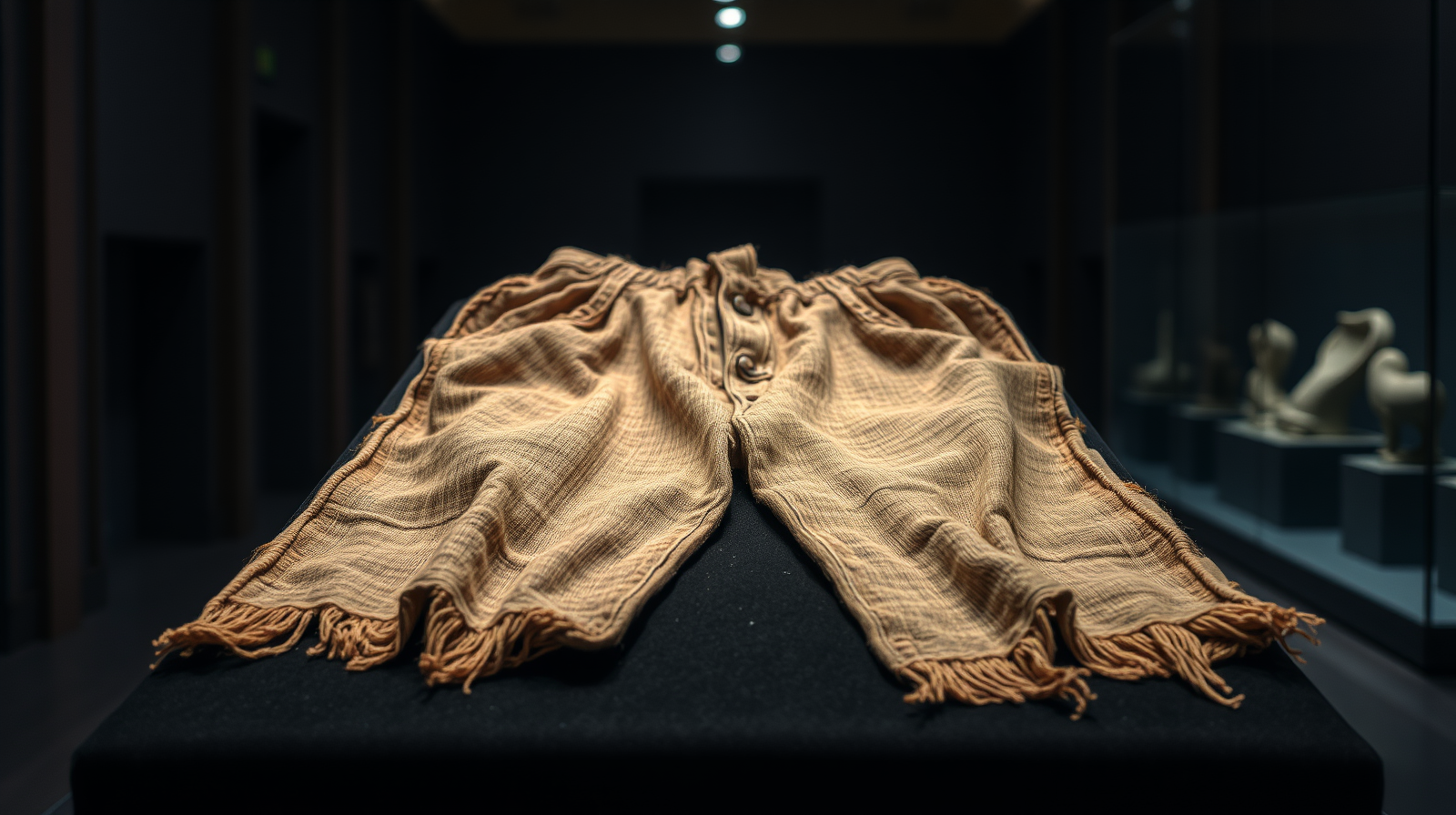
Long before jeans, leggings or tailored trousers became everyday wardrobe staples, a nomadic horseman in what is now northwestern China was buried wearing what researchers now call the oldest known pair of pants in the world. Discovered in the Yanghai cemetery near the Turfan oasis in the Xinjiang region, the woollen trousers date back more than three thousand years and offer a rare, well preserved glimpse into ancient textile technology. Unlike the robes, tunics and skirts worn across most ancient cultures at the time, these trousers were shaped specifically for horseback riding, hinting at a turning point in how humans dressed once they began mounting animals for transport and warfare rather than simply walking beside them. Researchers note the design's influence stretched far beyond Central Asia, since fitted trousers gradually spread westward alongside mounted warfare, eventually shaping clothing traditions across much of Europe and Asia in the centuries that followed.
Get breaking news anytime, anywhere. Download the TOI app now!

Digging into the Yanghai cemetery discovery
The Yanghai cemetery sits in a stretch of gravel desert where extreme heat and freezing winters have unintentionally preserved organic remains for millennia. More than five hundred individual graves have been excavated at the site since the 1970s, but two tombs, labelled M21 and M157, stood out because the bodies inside were still wearing fragments of woollen trousers. Radiocarbon dating placed the fabric from tomb M21 between 1122 and 926 BC, while the pants from tomb M157 may be slightly older, dating to between 1261 and 1041 BC, according to the peer-reviewed paper published in Quaternary International . Both men were around forty years old at the time of death and were likely herders as well as warriors.
How ancient trousers were tailored for horse riding
What makes this discovery particularly striking is not just the age of the trousers but how they were made. According to the study titled The invention of trousers and its likely affiliation with horseback riding and mobility, the fabric was never cut. Instead, each piece was woven directly on the loom to fit the exact measurements of the wearer, meaning the weaver essentially designed the garment around a specific person's body. The trousers featured straight-fitting legs and a notably wide crotch piece, a design choice researchers believe was meant to reduce friction and allow greater freedom of movement during long hours on horseback. This structure closely resembles the shape of modern riding breeches, suggesting the level of tailoring skill involved had already matured by this period.
Grave goods that point to a horseback riding culture
The trousers were not the only clue linking these men to horse culture. Alongside the remains in tomb M21, archaeologists found a decorated leather bridle, a wooden horse bit and a leather bracer used for arm protection during combat. Tomb M157 contained a whip, a decorated horse tail, a bow sheath and a bow. Together, these grave goods strongly support the idea that trousers were developed as a practical response to the physical demands of mounted travel and warfare, rather than as a fashion choice or symbol of status. Before this shift, most people across Europe and Asia relied on robes, tunics and wraparound garments that were far less suited to sitting astride an animal for extended periods.
Why this find matters for the history of clothing
Historians studying ancient dress have long debated when and why humans transitioned from draped garments to fitted, bifurcated lower body clothing. The Yanghai trousers predate other known examples of similar riding wear, including finds associated with Scythian horsemen, and so are an important marker in tracing this change. "The emergence of trousers seems intimately linked to the emergence of mobile pastoralism in Central Asia, a lifestyle that involved herding animals and travelling long distances on horseback," the researchers behind the study noted. "As riding became a more integral part of everyday life and warfare, clothing had to change, and trousers provided practical advantages that robes could not provide."







