
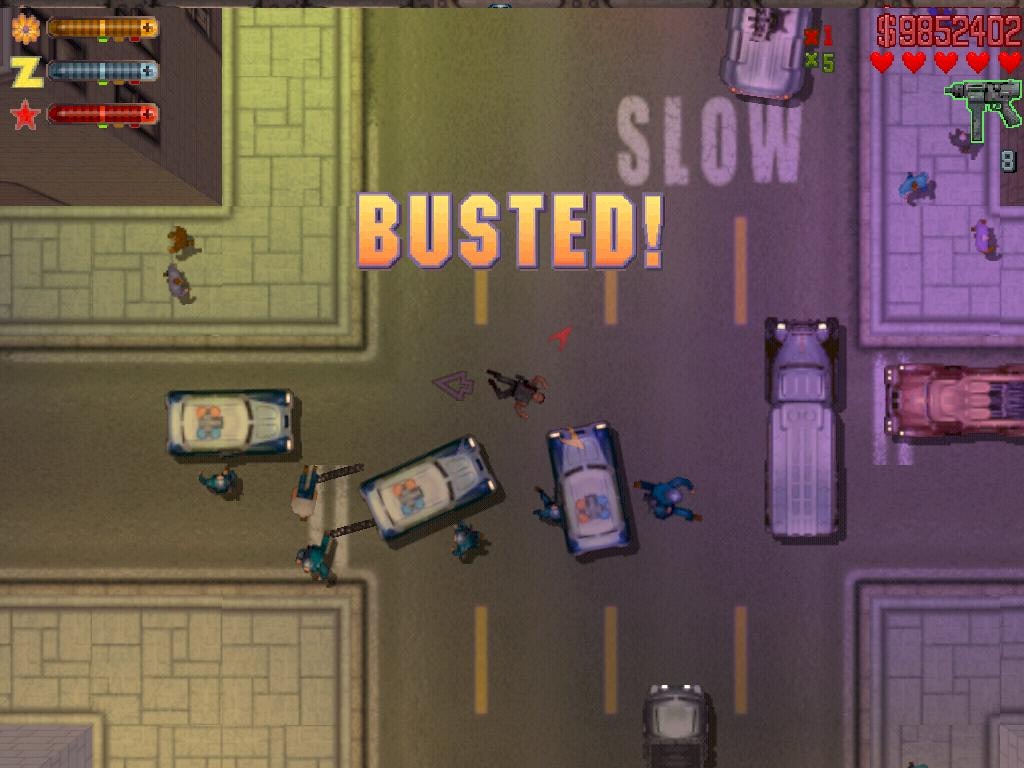
While the idea that video games would cause teenagers to commit violent or serious crimes has been widely debunked by the American Psychological Association today, try telling that to your parents a teenager back in 1999. After the release of Grand Theft Auto in 1997, gamers of a certain age will remember having to either play the game at their friend’s house or, being the friend who was actually allowed to have the game at all. Like the “blood codes” for Mortal Kombat in 1993, for teenagers, the illicit nature of the first two Grand Theft Auto games only added to their appeal.
Now, twenty-five years after the release of the second Grand Theft Auto — Grand Theft Auto 2 — it’s easy to forget what all the fuss was about. Most gaming experts correctly point out that the actual mechanics of GTA 2 weren’t that different from the original, and that the franchise didn’t really make a leap forward until 2001, with the more realistic, and even more controversial game Grand Theft Auto 3. But in a pre-9/11 culture, 90’s teens of the Clinton Years knew that the fantasy crime in GTA 2 was the most faux-dangerous thing you could play. And yet, Rockstar games softened GTA 2 with two subtle changes — alterations that were slight enough to go unnoticed, and today, were almost totally forgotten.