
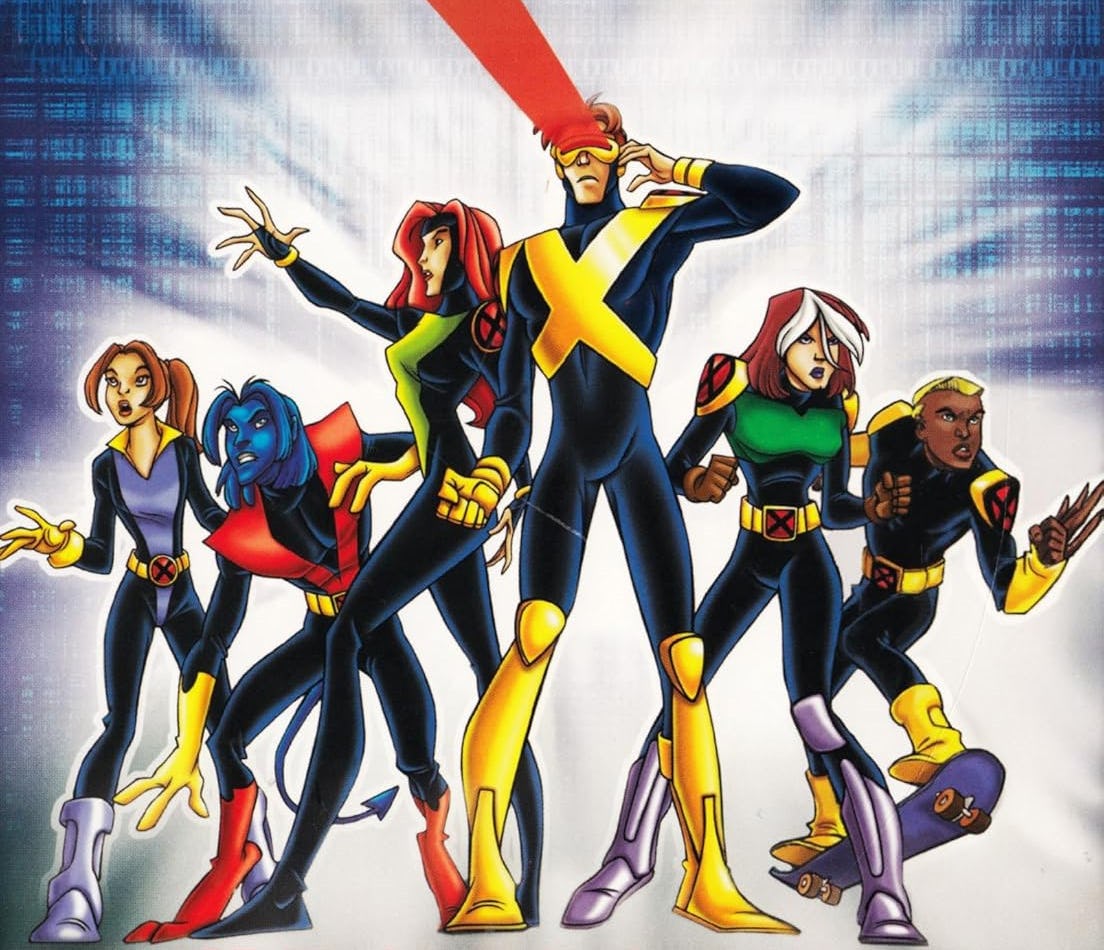
The X-Men will always have a foothold in the zeitgeist, but Marvel’s team of angsty mutant heroes arguably hit their peak at the turn of the millennium. The 2000s were good to Charles Xavier’s super-team, if only because they finally managed to break out from the pages of Marvel comics and onto the big screen in a wildly successful blockbuster. X-Men created the kind of renaissance that trickled down into every other medium, from Grant Morrison and Frank Quitely’s New X-Men comics to a new animated series on the small screen.
It goes without saying, but the X-Men’s popularity was thanks in great part to its first animated series, which ran from 1992 to 1997. Reviving the team in animation so close to the end of such a beloved show was a daunting task, but it was one that producers Boyd Kirkland, Steven E. Gordon, and others took in stride. Their efforts culminated with X-Men: Evolution, which premiered just a few months after X-Men hit theaters. Evolution exists in its own universe, separate from X-Men the film and X-Men: The Animated Series. It was also clever enough to do what neither project was able to: with the freedom of a fresh timeline, Evolution could go back to (almost) the beginning, offering a new take on the origin stories of fan favorite characters.