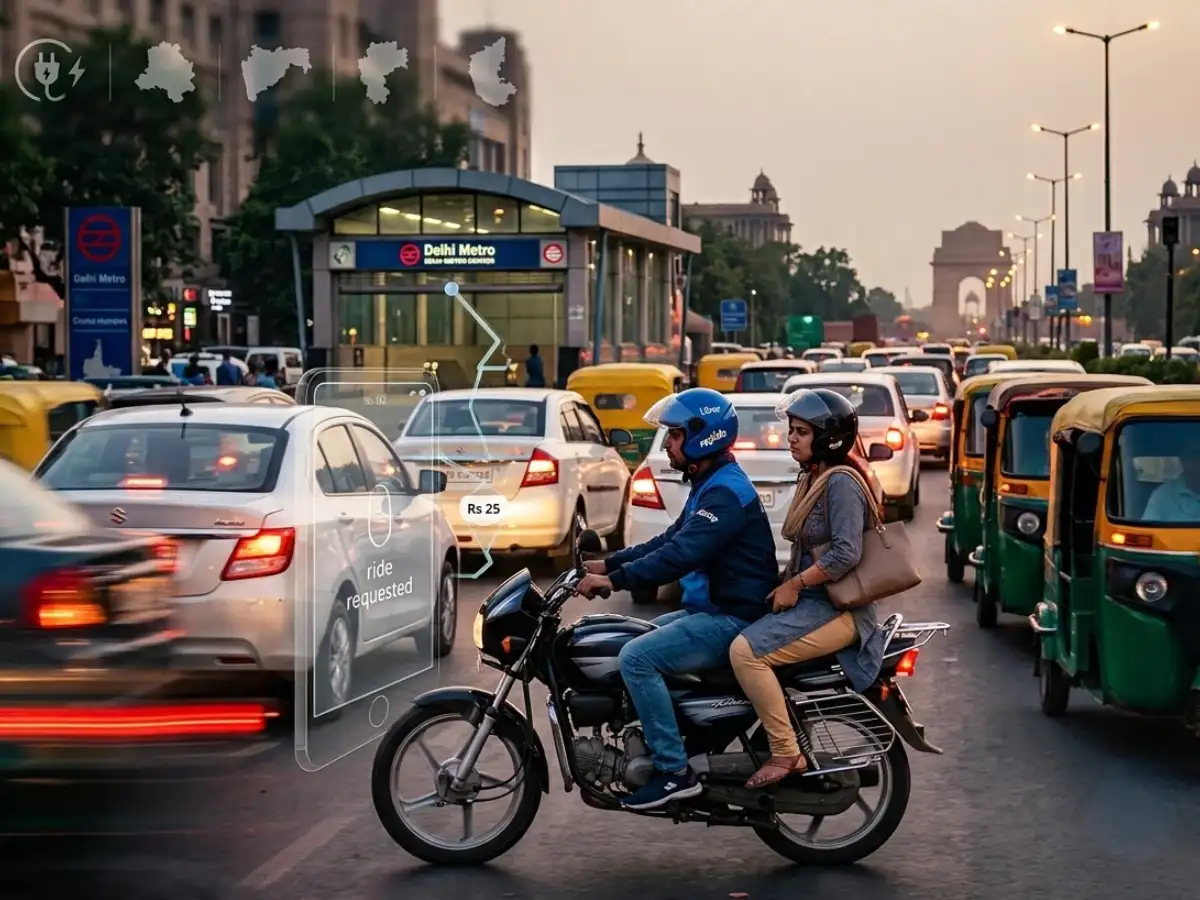
For Rs 25, you can get on the back of a motorcycle and travel up to 3 km under Uber's Pachisi campaign. It is the sort of price that makes a commuter look twice. But that Rs 25 ride is about more than a promotion. It captures the central promise of India's bike taxi industry — a ubiquitous vehicle on roads, put a passenger on the back and use technology to turn it into an affordable, on-demand form of transport.
Yet the industry's biggest problem has never really been finding customers. It has been finding a place within transport rules. Bike taxis have found a ready market among commuters looking for a cheaper and faster way through increasingly congested cities, but the business has spent years navigating bans, court battles, competing state regulations and questions over whether fares low enough to attract passengers can also generate sustainable returns for riders and platforms.