
Get all your news in one place.
100’s of premium titles.
One app.
Start reading
Homes & Gardens
Homes & Gardens
Molly Malsom

27 Kitchen Lighting Ideas to Illuminate Your Cooking Space in Style

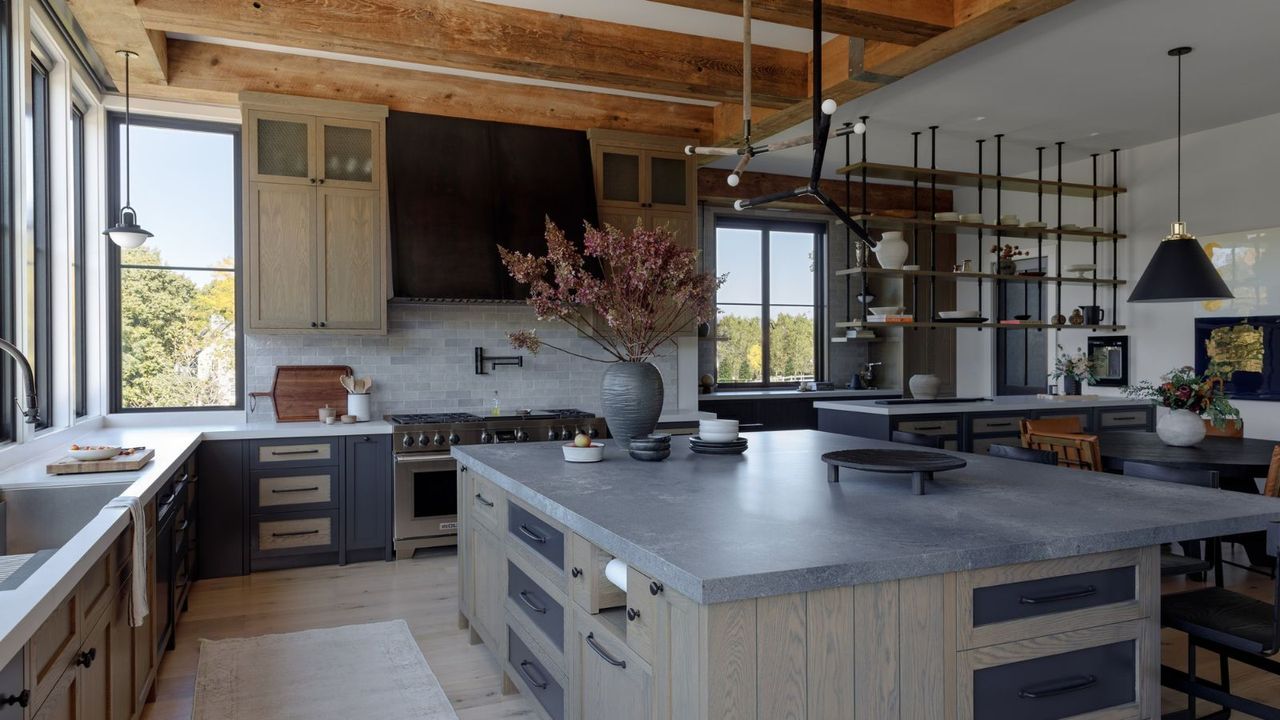
Modern rustic kitchen with wooden and gray cabinets, gray countertops and wooden beams.

Lighting plays a crucial role in every room, but none relies on it quite as much as the kitchen. It's a room that requires functional lighting, but also blends with softer, more ambient illumination.

And while you may have prioritized cabinetry styles and countertop options, finding the best designs and places to buy kitchen lighting deserves just as much consideration. It's the final detail that takes your kitchen ideas from standard to something far more inspiring.

And interior designers have plenty of kitchen lighting ideas and approaches they always return to for the perfectly lit cooking space. Here, they share the best styles and expert advice, from finding the right pendants to adding those softer light sources.

27 Kitchen Lighting Ideas to Try in 2026

There are a few ways to find inspiring ways to light your cooking space, from this year's kitchen lighting trends to discovering the designs designers always recommend for a timeless look. And switching up your fixtures and fittings isn't just part of a remodel; there are plenty of ways to refresh your kitchen with lighting, too. And these ideas are a great place to start.

1. Always Layer Your Kitchen Lighting

As well as the traditional ceiling lights, sconces add a new layer of lighting to this kitchen. (Image credit: deVOL Kitchens)

Knowing how to layer lighting is important in any room, but since the kitchen wears so many hats, having a different source and type of lighting for each task is key. You want to ensure each part of your kitchen is lit for the tasks it will face, which usually means a combination of pendant lights, wall lights, and even lamps to light specific surfaces.

As Helen Parker, Creative Director of deVOL explains, 'Always layer your kitchen lighting. Keep kitchen pendant lights subtle and not too overpowering, even though the urge to really make your mark with these is hard to resist. Don’t be set on the three lights over an island combination; try to be less obvious and go for simple, understated, and beautiful.'

'And make sure you have plenty of inset ceiling lights to give full-on light when needed, but as with all lighting, make sure you get dimmers fitted, they make so much difference to the atmosphere and function of a room. Wall lights are a great way of mixing up the feel of a kitchen, they seem to create a softer light and really give character to a room. I would always recommend wall lights in a kitchen.'

'Also, a few little occasional lights are nice for added atmosphere, a little pool of light in a dark corner is the perfect way to create lovely little spots in a room, an unexpected light and a little styling in an otherwise dark corner can be the making of a kitchen.'

2. Consider Adding Dimmers to Your Kitchen Lighting

If you're going to introduce dimmers, make sure you choose pretty hardware, like the Forbes & Lomax Rotary Dimmer from Rejuvenation. (Image credit: Bethany Adams Interiors/JL Jordan Photography)

When you are planning your lighting in cozier rooms such as a bedroom or living room, you probably consider adding dimmers. And it's something you should be introducing to your kitchen lighting scheme, too, especially if yours is a multi-functional space.

When you're cooking, you can benefit from your lighting's full brightness, but while you are dining or enjoying a relaxing evening, dimming the lights is much more appropriate. Dimmers also work particularly well with spotlights, especially if they tend to feel a bit harsh.

3. Balance an Island With Large Scale Lighting

In this kitchen, oversized linen shades have been used for a softer look, but you can also opt for materials like rattan, such as the Green Oaks Oversized Pendant from McGee & Co., for a warmer, more textured look. (Image credit: Chris Horwood)

Large-scale lighting can play a balancing role in a room with a high ceiling, drawing the eye downwards to beautiful cabinetry and surfaces. ‘Here, a pair of oversized pendants makes a practical and elegant statement above the island,’ says Hannah Linford, senior studio lead at Sims Hilditch. ‘Their classic conical shape respects the form of the roof void and provides a soft light within the open-plan space.’

Positioning pendants above a kitchen island or table in an odd number is generally the rule. However, when the fittings are bigger than usual, it’s preferable to base the number on the island’s width, allowing around 23-25 inches between pendants and 5-7 inches from either end.

4. Introduce a Small Pendant Above the Sink

The Small Narrow Pleat Porcelain Light from deVOL creates a tonal look in this space. (Image credit: DeVOL Kitchens)

When you think of kitchen pendant lighting, the island is likely the first thing that comes to mind. But hanging a pendant over main working areas, such as the kitchen sink, can make a huge difference.

The key is to go for a small fixture. In this design by deVOL Kitchens, a small ceramic pendant hangs just to the side of the sink, adding the perfect amount of focused lighting to the area, as well as a charming decorative detail. It's a great alternative to a harsh spotlight, too.

5. Elevate Spotlights to Feel More Custom

This dark blue kitchen proves that spotlights can work beautifully in a more traditional scheme. (Image credit: deVOL Kitchens)

Kitchen spotlights can sometimes feel a bit basic and builder-grade – the sort of modern-day addition that is all function over style. But that doesn't mean they can't be introduced in a way that feels a bit more elevated.

In this kitchen, the spotlights integrate seamlessly into the ceiling, blending with the moody hue drenched throughout the room. Similarly, you could opt for an aged brass design for a more traditional look – it's simply about moving away from the basic, plastic-adjacent white spotlights that make a kitchen feel a bit dated.

6. Incorporate a Plug-In Task Light

Plug-in lights aren't just great for a quick solution where outlets are lacking, but they are also incredibly renter-friendly, too. For something elegant in style, try the Derte Brass Plug-in Pendant Light from Wayfair. (Image credit: Courtesy of deVOL)

Plug-in lights are your flexible friend in the kitchen, offering versatility and ease of installation. They allow you to place lighting exactly where you need it, without the commitment of hardwiring. Perfect for adding accent lighting or brightening a dim area, their mobility also means you can switch up your lighting scheme easily as your kitchen layout evolves.

‘We love a plug-in light that can just appear in a once gloomy spot or in a newly organized corner of a kitchen, creating instant mood,’ says Helen Parker. ‘The ability to plug in a light source without the need for permanency can enhance your kitchen for a special occasion or specific purpose, but our guess is that once you have created an extra corner of moodiness, you won’t want to take it away.'

7. Embrace the Trend for Portable Counter Lamps

These cordless lamps might be small in size, but the warm glow they let off adds a cozier atmosphere to your kitchen. (Image credit: Original BTC)

Portable lamps are a huge kitchen trend this year, and they have meant that you can be more flexible than ever with your kitchen lighting. You don't have to worry about wires or where your plugs are positioned.

The soft lamp light is perfect for when your kitchen shifts from cooking time to relaxing or socializing time. You can turn off the brighter task lights and switch on a few lamps around the space to create soft pools of light, much like you would find in much softer spaces like bedrooms or living room. Amazon stocks a huge array of portable lamps, and Anthropologie's viral Bobbin lamp is gracing all the most stylish kitchens right now.

8. Use Your Kitchen Lighting to Bring in Contrasting Styles

Lighting is a great way to add balance to a design. In a traditional kitchen, add modern lighting, and vice versa, for a more dynamic look. (Image credit: Jake Shea)

Contrast is what makes spaces interesting, bringing in something unexpected so your kitchen doesn't look too set in one style. Lighting is the perfect way to do this as it's far easier to introduce lighting that contrasts your kitchen cabinet style than, say, tiles or flooring. Lighting is the perfect size to add interest without those different styles looking jarring.

It's exactly what designer Becky Shea has done in this modern rustic kitchen. The overall kitchen style leans farmhouse rustic with the wooden cabinetry and beams, but rather than go for a more traditional rustic kitchen lighting idea, Becky has added a statement contemporary piece that gives the whole room an edge.

9. Pick Lighting That's a Piece of Art

Kitchen lighting doesn't need to be boring – the artistic light in this design proves sculptural lights can still be functional. (Image credit: Moniomi)

Kitchens are very practical spaces; it can be hard to bring lots of decor into these hardworking rooms, so let your lighting double as decor by choosing a really beautiful fixture.

As Miami-based husband and wife design duo Monica Santayana and Ronald Alvarez of Moniomi explain, 'Lighting in a kitchen should do more than illuminate, it should inspire and elevate. In this kitchen, the handcrafted chandelier by Klove, with its intricate detailing and sculptural presence, crowns the island like a piece of art, infusing the space with warmth and artisanal richness. To complement it, we opened the backsplash to include a window, inviting natural light to pour in and extending the home's breathtaking views right into the heart of the kitchen.'

10. Mix Metals in Your Kitchen Lighting

Mixing metals is a designer-approved ay to add interest – just make sure you stick to consistent styles to the mixed finishes feel intentional. (Image credit: Shade Degges)

Don’t be afraid to mix metals with kitchen lighting – breaking from uniformity can create a more relaxed, lived-in, layered look. In this warm kitchen scheme, interior designer Denise Morrison paid homage to the home’s 1940s heritage by using vintage-style fittings in various shapes and finishes.

Limiting the number of metals to no more than three – in this case, dark bronze, antique brass, and nickel (on the hardware and faucets) – helps to prevent a chaotic look.

‘We deliberately avoided minimalist lighting in favor of decorative fixtures,’ says Denise. ‘In particular, the brass flush-mount ceiling design is a stylish substitute for modern recessed lights, enhancing the vintage feel.’

11. Introduce Softer, Natural Materials

Soft kitchens are proving enduringly popular, and rattan is a great way to add texture through lighting. This kitchen is elevated by the Terrene Pendant by Elan Byrd. (Image credit: Lulu and Georgia)

Soft kitchens are perhaps the most coveted of trends in 2026, and lighting plays a huge part. While it can be tempting to choose the classic glass or porcelain lighting fixtures, choosing something tactile and natural can instantly add warmth and a softer feel to your design.

Rattan and woven designs are a timeless choice that instantly adds a more charming, textured feel. In this kitchen, rattan pendants above the island contrast beautifully with the marble finishes and tie in seamlessly with the bar stools. It's these small details that take your kitchen from basic to expertly layered.

12. Conceal Your Lighting For a Subtle Glow

These linear LED strips instantly elevate cabinetry, but they are more suited to modern designs than traditional ones. (Image credit: Astrid Templier)

Not all kitchen lighting needs to make a statement. Hidden illumination, where the fittings are concealed and only the soft glow of light can be seen, is a beautiful way to layer more lighting into your scheme without a cacophony of fittings. Langstaff shows how it’s done with this elegantly illuminated glass kitchen cabinet.

‘By concealing LEDs within or behind kitchen shelving, you can subtly integrate the lighting to provide atmospheric illumination and highlight design details, such as a beautiful woodgrain, for example,’ says company director Nick Bell. ‘We always recommend using warm white LED lighting with a color temperature of 2700 Kelvin, as it adds a soft, inviting glow that enhances the warmth and sophistication of the space.’

13. Keep Kitchen Lighting Simple But Effective

The small ceiling light in this kitchen way be petite, but it adds a truly designer feel to the space. (Image credit: Matthew Williams )

If your kitchen is flooded with natural light, you can pare back on the style of your light fixtures, as can be seen in this Manhattan apartment kitchen designed by Studio DB. This kitchen is filled with beautiful textures and interesting shapes; there's no need for a statement light, so subtle wall lights and downlights were chosen so as not to compete with the rest of the design.

'Our corner kitchen is largely illuminated by the natural light provided by the two large windows and helped by the Apparatus wall sconce come evening,' explains Studio DB partners Damian and Britt Zunino. 'We created this expansive floor-to-ceiling cabinetry, covered in a white oak burl which complements the burnished brass of the kitchen island.'

14. Add Wall Lights at Ceiling Level

If you're installing wall lights close to the ceiling, choose down-facing fixtures like the Amilia Enameled Brass Perforated Sconce from Anthropologie. (Image credit: Michael Clifford)

You often see wall lights at eye level; however, mounting them higher up, closer to the ceiling, means they create less of a spotlight on your countertops and can illuminate more of the space. They become almost like ceiling lights, but light the edges of the room rather than the center.

In this plaster pink kitchen designed (and owned) by Zoë Feldman, adding lights above the shelves made sense to turn them into more of a focal point. The brass finish also ties in perfectly with the fixtures around the sink below.

'The warm, amber-hued tones of the kitchen are provided by the walls painted in Oxford Stone by Farrow & Ball and unlacquered brass fixtures by Rejuvenation. Extra storage is provided by the open shelving that sits above the textured Grove Brickworks backsplash by Waterworks,' explains Zoë.

15. Blend Lighting With the Cabinet Color

A monochromatic look is incredibly impactful in a small kitchen, allowing different features to shine without competing with one another. (Image credit: Photography by Ethan Herrington; styling by Katja Greef)

In a small kitchen, where you might not want too many elements competing for attention, matching your lighting color to your cabinet color helps prevent visual distraction. In this kitchen, designed by White Arrow, the sleek lights almost blend into the background, allowing the statement seating and marble island to be the focal point.

We designed these custom floor-to-ceiling cabinetry in a white bleached maple to infuse a sense of brightness to the kitchen space, which pairs well with the white pendants hanging overhead the island by Please Wait To Be Seated,' explains Keren and Thomas Richter, founders of the studio.

16. Choose Functional Statement Lighting

Flush ceiling lights get a bad wrap, but when you choose an elevated design, like in this kitchen, they can feel more stylish than pendants. (Image credit: James McDonald)

It can take time to track down the perfect kitchen lighting, but perseverance can pay off, as interior designer Kate Guinness attests. For this open-plan space, she employed her best sourcing skills to find a ceiling light for the main part of the kitchen that would provide good general illumination while being a statement piece in itself.

'We wanted something flush to the ceiling, or that wouldn’t hang down too far, since we also have some low pendants elsewhere in the space and didn’t want them to conflict with one another,' Kate explains. This trio of ceiling-hugging lights brings big-scale design energy while maintaining a low profile. ‘It’s the perfect combination of style and function,’ adds Kate.

17. Use Kitchen Lighting to Zone an Area

Designers always say you should utilize lighting to zone an open plan space – opt for different styles installed at various heights for maximum impact. (Image credit: Darren Chung)

For multifunctional lighting with focal point potential, consider suspending metal-framed shelving. Threaded with three mini pendants, this smart steel unit was designed to zone the kitchen area in the open-plan space, while also targeting task lighting on the island below.

‘It distinguishes the working cooking area from the dining table where the same pendants are used,’ says Mike Fetherston, design director at Hetherington Newman.

When fitting pendants above an island, Mike advises leaving 27-37 inches between the worktop and base of the lights to retain good sightlines. ‘The lights should also have an easy-clean surface such as glass, metal, or enamel rather than fabric, as they will pick up grease from cooking over time.'

18. Add Character With Vintage Kitchen Lighting

Vintage lighting not only looks really characterful, but it can also be a more affordable way to source stylish fixtures. (Image credit: Anna Stathaki)

There’s a special joy in bringing vintage lights, with their time-worn charm and sense of history, into your kitchen. ‘Vintage lighting creates a wonderful friction with the newness of a modern kitchen, adding a patina, authenticity, and a story,’ says interior designer Fiona Duke, who sourced this 1940s wall-mounted task lamp by Midgard.

As the wall arm was heavy, Fiona had the backplate changed to a more secure design, and it was rewired by a specialist to comply with safety standards. ‘Besides introducing character, the tractable design of this particular lamp is practical, allowing you to target the light exactly where it’s needed without working in your own shadow,’ Fiona adds.

19. Use Lighting to Add Playful Colors

If you're going to add colorful lighting, make sure it fits in with the color scheme of the rest of your kitchen so it feels cohesive. (Image credit: Simon Brown)

Commissioning a bespoke light fitting from sculptor Margit Wittig was particularly appropriate for this kitchen that belongs to an artist. ‘The walls of the home are lined with sensational watercolors and, knowing Margit’s use of color is exquisite, we worked together to create this sculptural and colorful pendant as the kitchen’s centerpiece,’ says Katie Glaister, founder, K&H Design.

The aim was to create a room where the dining and living experience takes precedence over the kitchen’s functionality. To maximize impact, the light fitting was positioned so it would be reflected both horizontally and vertically in the high sheen of the Pyrolave worktop and the antique mirroring.

20. Create Interesting Contrasts With a Kitchen Chandelier

A kitchen might be the last place you thought to add a chandelier, but above an island or table, it adds a sense of grandeur. If you aren't so keen on the traditional look, try the Echo Chandelier from Lulu and Georgia for a more modern take. (Image credit: deVOL Kitchens)

See kitchen lighting like jewelry, it's a way to bring something decorative into your kitchen, and add some sparkle to a practical space. And what's the most sparkling of all light fixtures? A chandelier.

I think the lighting is the one place where you can do what you want and what you like, be a bit reckless,' says Helen Parker. 'I reckon a chandelier or an industrial metal look would be equally at home, the key is to stick to the color palette and the simplicity everywhere else in the room, then perhaps, add a little surprise with the lighting.'

'Some people want rustic vibes and love the way rustic fits in with their lifestyle, and yet they crave a bit of frivolity or femininity, color or grandeur, lighting is where they can forget the rules and go off-piste. I absolutely love the idea of raw, humble, and basic for almost everything, but then a surprise sparkle with the lighting, the juxtaposition of this unexpected choice is always what turns a great room into a wow, unexpected room.'

21. Mix Your Fixtures, But Keep It Coherent 

Mixing styles and lighting types with add visual interest to your kitchen, while drawing the eye up. (Image credit: Richard Felix-Ashman Design/Aaron Leitz)

As all kitchens will require multiple types of lighting, consider exploring a multitude of kitchen lighting trends in your space by mixing and matching different fixtures.

‘Have fun with different shapes and shades, but if you’re mixing it up, stick to a theme or a core tone so that everything hangs together visually,’ says Tom Howley, Design Director of his eponymous kitchen design brand.

This principle is clear in this large barn conversion kitchen by Richard Felix-Ashman, where pendant, chandelier, and wall lighting have been used over the counters, island, and dining tables. All of them feature the color black, with two sporting brass accents, and the entire scheme explores a contemporary take on vintage styles.

22. Consider a Solo Light to Highlight a Focal Point 

If you're going to use just one light in your kitchen, make sure it's as impactful and design-forward as this one. (Image credit: Darren Chung)

A single designer light poised above an island unit can be all it takes to unite a scheme, inject elegance, and emphasise a focal point, especially in an open-plan space.

'If you’re going for one lone fitting, it should be scaled in proportion with the island. Not so big it overpowers, nor so small it looks lost in the space,' says Mike Fetherston, design director at Hetherington Newman.

'Position either centrally if the shape of the island suits, or above a bar seating area. The bottom of the pendant should be clear of head height, so at least 90cm above the countertop.'

23. Oversize Your Pendants

Oversized pendant work best if you keep the style and color pared-back – you don't want them to over-power the room. (Image credit: Tiffany Leigh Design/Lauren Miller)

When thinking about how to plan kitchen lighting, don’t be afraid to go big. Daringly oversized lighting features are a great way to add character to a kitchen – just be sure to position them carefully.

In this kitchen by Tiffany Leigh, oversized lampshades hang from the ceiling over the island – their positioning maximizes task lighting over the workspace, while also creating a widespread warm glow at the center of the room.

Crucially, they are kept high enough not to interfere with the eyeline, and add a quirky touch thanks to their slightly surreal size.

24. Incorporate Reflective Materials to Bounce Light Around the Room 

Whether your kitchen lacks natural light or feels a little small, reflective finishes will solve your lighting woes. (Image credit: Liz Caan/Eric Roth)

When thinking about how much light your kitchen needs, consider a balance of natural and artificial light. One trick you can use to enhance both (day and night) is to incorporate reflective surfaces into your design.

In this kitchen by Liz Caan, brass metallic accents glow in the sunlight, glass cabinet doors reflect light in the darker lower areas of the kitchen, while a mirror next to the window and a statement mirrored ceiling light create a glistening jewel at the center of the room.

25. Group Smaller Lights For Dramatic Impact 

Pendant lights aren't reserved for an island. Hanging a few above your countertops adds a decorative finish. (Image credit: deVOL)

The unexpected positioning of these pretty vintage pendants elevates their appeal. It also bears practical benefits, bringing the light source closer to the task in hand. The elegance and jewel-like colors of these antique glass pendants are unique, but the shades have been visually united using matching retro fittings. Individually, they may be small and dainty, but when they work together, they feel far bolder and are far more practical too.

'You can easily tire of statement lighting that dominates the kitchen,' says Helen Parker. 'Discreet and understated designs still catch our attention, but we don’t get bored of them so easily.'

25. Use Sconces to Light Up Decor

Make sure you consider the height of the decor on your shelves before installing your lights, so everything feels in proportion. (Image credit: Future)

It's easy to fall into the trap of adding kitchen lighting purely for practical purposes, but there is always room for something a bit more decorative. Whether you have art hanging on the walls of open shelves filled with ceramics and collected pieces, adding lights to highlight them gives your design a more personalized feel.

There are a few options here, from classic sconces, as shown in the kitchen above, to unexpected picture lights if you prefer something a little bit more traditional. You'll be surprised how often you use them for a more ambient glow in your kitchen.

26. Give Unique Nooks Dedicated Lighting

Adding a couple of wall lights to a nook or alcove instantly makes it feel more considered in your design. Make sure you choose fixtures that tie in to the rest of your kitchen. (Image credit: Barbara Sallick/William Abranowicz)

Recessed areas and alcoves can be great spaces to turn into dedicated areas for certain functions, like a home bar or coffee station, but they can also end up being a little darker if tucked away from the room’s main lights.

In this kitchen owned by Waterworks Co-Founder Barbara Sallick, an alcove has been turned into a bar area, deliberately lit with its own brass wall sconces to ensure home bartenders can work their magic with ease. Lighting can give these spaces more character too – you can be more playful with your lighting here.

27. Light Up a Pantry

Make sure your pantry's light switch is easily accessible from outside the pantry so it doesn't become an uninviting corner you don't want to enter. (Image credit: Devol)

If you have a walk in pantry, you need to consider its lighting much like your kitchen. Like a kitchen, this space needs to be practical first and foremost, and a mixture of ceiling and wall lighting usually works best. Nothing too ornate that's going to hang down or stick out into the space.

You could also add LED strips underneath shelving or in cabinets, which are ideal task lights in a pantry. You might want to consider making some of your lighting motion-activated, too, as these rooms often don't have windows, having a light switch on as soon as you walk in the space can be helpful.

Most of your kitchen lighting ideas should be planned in right from the beginning of your remodel. But that's not to say you can't switch them out as kitchen trends change, or add new lighting fixtures like lamps to soften your scheme.

Sign up to read this article
Read news from 100’s of titles, curated specifically for you.
Already a member? Sign in here
Related Stories
Top stories on inkl right now
One subscription that gives you access to news from hundreds of sites
Already a member? Sign in here
Our Picks
Fourteen days free
Download the app
One app. One membership.
100+ trusted global sources.