
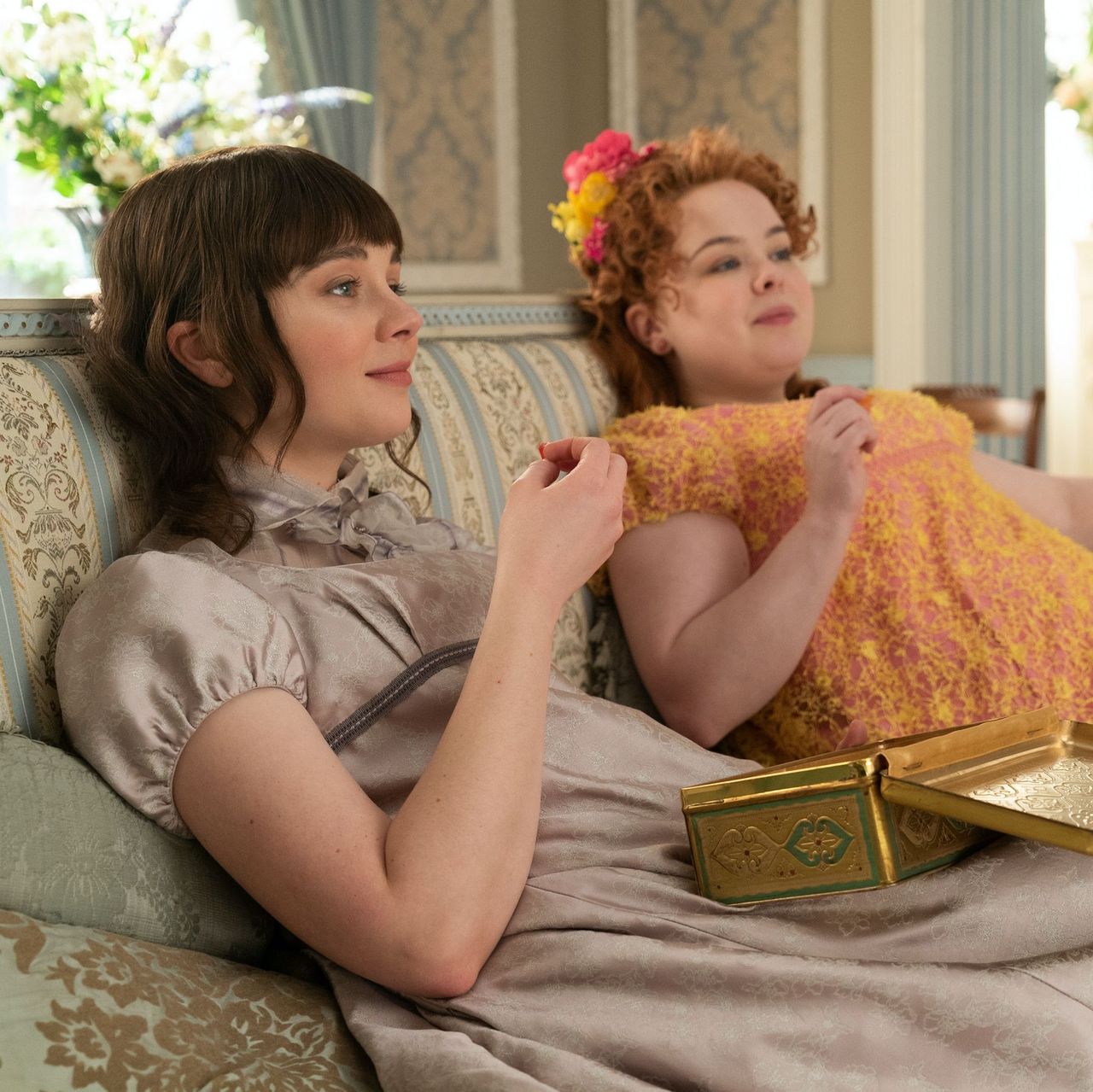
For far too long (like, literal centuries), Jane Austen's body of work has been among just a handful of reprieves to the mostly stodgy, excessively patriarchal period pieces of the era. Fortunately for fans of both feminism and empire-waist dresses, recent years have ushered in a surge of empowering retellings of old-fashioned stories, not only in book form but on TV, as depicted in the Shonda Rhimes-helmed adaptation of Julia Quinn's popular Bridgerton book series.
The series, now in its fourth season, focuses on the highly scandalized private lives of London's high society, with the largely progressive Bridgerton family at its center. While themes like marriage for financial gain and class-driven societal rank still abound, characters like Eloise Bridgerton, an outspoken feminist, and her sexually progressive brother Benedict, who is bisexual, offer viewers a more complex view of life in a bygone era that goes above and beyond the norm. Let us also not forget Penelope Bridgerton (née Featherington), a.k.a. Lady Whistledown, who wields immense power and influence over Regency society as the town's foremost gossip columnist and supports herself financially with this work.













