Get all your news in one place.
100’s of premium titles.
One app.
Start reading
Fortune
Fortune
Sasha Rogelberg

23,000 cancelled flights and debris raining on Dubai hotels: The Iran war is jeopardizing the $12 trillion global travel industry

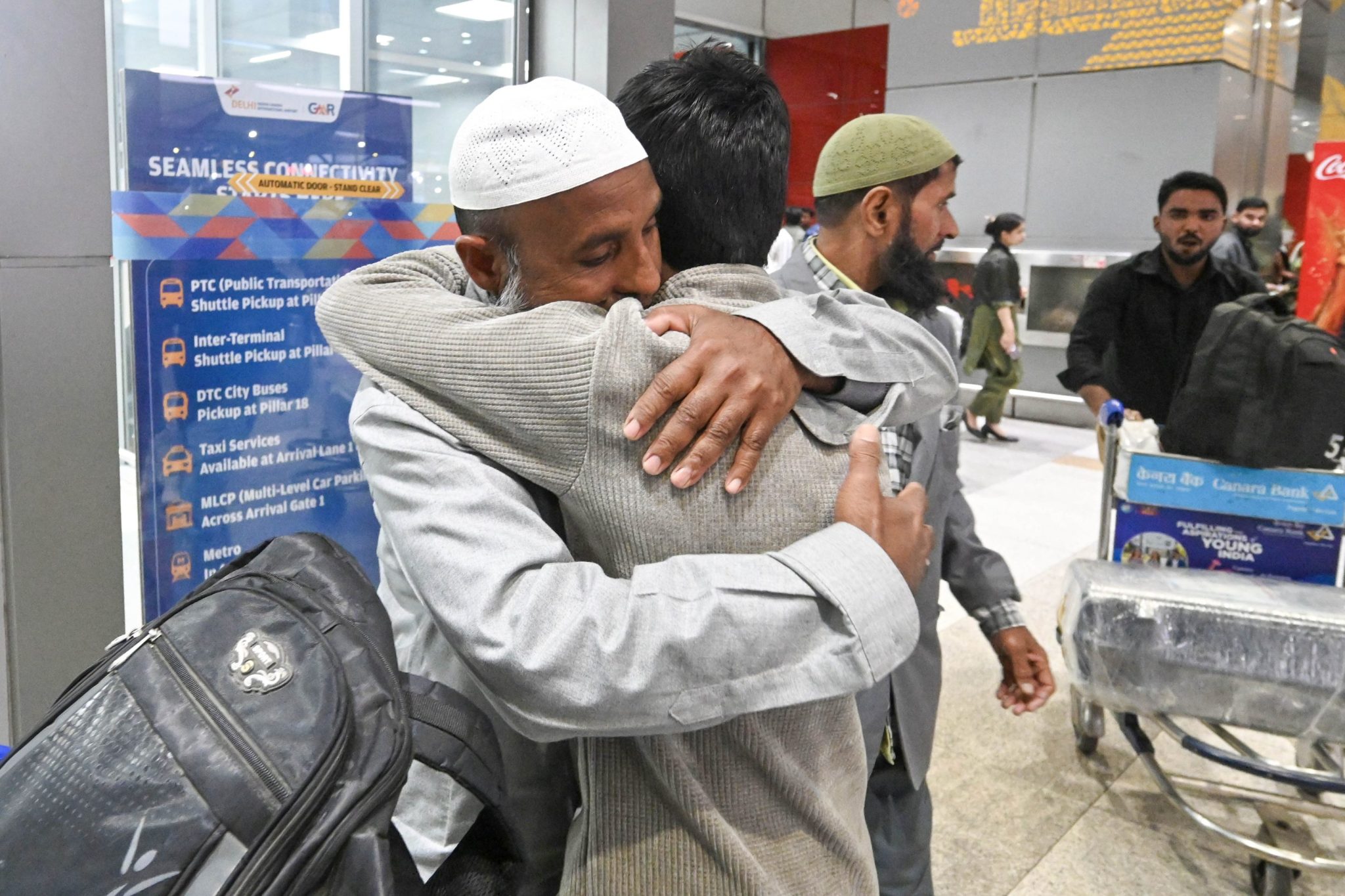
An older and younger man embrace at an airport. (Credit: Sanchit Khanna/Hindustan Times—Getty Images)

Over the weekend, missile debris rained over parts of Dubai’s Palm Jumeirah, a tree-shaped, man-made island home to fine-dining establishments and luxury hotels, including the skyscraping Burj Al Arab hotel. According to local authorities, four individuals were injured in the resulting fire.

The damages sustained by the hotels is only part of the story of how the U.S.-Israeli attacks on Iran and subsequent counterattacks have shaken the travel industry around the world. More than 23,000 flights have been cancelled globally since Iran’s first retaliatory strike, according to data from flight analytics platform Cirium.

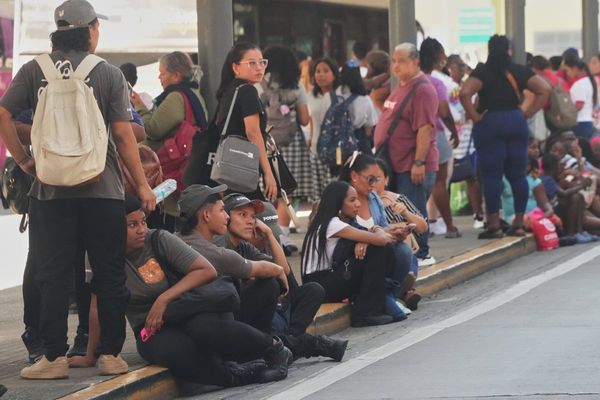
Those cancellations—including in key hubs such as Dubai, Abu Dhabi, and Doha—have stranded hundreds of thousands of travelers in the area. While some await government-organized repatriation flights to bring them home, others are willing to spend more than $200,000 for chartered flights to Europe from Dubai.

MSC Cruise said on Thursday it would charter five flights, each carrying about 1,000 passengers, to repatriate its guests on the MSC Euribia, a 6,300-person capacity ship which remained docked in Dubai as a result of the conflict. The cruise line announced earlier in the week it would cancel its three remaining sailings from Dubai in March.

“We understand that this will be disappointing, but we are sure that guests impacted will understand this decision,” the company said in a statement.

Taken together, these disruptions to global travel are among the largest the industry—worth $11.7 trillion according to the World Travel & Tourism Council—has seen.

“We have not seen anything like this ever outside of, frankly, the Covid pandemic, and that was very different. That was a health-related issue, and where travel was prohibited,” Henry Harteveldt, founder of travel consultancy Atmosphere Research Group, told Fortune. “This is obviously a war, a military conflict, and this has destabilized travel on the six populated continents of the earth.”

Flight activity in the Persian Gulf and Middle east on Feb. 26, 2026, prior to the U.S.-Israeli attacks on Iran.
Flight activity in the Persian Gulf and Middle east on March 5, 2026, following the U.S.-Israeli attacks on Iran.

Disrupting the $12 trillion travel industry

What Harteveldt said was “unprecedented” about the disruptions was their sheer magnitude. While the Middle East has seen its share of conflict in the past several decades, attacks have usually been concentrated in certain geographies. Iran’s counterattacks have targeted not just Israel, but also the United Arab Emirates, Qatar, Kuwait, Bahrain, Saudi Arabia, Oman, Jordan, and Lebanon, among others. The attacks have instigated not just flight restrictions, but closures of swaths of airspace.

Countries in the area, such as UAE, rely on tourism as a major industry. In 2023, tourism accounted for about 12% of the country’s economy. The Persian Gulf has become a home to millions of Indian migrant workers, many of whom travel back and forth across the corridor on sub-three-hour flights. The Dubai International Airport, the world’s busiest hub for international travel, saw a record 95.2 million passengers in 2025.

Following attacks over the weekend, aircrafts and crew were grounded and displaced, leading to mass disruption.

“You have hundreds of aircraft that are not where they need to be,” Harteveldt said. “And with that, of course, you’ve got pilots in the cabin crew who are not where they’re supposed to be either.”

A resilient industry

Harteveldt expects the sector to recover. Hotel guests in the area report feeling safe and comfortable, and airlines have already begun to resume some, albeit limited, operations. Emirates announced on Thursday it would operate on a reduced flight schedule of more than 100 flights until further notice. The UAE has opened a “safe air corridor” to allow airlines like Emirates, as well as Etihad Airways and FlyDubai, with a capacity of 48 flights per hour. Abdulla bin Touq Al Marri, UAE minister of economy and tourism, did not provide details on how the corridor functions.

The biggest challenge to the industry in the near future, Harteveldt said, would be prospective travelers reluctant to visit the Gulf and Middle East as a result of the conflict. The conflict will likely be contained, but Gulf region hubs seen as safe and reliable through previous skirmishes, will have to convince consumers they are still secure.

“The airlines, the airports, the countries, are going to have to take action to rebuild public trust in those institutions,” Harteveldt said.

Others in the aviation industry see opportunity—albeit other places across the globe—amid the disruption. Ryanair CEO Michael O’Leary predicted tourism in the Persian Gulf would falter for the next year or two, but he said in a press conference this week he’s seen a surge in short-haul bookings in Europe for the Easter vacation period in particular. Ryanair operates smaller Boeing 737 aircraft almost exclusively across Europe.

The conflict, O’Leary said, would be short-lived, and he did not forecast fundamental booking trends over the next few months.

President Donald Trump “has a short attention span,” O’Leary said. “So he would want it to be over reasonably quickly or he’ll get bored.”

Ryanair and the White House did not immediately respond to Fortune’s request for comment.

Sign up to read this article
Read news from 100’s of titles, curated specifically for you.
Already a member? Sign in here
Related Stories
Top stories on inkl right now
One subscription that gives you access to news from hundreds of sites
Already a member? Sign in here
Our Picks
Fourteen days free
Download the app
One app. One membership.
100+ trusted global sources.