
Get all your news in one place.
100’s of premium titles.
One app.
Start reading
Golf Monthly
Golf Monthly
Sport
Joe Ferguson

2026 AutoFlex Shaft Range Review: Can This 'Hidden' Korean Tech Transform Your Game?

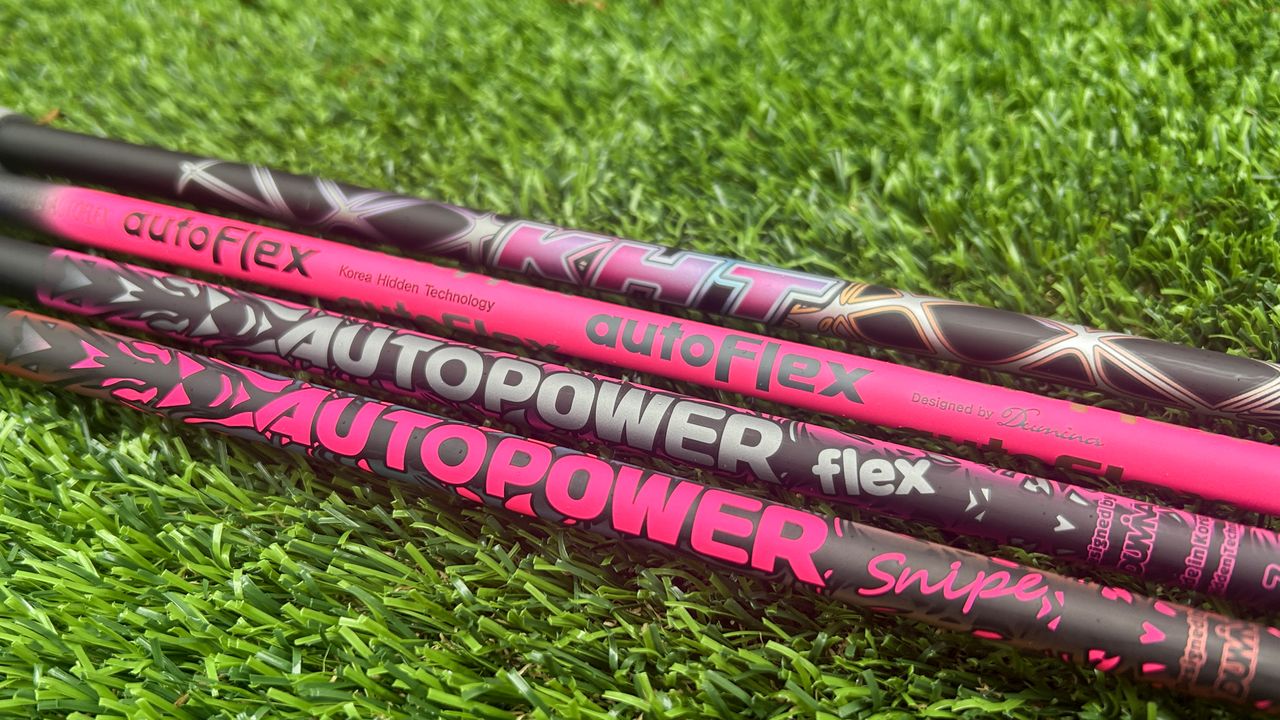
Photo of the AutoFlex range.

For years, the industry narrative has been simple: if you swing fast, you need a heavy, boardy, extra-stiff shaft. Then came AutoFlex.

Developed by Dumina Co. in Korea, this "hidden" technology challenged everything we thought we knew about lead-arm physics and shaft frequency.

While the original pink-and-black shaft became a viral sensation, the brand has expanded its stable to include the AutoPower series - KHT, Flex, and Snipe - offering different weights and stability profiles.

I spent several extremely interesting sessions testing these four options to see how they compared to my usual gamer, the Fujikura Ventus Black.

How We Test Shafts

(Image credit: Future)

All of our shaft testing is conducted using the same TaylorMade Qi35 core head set to a precise 9 degrees (measured), with each shaft cut to an exact length of 45.5 inches, fitted with a Golf Pride Tour Velvet 60R grip. Furthermore, all testing shots are struck from a white castle tee to ensure consistent tee height during testing.

The data is collected and recorded using a Foresight Sports GC3 launch monitor and TaylorMade TP5x golf balls.

Controlling these potential variables allows me to draw accurate and direct comparisons and form a clear picture of each shaft's performance and feel characteristics.

AutoFlex Original

(Image credit: Future)

Specs Tested: SF505xx (57g, 220cpm)

The original AutoFlex is the shaft that started the conversation. For this test, I used the SF505xx. At 57 grams and an incredibly low 220cpm (cycles per minute), it sits in a frequency range usually reserved for senior or ladies' flexes - yet allegedly is designed to handle high swing speeds.

The Feel: Switching from a stout Ventus Black to something more akin to a fishing rod was certainly a strange departure. However, once the initial "shock" wore off, the sensation was incredibly smooth. Unlike many shafts that feel "hingy" in the tip or soft in the handle, the AutoFlex felt remarkably balanced to me. Whereas many ‘softer’ options can produce obviously softer sections, the flex felt refreshingly uniform throughout the entire profile.

(Image credit: Future)

Performance: Initially, with the hugely different sensation and noticeable loading, my timing was off, and I couldn't stop over-drawing the ball. However, once I adjusted my rhythm, my strike, and the dispersion tightened significantly. Regarding the "miracle" speed gains, I certainly didn't experience the 5-10mph clubhead speed boost some claim; instead, I found a consistent 1 to 1.5mph ball speed increase. It’s a subtle gain, but the ease of swing was the real story here. I would be lying if I said dispersion was optimal, but it was definitely significantly tighter than maybe I had anticipated.

Choose this shaft if…
You want to maximize "ease of swing" and reduce the physical effort required to generate clubhead speed.

Avoid this shaft if…
You have a very aggressive, quick transition.

AutoPower KHT

(Image credit: Future)

Specs Tested: 607+ (66g, 275cpm)

If the original AutoFlex feels like a leap of faith, the AutoPower KHT is the "gateway drug" for those afraid to jump two-footed (and two-walleted!) into the ultra-soft story.

The Feel: The 607+ model felt like a bridge between the radical AutoFlex tech and a more conventional X-flex offering from the likes of Fujikura or Mitsubishi. There is a noticeable bit of "give" in the handle section, but you get more traditional feedback up the shaft than the original AutoFlex.

Performance: This is for the golfer who wants the AutoFlex "kick" but finds the original a bit too disconnected. It provides a sense of control that aggressive swingers will find comforting while still benefiting from the brand's proprietary KHT (Korea High Technology) construction.

(Image credit: Future)

Choose this shaft if…
You want to experience Korean "hidden" technology but still want the feedback of a traditional X-flex.

Avoid this shaft if…
You are looking for the radical, ultra-soft "magic carpet" feel of the original AutoFlex.

AutoPower Flex

(Image credit: Future)

Specs Tested: 7 Flex (71g, 285cpm)

The AutoPower Flex may well have been my favorite of all four profiles tested within the AutoFlex family. Moving into a heavier 71g weight class, this shaft felt perfectly calibrated for my action.

The Feel: It is exceptionally smooth through the backswing and transition, but features what felt like a pretty stout tip section. One of its standout qualities was impact absorption; it felt incredibly gentle on the hands to me, even on off-center strikes.

(Image credit: Future)

Performance: For me at least, this was the easiest of the four to "time up." It felt stable enough to support high-end speed without ever feeling like "hard work." For the player who wants stability without the harsh, boardy feel of traditional heavy X-flex shafts, this is a genuine standout.

Choose this shaft if…
You prefer the stability and "heavier" feel of a 70g+ shaft but hate the "boardy" sensation of most Tour-X profiles.

Avoid this shaft if…
You like a lot of "kick" or active loading through the hitting zone.

AutoPower Snipe

(Image credit: Future)

Specs Tested: 707 (71g, 295cpm)

The AutoPower Snipe is the heavyweight contender of this particular group. At 295cpm, it is the stiffest on paper and the closest in DNA to a "tour-spec" profile.

The Feel: This felt most similar to my current Fujikura Ventus Black, offering a much more traditional or conventional profile. While AutoFlex doesn't officially provide torque readings, my hands told me the Snipe is very low on torque. It feels rigid, stable, and built for speed.

Performance: I launched this lower than the other three shafts, a testament to its rigid profile and lower spin characteristics. It was a solid, predictable performer. If you are a high-speed player who loves the feeling of a shaft that stays with you no matter how hard you "lash" at it, the Snipe is the choice.

(Image credit: Future)

Choose this shaft if…
You have an aggressive tempo from the top, or you need to lower your launch and spin rates while maintaining maximum stability.

Avoid this shaft if…
You have a moderate to smooth tempo and struggle to launch the ball, or you are looking for the signature "soft and whippy" performance that made the brand famous.

Sign up to read this article
Read news from 100’s of titles, curated specifically for you.
Already a member? Sign in here
Related Stories
Top stories on inkl right now
One subscription that gives you access to news from hundreds of sites
Already a member? Sign in here
Our Picks
Fourteen days free
Download the app
One app. One membership.
100+ trusted global sources.